Opening paragraph text.
Background & Facts
The Dispute
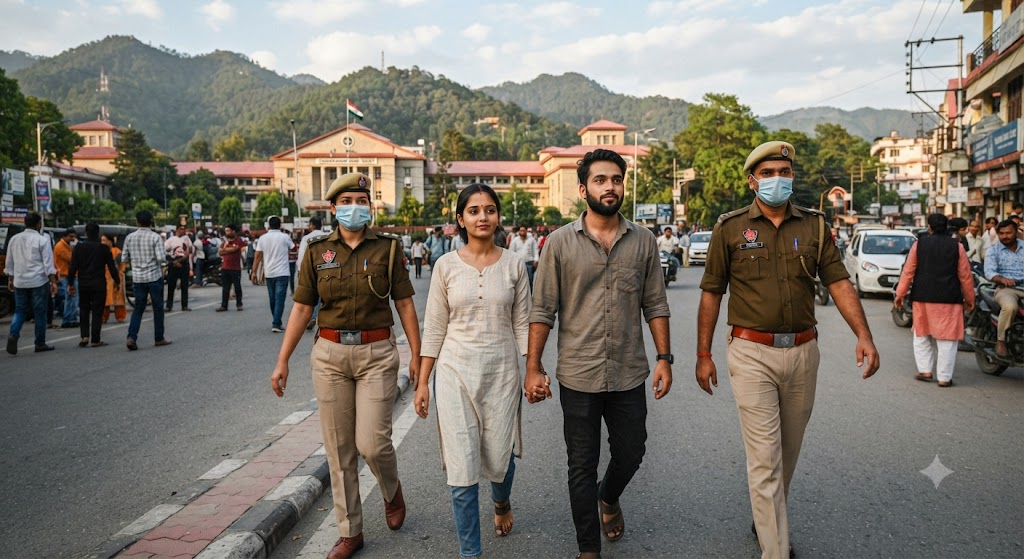
The petitioners, Najuk and her partner, are adults residing together in a live-in relationship and intend to solemnize marriage in the future. They propose to register their live-in relationship on the Uttarakhand Uniform Civil Code (UCC) Portal. The family members of the petitioner oppose the relationship and the petitioners apprehend a threat to their life and liberty from the said relatives and other private persons.
Key Facts
The petitioners are major and residing together in a live-in relationship.
They intend to marry and propose to register their live-in relationship under Section 381(1) of the Uttarakhand Uniform Civil Code, 2024.
The family members of petitioner No. 1 are opposed to the relationship.
The petitioners apprehend threat to life and liberty from the relatives and other private persons.
The State acknowledges its constitutional obligation to ensure no harm is caused to the petitioners by private respondents or any other person.
The judgment was delivered on 23 September 2026.
Procedural History
The present writ petition (WPCRL/1962/2026) was filed directly before the Hon’ble High Court of Uttarakhand. No prior orders from lower courts or tribunals are mentioned in the judgment.
Relief Sought
The petitioners sought a direction to the respondents to provide protection from the apprehended threats, to enable them to live peacefully, and to facilitate the registration of their live-in relationship on the UCC Portal.
The Legal Issue
The central question was whether persons in a live-in relationship are entitled to protection of life and liberty under Article 21 of the Constitution of India, and whether the State can be directed to (i) facilitate registration of such relationship under Section 381(1) of the Uttarakhand Uniform Civil Code, 2024, and (ii) assess threat perception and provide necessary protection in accordance with law.
Arguments Presented
For the Petitioners
Learned counsel for the petitioners submitted that the petitioners have made out a prima facie case for protection of life and liberty, relying on the Supreme Court’s decision in Lata Singh v. State of U.P. & Anr., (2006) 5 SCC 475, which held that adults have the right to choose their partner and that interference by family members constitutes a threat to life and liberty. It was argued that the State, under its constitutional duty, must take proactive steps to safeguard the petitioners, including directing the police to assess threat and extend protection, and to facilitate registration of the live-in relationship under the UCC.
For the Respondent
The learned State Counsel submitted that the State is under a constitutional obligation to ensure that no harm is caused to the petitioners by private respondents or any other person. The State did not oppose the grant of protection but emphasized that any direction must be in accordance with law and that the police should assess threat perception before extending protection.
The Court's Analysis
The Court considered the submissions and the law laid down by the Supreme Court in Lata Singh v. State of U.P. & Anr., (2006) 5 SCC 475. It observed that the petitioners, being adults in a consensual live-in relationship, have a prima facie case for protection of their life and liberty guaranteed under Article 21 of the Constitution. The Court noted that the apprehension of threat from family members and private persons brings the case within the ambit of Lata Singh.
The Court held that the petitioners must submit a statement of their live-in relationship under Section 381(1) of the Uttarakhand Uniform Civil Code, 2024, before the Registrar having jurisdiction over the area where they reside, within a reasonable time. This direction serves to formalize the relationship under the statutory framework.
Furthermore, the Court directed the Station House Officer, Police Station Jaspur, District Udham Singh Nagar, to assess the threat perception, if any, to the life and limb of the petitioners. If a genuine threat is found, necessary protection shall be extended to them strictly in accordance with law. The S.H.O. is also required to summon the private respondents and any other persons found to be hostile to the petitioners’ relationship and counsel them to maintain peace and act in accordance with law.
The Court concluded that these directions adequately address the petitioners’ apprehensions while respecting the State’s duty to maintain law and order.
The Verdict
The petitioners succeeded in part. The Court directed them to submit a statement of their live-in relationship under Section 381(1) of the Uttarakhand Uniform Civil Code, 2024, within a reasonable time. It directed the Station House Officer, Jaspur, to assess threat perception and, if a genuine threat is found, to extend necessary protection in accordance with law and to summon hostile persons for counselling. The writ petition was disposed of accordingly. No monetary compensation or specific timelines beyond "reasonable time" were awarded.
What This Means For Similar Cases
Protection of Live-in Relationships Under Article 21
The judgment reinforces that adults in consensual live-in relationships are entitled to protection of life and liberty under Article 21. Family opposition or societal disapproval does not negate this right, and the State must take proactive measures to safeguard such relationships.
Duty to Register Under UCC
Persons in a live-in relationship may be directed to register their relationship under Section 381(1) of the Uttarakhand Uniform Civil Code, 2024, as a precondition for availing State protection. This links personal liberty with statutory compliance.
Police Obligation to Assess Threat
The police must conduct a threat assessment upon receiving apprehensions of harm from private parties. Protection is to be extended only if a genuine threat is found, and the authorities must counsel hostile persons to maintain peace, thereby balancing individual rights with public order.