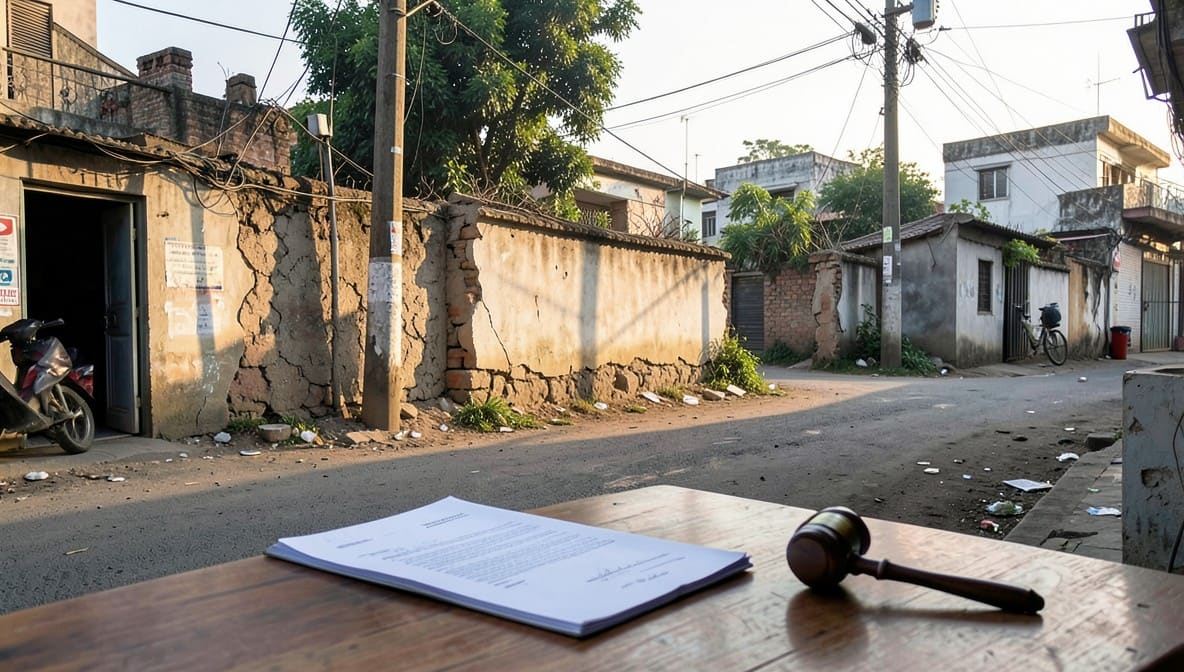
The Delhi High Court has clarified that the limitation period for a declaratory suit challenging fraudulent property transfers begins when the plaintiff first becomes aware of a third party asserting ownership, not when they later discover forged documents or subsequent sales. This ruling reinforces the principle that delay in asserting title, even under claims of fraud, cannot be excused if the plaintiff had actual knowledge of the adverse claim years earlier.
Background & Facts
The Dispute
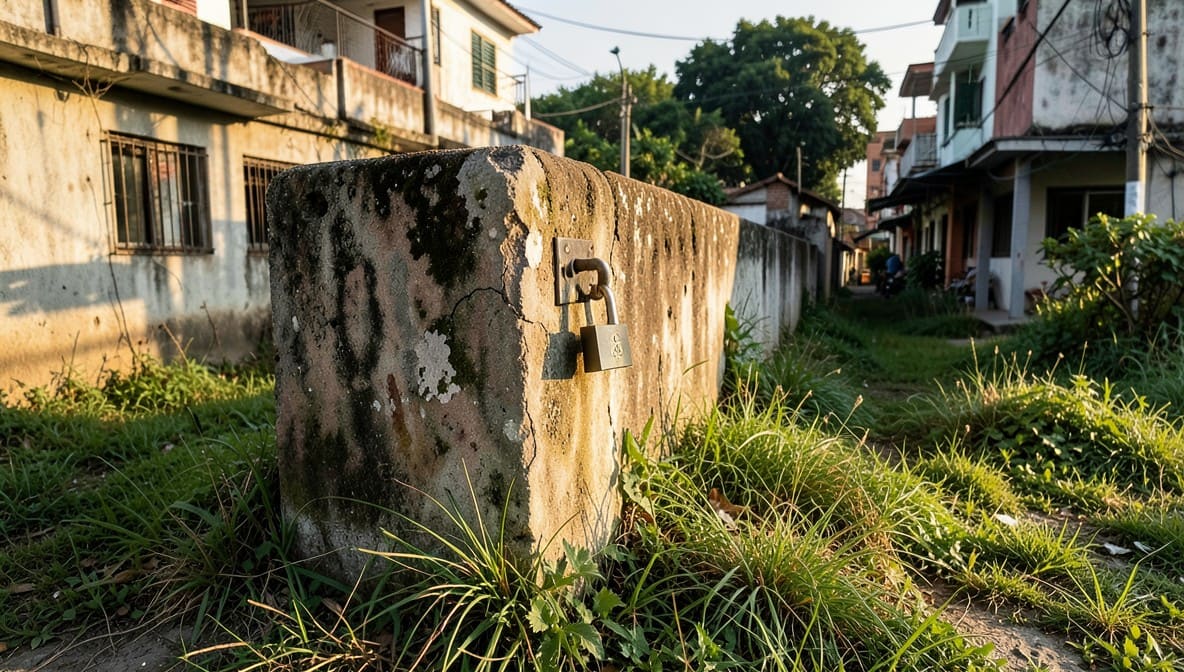
The appellant, Kanishka Sabharwal, filed a suit for declaration of ownership, recovery of possession, mesne profits, and permanent injunction over a plot of land measuring 79 sq yds, located in Nihal Vihar, Nangloi, Delhi (Plot No. 47 old / 140 new, Khasra No. 77/7). He claimed to have purchased the property from the original owner, Shri Suresh Kumar, through a registered General Power of Attorney (GPA), Agreement to Sell, Affidavit, Receipt, Will, and Possession Letter, all dated 15.05.2001. He alleged that he took physical possession, constructed a boundary wall, installed a lock, and intended to build a residence.
Key Facts
- The appellant was not residing on the property; he lived as a tenant at H.No. 604, Rohini Heights, Delhi.
- On 23.12.1999, the original title to the property was held by Smt. Harpreet Kaur, wife of Sh. Rajinder Singh, in favor of Defendant No. 1 (Suresh Kumar).
- In 2006, Defendant No. 1 approached the appellant’s mother under the pretext of facilitating a sale and obtained the original title documents dated 23.12.1999.
- In October 2008, the appellant’s father was informed by Nagender Chaudhary, a property dealer, that he had purchased the property from Defendant No. 1.
- The appellant and his father confronted Nagender Chaudhary, presented copies of their 15.05.2001 documents, and were threatened with violence if they approached the plot again.
- On 08.11.2008, the appellant lodged a complaint at P.S. Prashant Vihar after learning construction had begun on the plot.
- A further complaint was filed on 09.11.2008 at P.S. Nihal Vihar, leading to police intervention halting construction.
- A written complaint was sent on 15.11.2008 to multiple authorities, including BSES Rajdhani Power Ltd., requesting denial of electricity connection.
- The appellant alleged that Defendant No. 1 fraudulently altered property details (from Plot No. 47/140 to RZH-141A) and signatures (from English initials to Hindi ‘Suresh Bharti’) in subsequent documents.
- A chain of transfers was allegedly executed: Defendant No. 1 → Defendant No. 2 (Ram Shankar) on 06.12.2006 → subsequent transferees → Defendant No. 8 (Bijender Dabas), who was found in possession on 15.07.2018.
- FIR No. 336/2019 was registered on 16.05.2019 under Sections 420, 467, 468, 471, 34 IPC after the appellant received copies of the disputed documents from the investigating officer.
- A legal notice dated 03.06.2019 was served on Defendant No. 8 demanding possession and payment of mesne profits at ₹10,000/month.
- The suit was filed on 15.07.2019.
Procedural History
- 15.05.2001: Appellant purchases property via GPA, Agreement to Sell, etc.
- 2006: Defendant No. 1 obtains original title documents from appellant’s mother.
- October 2008: Appellant learns of Nagender Chaudhary’s claim to the property.
- 08.11.2008: First police complaint lodged.
- 09.11.2008: Second complaint filed; construction halted.
- 15.11.2008: Written complaint sent to police and BSES.
- 17.06.2009: Appellant’s father suffers heart attack.
- 2014: Appellant’s father diagnosed with CRBO eye disease.
- 15.07.2018: Appellant discovers Defendant No. 8 in possession.
- 03.06.2019: Legal notice served on Defendant No. 8.
- 16.05.2019: FIR No. 336/2019 registered.
- 15.07.2019: Suit filed before the District Judge.
- 01.07.2025: Trial Court rejects plaint under Order VII Rule 11 CPC, holding suit barred by limitation.
- 24.03.2026: Delhi High Court dismisses appeal.
The Parties' Positions
For the Appellant
- Claimed absolute ownership based on documents dated 15.05.2001.
- Argued that he had no knowledge of subsequent transfers until May 2019, when police supplied copies of forged documents.
- Contended that the cause of action arose only in May 2019, not in 2008.
- Asserted that delay was due to his father’s serious illness and death.
- Maintained that Defendant No. 1 had no title after 2001, rendering all subsequent transfers void.
For the Respondents
- Argued that the suit was filed after an inordinate delay of over 10 years from the time the appellant knew of the adverse claim in 2008.
- Contended that the appellant had actual knowledge of a cloud on his title in 2008 and failed to act.
- Asserted that the suit was frivolous, vexatious, and barred by limitation under Article 58 of the Limitation Act.
- Alleged suppression of facts and unclean hands.
- Presented a chain of title from 1999 to 2012 to establish lawful possession.
Relief Sought
The appellant sought:
- Declaration that the 15.05.2001 documents in his favor are valid and binding.
- Declaration that all subsequent transfers (2006 - 2012) are void.
- Recovery of possession of the suit property.
- Mesne profits at ₹10,000 per month from 2018 to 2019.
- Permanent injunction against respondents.
- Costs.
The Legal Issue
Did the cause of action for a declaratory suit challenging fraudulent property transfers accrue in 2008, when the appellant learned of a third party’s claim, or only in 2019, when he obtained copies of the allegedly forged documents?
Arguments Presented
For the Appellant
The appellant relied on the principle that limitation begins only when the plaintiff gains knowledge of the specific fraudulent documents. He argued that until the police investigation in May 2019 revealed the chain of transfers and forged signatures, he could not have filed a suit to cancel them. He cited his father’s illness from 2009 until death as justification for delay and contended that the Trial Court erred in ignoring the criminal proceedings initiated under FIR No. 336/2019. He further argued that the suit was not barred because he never relinquished possession and the respondents’ title was void ab initio.
For the Respondent
The respondents contended that the appellant’s own pleadings admitted awareness of a third party’s claim in October 2008, which constituted a cloud on his title. They relied on Anathula Sudhakar v. P. Buchi Reddy and Mallavva v. Kalsammanavara Kalamma to argue that once a title is clouded, the limitation period for a declaratory suit begins immediately. They emphasized that mere ignorance of the identity of subsequent transferees or the existence of forged documents does not extend limitation. The delay of over a decade was held to be inexcusable and indicative of laches.
The Court's Analysis
The Delhi High Court examined the nature of the appellant’s claim and the timing of his knowledge. The Court held that the appellant’s own case established that he became aware in October 2008 that Nagender Chaudhary was asserting ownership and had taken possession of the property. This constituted a clear cloud on his title, triggering the limitation period under Article 58 of the Limitation Act, which prescribes a three-year period for suits seeking declaration of title.
"The cause of action to file a Suit to challenge the documents in favour of the Defendant No. 2 arose in 2008, while the Suit has been filed only in 2018."
The Court rejected the appellant’s argument that limitation began only upon receipt of police documents in May 2019. It held that the appellant’s failure to act after 2008 could not be excused by subsequent discovery of additional fraudulent transfers. The Court emphasized that the Limitation Act does not permit plaintiffs to wait for the full extent of wrongdoing to unfold before initiating legal action.
The Court further noted that the appellant had not sought a declaration of his own title in the suit, despite the cloud on his ownership. The suit was framed only to declare the respondents’ documents void, without affirmatively asserting his own rights. This omission, the Court held, further weakened his claim.
The Court also dismissed the argument that the appellant’s father’s illness excused the delay. While acknowledging the hardship, the Court held that personal circumstances do not suspend the operation of limitation unless there is a legal disability under Section 6 of the Limitation Act, which did not apply here.
The Court affirmed the Trial Court’s reliance on Anathula Sudhakar and Mallavva, both of which hold that when a cloud is raised on title, the limitation period begins from the date of knowledge of the adverse claim, not from the date of discovery of the full extent of fraud.
The Verdict
The appeal was dismissed. The Delhi High Court upheld the Trial Court’s order dated 01.07.2025 rejecting the plaint under Order VII Rule 11 CPC. The suit was held to be barred by limitation under Article 58 of the Limitation Act, as it was filed in 2019, more than ten years after the cause of action accrued in October 2008. No monetary relief, costs, or directions for possession were granted. The pending applications were disposed of.
What This Means For Similar Cases
Knowledge of Title Cloud Triggers Limitation
- Practitioners must advise clients to file declaratory suits within three years of learning that a third party is asserting ownership, even if the full extent of fraud is unknown.
- Delay cannot be justified by waiting for police investigations or discovery of forged documents.
Declaratory Relief Must Be Explicit
- Suits seeking cancellation of documents must also include a positive declaration of the plaintiff’s own title to avoid dismissal on technical grounds.
- A suit confined only to voiding others’ documents, without asserting one’s own ownership, is vulnerable to rejection.
Personal Hardship Does Not Extend Limitation
- Illness, death of family members, or emotional distress are not legal grounds to extend limitation under the Limitation Act.
- Only statutory disabilities (e.g., minority, insanity) under Section 6 can suspend limitation.
Criminal Proceedings Do Not Toll Civil Limitation
- Registration of an FIR or ongoing criminal investigation does not pause the limitation period for civil suits.
- Civil remedies must be pursued independently and promptly, even if criminal proceedings are pending.
Documentary Evidence Must Be Challenged Promptly
- If a plaintiff retains possession and title documents, any third-party claim must be challenged immediately.
- Passive reliance on possession without legal action may be construed as acquiescence.