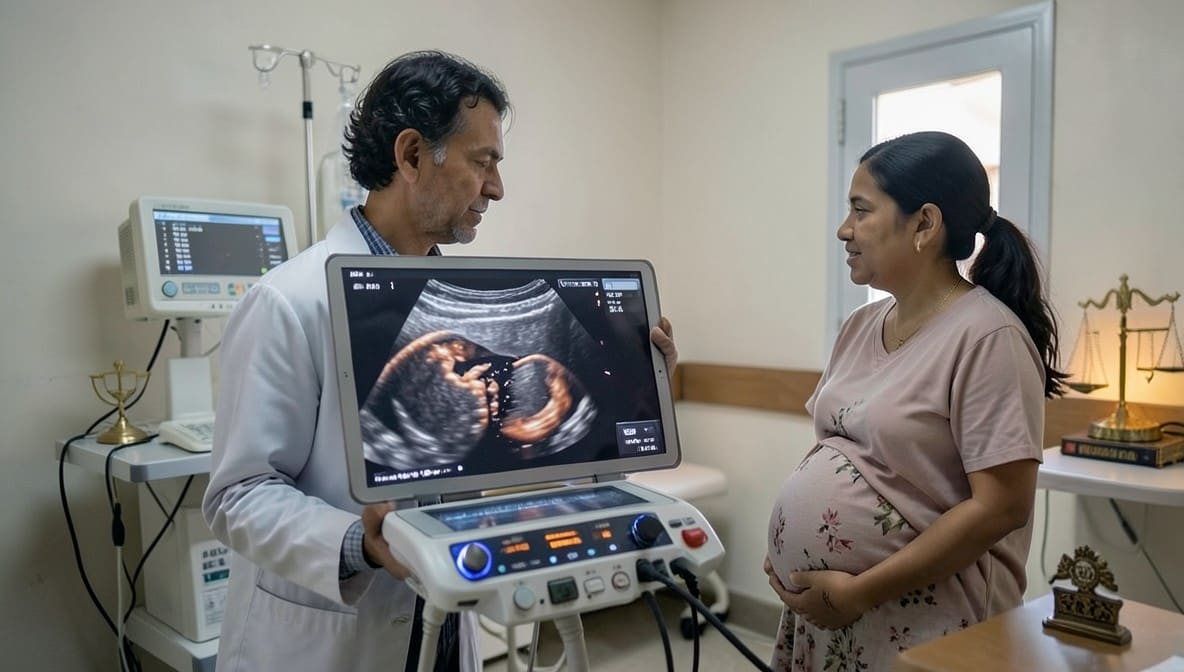
The Madhya Pradesh High Court has affirmed that women suffering sterilization failure are entitled to statutory compensation under the Family Planning Indemnity Scheme, 2013, even when claims are filed beyond the stipulated 90-day period. The judgment reinforces the welfare-oriented nature of the scheme and rejects rigid procedural bars that would defeat its humanitarian purpose.
Background & Facts
The Dispute
The petitioner, Smt. Manju, underwent a sterilization operation on 12.12.2012 at a public health facility in Madhya Pradesh. Despite the procedure, she became pregnant and delivered a male child on 21.10.2014. She subsequently sought compensation under the Central Government’s Manual for Family Planning Indemnity Scheme, 2013, which provides for a fixed compensation of Rs.30,000 in cases of sterilization failure. The State denied her claim, arguing that the scheme had no retrospective application and that her delay in filing violated the 90-day limitation clause.
Key Facts
- Sterilization operation performed on 12.12.2012 at a government health facility
- Pregnancy detected and child born on 21.10.2014
- Petitioner filed writ petition on 2018, seeking compensation of Rs.30,000 and additional damages for trauma and child-rearing expenses
- Consent form signed prior to operation (Annexure R/1) contained a clause waiving right to claim compensation if abortion was not performed within two weeks of conception
- The Family Planning Indemnity Scheme, 2013, came into effect on 01.04.2013
- Prior policy (2005 - 2013) also provided Rs.30,000 compensation for sterilization failure
Procedural History
- 12.12.2012: Sterilization operation performed
- 21.10.2014: Birth of child following sterilization failure
- 2018: Writ Petition No. 17358 of 2018 filed under Article 226 of the Constitution
- 02.04.2025: Division Bench of this Court in W.A. No.37/2020 held that delay in filing claims under the 2013 Scheme may be condoned in light of its welfare objectives
- 17.03.2026: Final hearing before Single Judge
The Parties' Positions
For the Petitioner
- Relied on the Division Bench judgment in W.A. No.37/2020 (dated 02.04.2025), which held that the 90-day limitation under Clause 1.2(8) of the 2013 Scheme is not inflexible
- Argued that the scheme is a welfare measure meant to protect vulnerable women from state-induced harm
- Contended that the compensation amount of Rs.30,000 was consistent under both the pre-2013 and 2013 policies
- Emphasized that the consent form’s waiver clause cannot override statutory welfare rights
For the Respondent/State
- Argued that the 2013 Scheme has no retrospective effect and cannot apply to an operation conducted in 2012
- Relied on State of Punjab v. Shiv Ram and Ors. (2005) to assert that sterilization failure alone does not attract liability
- Invoked the consent form (Annexure R/1) as a binding waiver of compensation rights
- Claimed that claims arising before 01.04.2013 fall under expired policies and are not covered under current PIPs
Relief Sought
- Compensation of Rs.30,000 under the Family Planning Indemnity Scheme, 2013
- Additional compensation of Rs.2,00,000 for mental, emotional, and physical trauma
- Interest on the compensation amount
- Direction to the State to bear future expenses related to the child’s health, education, and marriage
The Legal Issue
The central question was whether a woman who suffered sterilization failure in 2012 is entitled to compensation under the Family Planning Indemnity Scheme, 2013, despite the claim being filed after the 90-day limitation period and the operation occurring before the scheme’s effective date.
Arguments Presented
For the Petitioner
The petitioner’s counsel relied on the Division Bench’s ruling in W.A. No.37/2020, which interpreted the 2013 Scheme as a benevolent welfare measure. The counsel argued that the 90-day limitation under Clause 1.2(8) is not a strict bar but a procedural guideline meant to facilitate timely processing, not to deny substantive rights. The counsel further submitted that the compensation amount of Rs.30,000 was identical under the prior policy (2005 - 2013), rendering the retrospective argument legally untenable. The consent form’s waiver clause was challenged as violative of Article 21 rights and unenforceable as against public policy.
For the Respondent/State
The State contended that the 2013 Scheme explicitly applies only to claims arising from operations conducted on or after 01.04.2013, as per Clause 1.2(7). It cited State of Punjab v. Shiv Ram to argue that medical failure without negligence cannot trigger liability. The State also emphasized that the consent form signed by the petitioner constituted a valid contractual waiver, and that extending benefits retroactively would create fiscal and administrative chaos.
The Court's Analysis
The Court undertook a purposive interpretation of the Family Planning Indemnity Scheme, 2013, emphasizing its humanitarian intent. It noted that the scheme was designed to protect women who undergo sterilization as part of a state-sponsored population control program, often under socio-economic compulsion. The Court observed that the 90-day limitation period under Clause 1.2(8) is not absolute, as the clause itself does not prescribe consequences for delay. The Division Bench in W.A. No.37/2020 had already held that such limitations must be construed liberally in favor of beneficiaries, particularly since the occurrence of failure is inherently unpredictable.
"Since it is a beneficial regulation/guidelines meant to the welfare of those families who support the cause of birth control by undergoing sterilization operation, therefore, this is meant to address the predicament of those families, who suffer at the hands of State Machinery/ Hospitals."
The Court further held that the compensation amount of Rs.30,000 was not a new benefit introduced in 2013 but was the same quantum provided under the earlier policy (2005 - 2013). Therefore, denying the petitioner compensation on grounds of retrospective application was legally unsustainable. The consent form’s waiver clause was held to be void as it contravened the public policy underlying the Scheme and undermined the State’s duty to provide redress for state-induced harm under Article 21.
The Court distinguished State of Punjab v. Shiv Ram on the ground that it dealt with negligence and liability of surgeons, whereas this case concerned statutory compensation under a welfare scheme, not tortious liability.
The Verdict
The petitioner succeeded. The Court directed the State to pay compensation of Rs.30,000 within 90 days from the date of receipt of the certified copy of this order. The prayer for interest was rejected on the ground that the Scheme does not provide for it. However, the Court directed that if the compensation is not paid within 90 days, it shall carry interest at 9% per annum from the date of communication of this order until actual payment. The claim for Rs.2,00,000 trauma compensation and future child-rearing expenses was dismissed as beyond the scope of the Scheme.
What This Means For Similar Cases
Delay in Filing Does Not Bar Compensation Under Welfare Schemes
- Practitioners may now argue that rigid limitation periods in welfare schemes must be interpreted liberally when the harm is unforeseeable and the claimant is vulnerable
- The burden shifts to the State to prove prejudice caused by delay, not to the claimant to prove timeliness
- This principle applies to all state-run health indemnity schemes, including those for maternal death or surgical complications
Consent Waivers Cannot Override Statutory Welfare Rights
- Any consent form that purports to waive rights under a statutory welfare scheme is void as contrary to public policy
- Courts will not enforce contractual waivers that negate fundamental rights under Article 21
- Legal aid clinics should advise beneficiaries to retain copies of consent forms and immediately file claims upon detection of failure
Pre-2013 Beneficiaries Are Entitled to Same Compensation
- Where the quantum of compensation under a revised scheme is identical to the prior scheme, beneficiaries from earlier periods are entitled to the same benefit
- The State cannot deny relief on technical grounds of scheme implementation dates if the substantive entitlement remains unchanged
- This creates a precedent for retroactive application in other health indemnity schemes where the benefit amount is unchanged