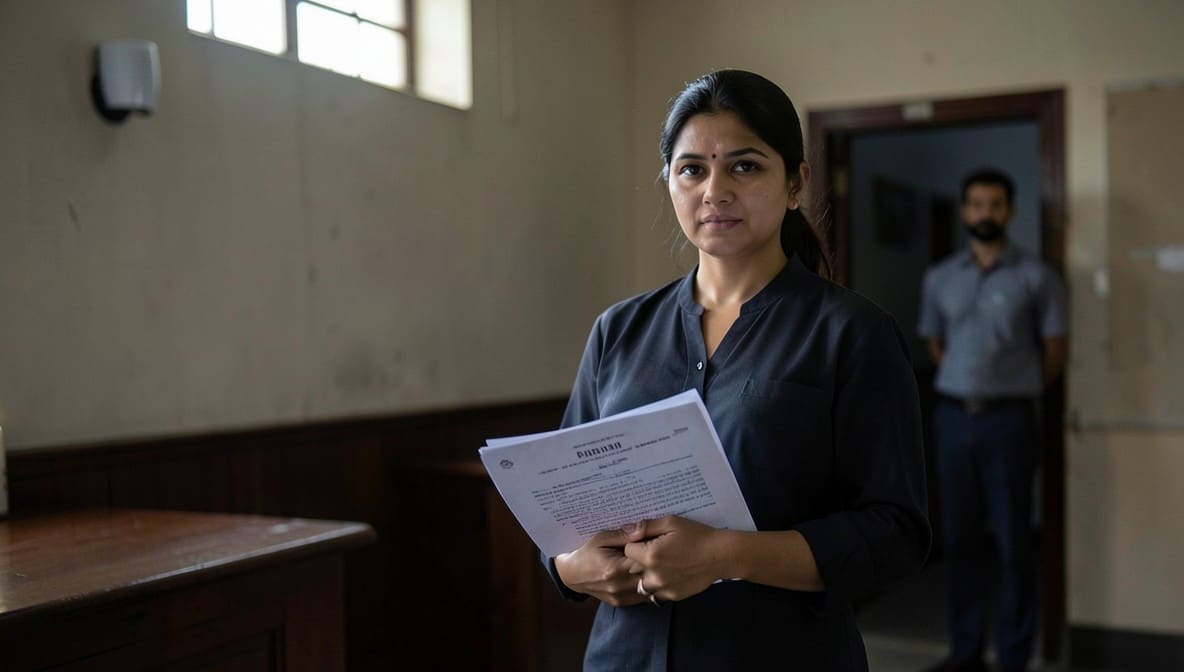
The Kerala High Court has clarified that making unfounded, grave allegations of sexual misconduct against a spouse’s close family members constitutes mental cruelty under the Hindu Marriage Act, 1955. This ruling reinforces that emotional abuse through false accusations, even if not physically violent, can irreparably damage marital trust and justify dissolution of marriage.
Background & Facts
The Dispute
The marriage between Jeena, the appellant-wife, and Vinod V.G., the respondent-husband, was solemnised on 18 February 2007. The husband filed for divorce alleging sustained mental cruelty, primarily through the wife’s repeated and baseless accusations that he engaged in illicit relationships with his own mother and his elder brother’s wife. These allegations were made during marital discord and later reiterated in court proceedings.
Procedural History
- 2012: Husband filed Original Petition (O.P. No. 499 of 2012) before the Family Court, Irinjalakuda, seeking divorce on grounds of mental cruelty.
- 2014: Family Court found the wife’s allegations to be unsubstantiated and concluded they amounted to mental cruelty, granting the divorce decree.
- 2015: Wife filed this appeal challenging the divorce decree, arguing that the allegations were made in the heat of conflict and did not meet the threshold for cruelty.
Relief Sought
The appellant sought reversal of the divorce decree, contending that the Family Court erred in treating mere allegations - without corroboration - as sufficient grounds for dissolution of marriage.
The Legal Issue
The central question was whether making false and grave allegations of illicit relationships with a spouse’s mother and brother’s wife, without any evidentiary basis, constitutes mental cruelty under Section 13(1)(ia) of the Hindu Marriage Act, 1955.
Arguments Presented
For the Appellant
The appellant’s counsel argued that the allegations, though false, were made during a period of marital breakdown and should not be elevated to the level of cruelty. Reliance was placed on N. Gopi v. K. Gopi to assert that isolated or emotionally charged statements, absent persistent harassment, do not amount to cruelty. It was further contended that the Family Court failed to assess the context of the allegations and ignored the husband’s conduct as a contributing factor.
For the Respondent
The respondent’s counsel submitted that the wife’s allegations were not mere disputes but deliberate, defamatory imputations targeting the husband’s family honour. Citing V. Bhagat v. D. Bhagat, it was argued that such accusations, especially involving incestuous overtones, inflict profound psychological trauma and erode the foundation of marital trust. The allegations were not rebutted by the wife during cross-examination, rendering them legally significant.
The Court's Analysis
The Court examined the nature and gravity of the allegations made by the wife, who was examined as RW1. The Family Court had correctly noted that the wife’s claims of illicit relationships with the husband’s mother and brother’s wife were not only unsubstantiated but also inherently damaging to the husband’s social and familial standing. The Court emphasized that mental cruelty does not require physical violence or repeated conduct; it can arise from a single, severe act that makes cohabitation intolerable.
"The allegation remain as mere wild allegations without any evidence. Making such unfounded allegations against the husband amounts to mental cruelty."
The Court rejected the appellant’s argument that context mitigates the cruelty, holding that the nature of the allegations - accusing a husband of sexual misconduct with his own mother and brother’s wife - transcends ordinary marital discord. Such accusations, even if made once, are inherently degrading and violate the dignity of the spouse and his family. The Court found no error in the Family Court’s appreciation of evidence, noting that the wife failed to provide any corroboration despite being examined under cross-examination. The absence of rebuttal, coupled with the gravity of the claims, rendered them legally operative as cruelty.
The Verdict
The appeal was dismissed. The Court held that false and grave allegations of illicit relationships with in-laws, unsupported by evidence, constitute mental cruelty under Section 13(1)(ia) of the Hindu Marriage Act, 1955, and are sufficient grounds for divorce. The Family Court’s decree was upheld.
What This Means For Similar Cases
False Accusations of Sexual Misconduct Are Not Minor Disputes
- Practitioners must treat allegations of incestuous or sexually inappropriate conduct against in-laws as per se grave, regardless of frequency.
- Even single instances, if proven false and defamatory, can meet the threshold for mental cruelty.
- Courts will not accept "heat of the moment" as a defence when the accusation involves deeply taboo social violations.
Burden of Corroboration Falls on the Accuser
- In matrimonial disputes, when one party makes serious allegations, the burden shifts to them to substantiate them.
- Failure to provide evidence during examination - especially under cross-examination - will be weighed heavily against the accuser.
- Oral testimony unsupported by documents or witnesses will not suffice to counter claims of cruelty.
Context Does Not Neutralize the Gravity of the Allegation
- While marital conflict may explain emotional outbursts, it does not excuse accusations that attack the core dignity of the spouse’s family.
- Courts will not equate marital quarrels with conduct that violates social and moral boundaries.
- Legal arguments must focus on the nature of the allegation, not merely its timing or frequency.