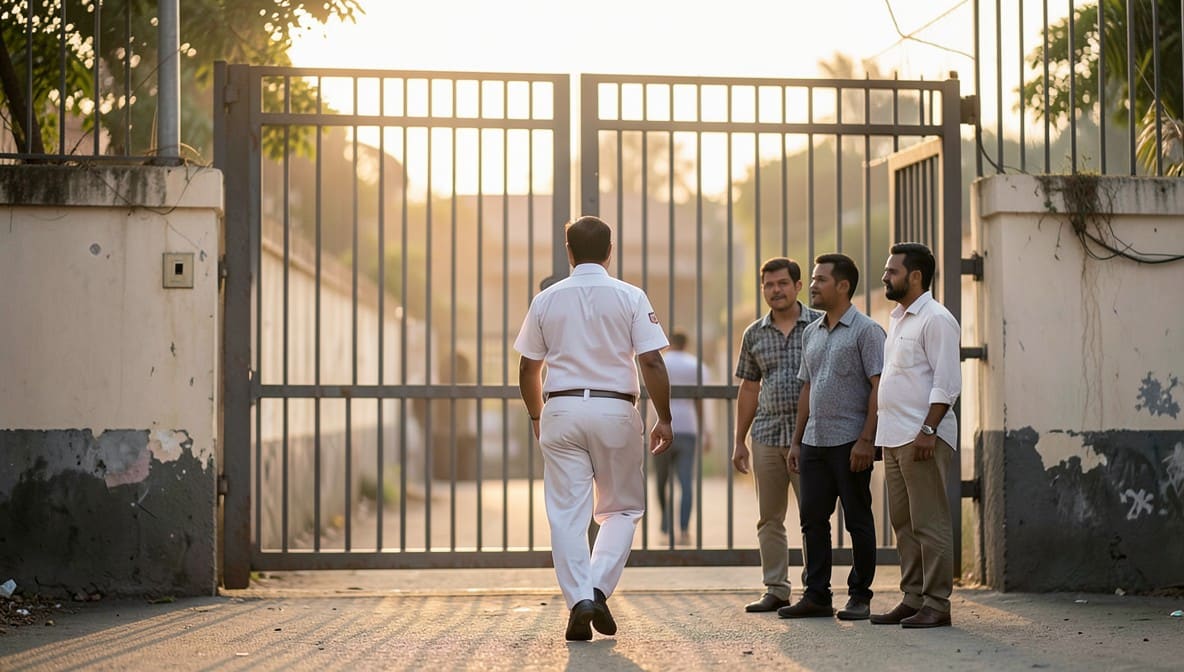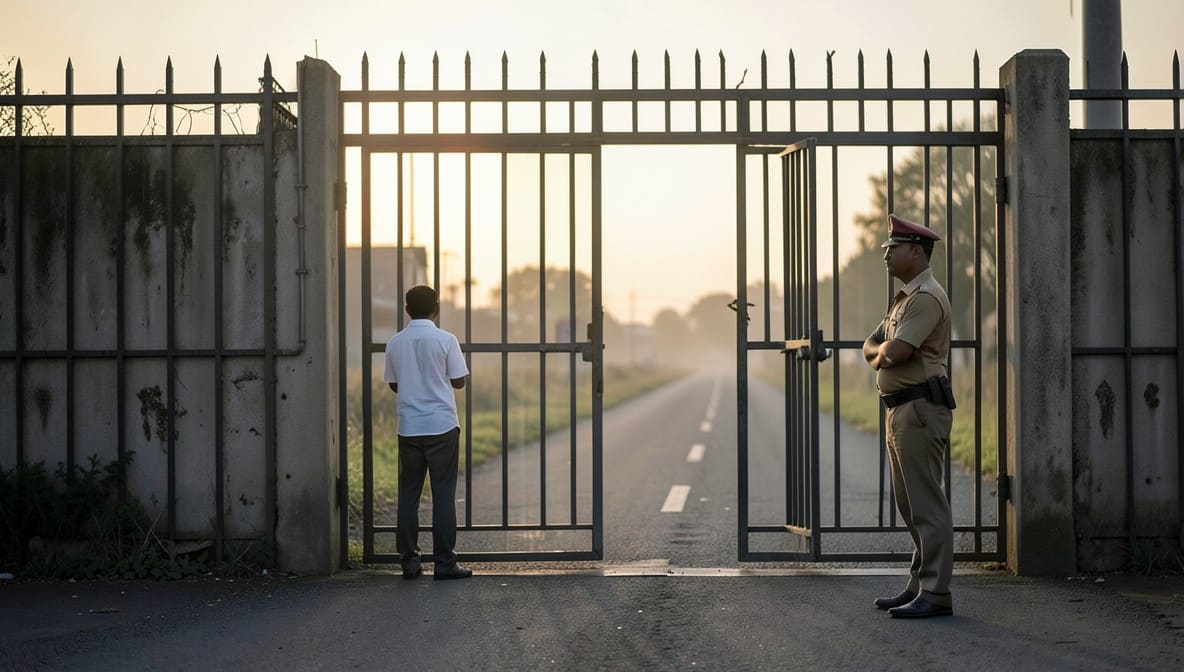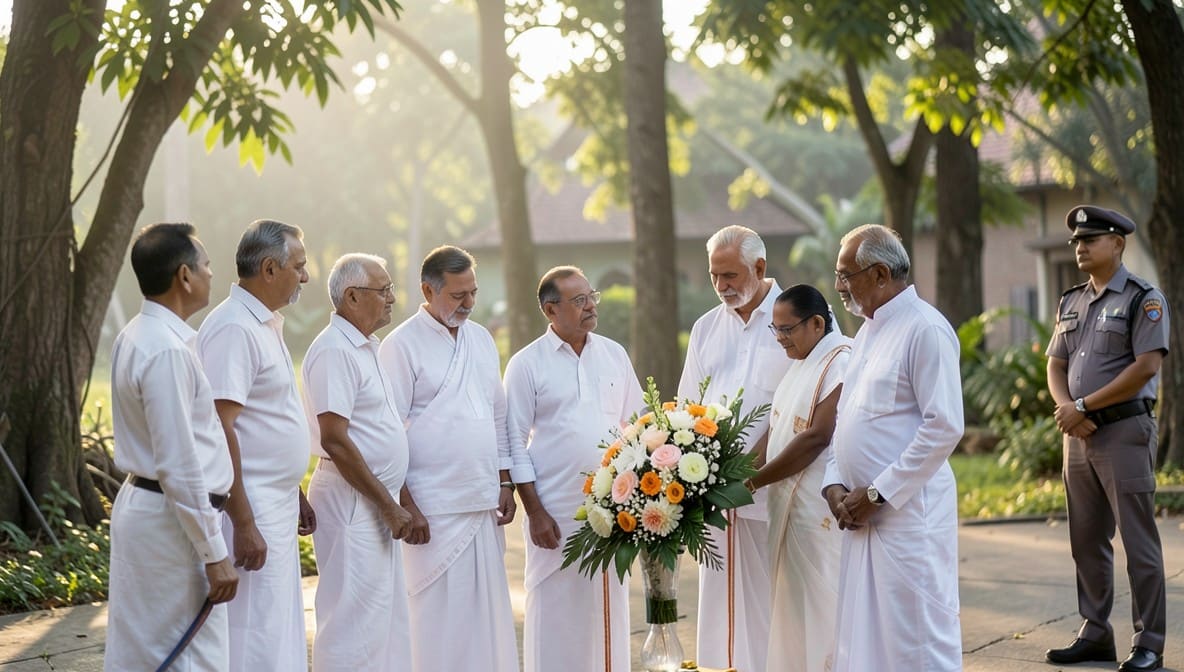
The Kerala High Court has recognized the human dimension of incarceration by granting emergency parole to a convict to attend the final funeral rites of his maternal uncle, affirming that compassion and justice are not mutually exclusive in the administration of punishment. This order underscores the judiciary’s role in balancing institutional security with fundamental human dignity.
Background & Facts
The Dispute
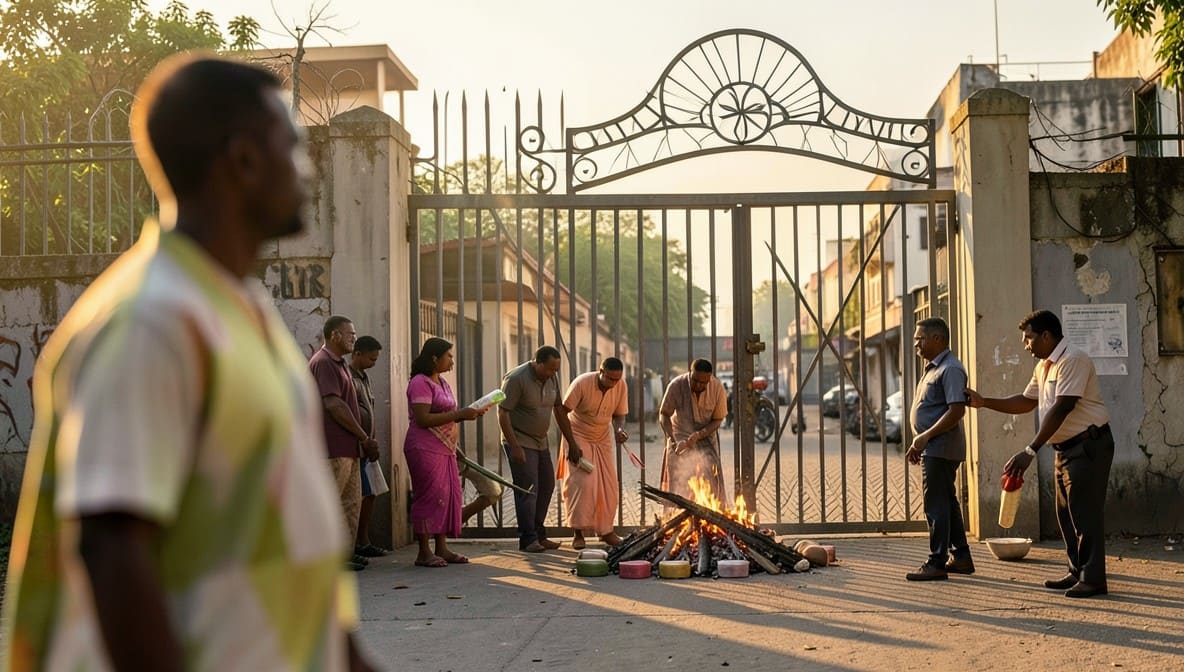
The petitioner, Sajini M.P., wife of a convict serving sentence under S.C. No. 479 of 2020 before the Fast Track Special Court, Thaliparamba, sought emergency parole for her husband to attend the 40th-day final funeral ceremony of his maternal uncle, who passed away on 15.05.2025. The ceremony was scheduled for 23.06.2026. The convict’s family expressed deep emotional distress over his inability to participate in this culturally significant rite, which marks the conclusion of mourning rituals in many Indian communities.
Key Facts
- The convict is currently incarcerated at the Central Prison and Correctional Home, Kannur
- His maternal uncle died on 15.05.2025, as certified by Death Certificate (Exhibit P1)
- The petitioner submitted a formal representation for emergency parole on 14.05.2026 (Exhibit P2)
- The 40th-day ceremony is a traditional Hindu rite of passage, attended by close family members
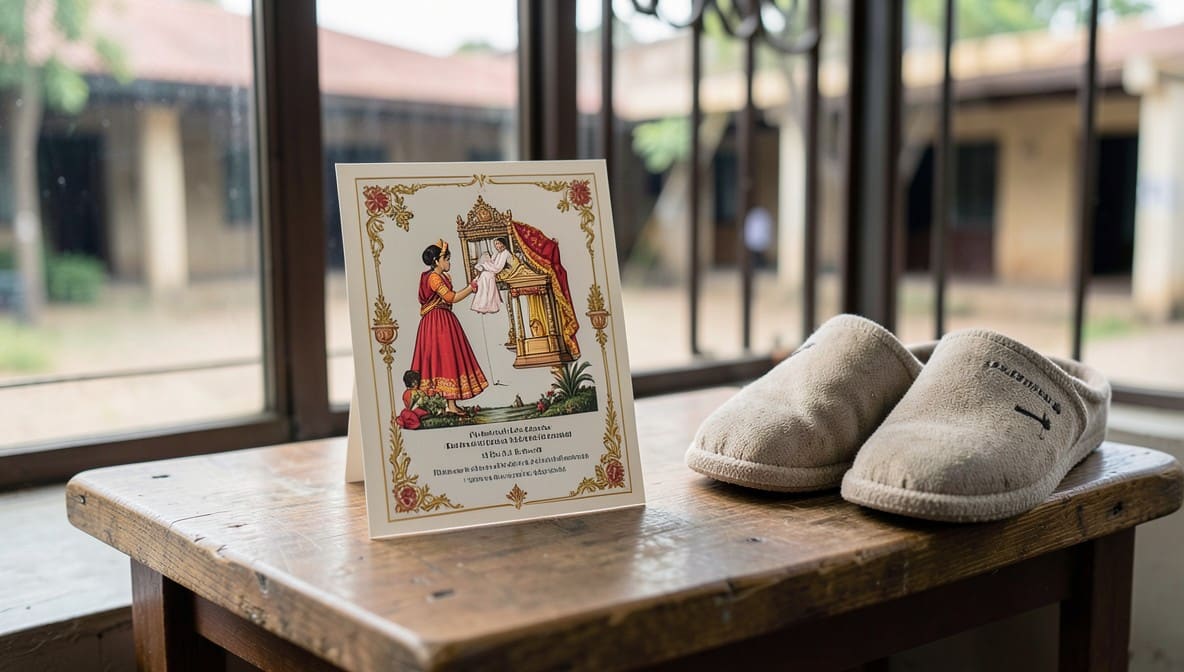
- A formal invitation for the ceremony was issued and dated 23.06.2026 (Exhibit P4)
- The petitioner cited W.P.(Crl.) No. 786 of 2026 (Exhibit P3) as a precedent where similar relief was granted
Procedural History
- 15.05.2025: Maternal uncle of the convict passed away
- 14.05.2026: Petitioner submitted formal representation to the 3rd Respondent (Superintendent, Central Prison, Kannur)
- 11.06.2026: Court directed the Jail Superintendent to consider the representation strictly as per rules
- 22.06.2026: Petition heard before the High Court; Public Prosecutor informed the Court that the convict initially objected to police escort but later withdrew objection
- 22.06.2026: Court delivered order granting emergency parole with conditions
Relief Sought
The petitioner sought interim parole for the convict to attend the 40th-day funeral ceremony on 23.06.2026, with police escort in casual attire to avoid social stigma, and return to custody on the same day.
The Legal Issue
The central question was whether emergency parole may be granted to a convict to attend the final funeral rites of a close relative, even in the absence of a specific statutory provision, based on principles of natural justice, human dignity, and judicial discretion under Article 226 of the Constitution.
Arguments Presented
For the Petitioner
The learned counsel argued that the relationship between the convict and the deceased - maternal uncle - is legally and culturally recognized as a close familial bond under Indian customs. The 40th-day ceremony is not merely a ritual but a mandatory social and spiritual obligation for close kin. Denial of attendance would inflict irreparable emotional harm and violate the convict’s right to dignity under Article 21. The petitioner relied on W.P.(Crl.) No. 786 of 2026, where the same Court had granted similar relief, and emphasized that the convict had no history of violence or escape attempts.
For the Respondent
The Public Prosecutor acknowledged the emotional gravity of the situation and confirmed that the Jail Superintendent was inclined to grant parole. However, initial resistance came from the convict himself, who feared humiliation from visible police escort. Upon clarification, the convict withdrew his objection and agreed to parole with police escort in civil dress. The State did not oppose the relief but sought strict conditions to ensure security and return.
The Court's Analysis
The Court examined the nature of parole in Indian prison jurisprudence, noting that while not codified in statute, it is a well-established administrative and judicial practice grounded in humanitarian principles. The Court observed that the right to dignity under Article 21 extends to prisoners, including the right to participate in culturally significant family rituals. The Court rejected the notion that incarceration must entail complete social isolation, especially when the request is limited, specific, and non-threatening.
"Evidently, the relationship between the convict and the deceased is close. Therefore, I am of the view that the prayer for releasing the petitioner's husband on emergency parole, so as to facilitate his attendance at the said ceremony, deserves to be allowed in the interest of justice."
The Court further noted that the State had not raised any security concerns beyond the general apprehension of absconding, which could be mitigated by a police escort. The Court emphasized that the convict’s willingness to return by 5.00 p.m. on the same day, coupled with the short duration and precise timing, rendered the risk negligible. The request for civil dress for escort officers was deemed reasonable to preserve the dignity of the grieving family and avoid public spectacle.
The Verdict
The petition was allowed. The Superintendent of Central Prison and Correctional Home, Kannur, is directed to release the convict on emergency parole from 9.00 a.m. to 5.00 p.m. on 23.06.2026. Adequate police escort in civil dress must be provided throughout the period. The convict must return to custody by 5.00 p.m. on the same day without fail. Failure to comply shall render the convict liable for disciplinary action and future parole applications may be summarily rejected.
What This Means For Similar Cases
Emergency Parole Is Recognized as a Humanitarian Remedy
- Practitioners may now cite this judgment to seek emergency parole for funerals of parents, spouses, children, siblings, or maternal/paternal uncles/aunts
- The Court’s recognition of the 40th-day rite as a culturally essential event sets a precedent for respecting religious and regional mourning customs
Civil Dress Escorts Are Legally Permissible
- Police escorts in uniform are not mandatory; civil attire may be ordered to prevent social stigma during sensitive family events
- This reduces trauma to bereaved families and aligns with the principle of minimizing humiliation under Article 21
Strict Temporal Conditions Are Non-Negotiable
- Parole must be time-bound to the exact hour of the event
- Failure to return by the stipulated deadline will result in automatic forfeiture of future parole eligibility
- Courts will not entertain open-ended or vague requests for temporary release