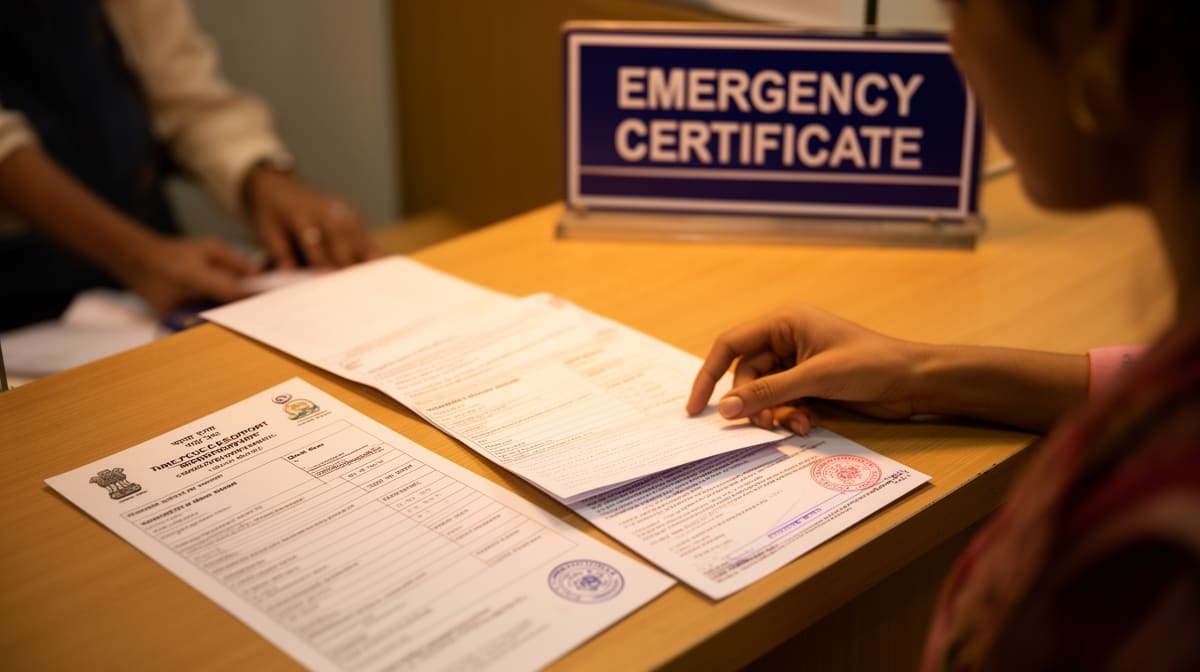
The Kerala High Court has established a procedural framework for accused persons abroad to obtain Emergency Certificates under Section 4 of the Passports Act, 1967, enabling their return to India for judicial proceedings. The judgment clarifies the interplay between passport regulations and criminal procedure, particularly in cases where coercive steps have been initiated by magistrates.
Background & Facts
The Dispute
The petitioner, an Indian citizen employed abroad, faced criminal proceedings in India while his passport had expired. Crime No.147/2025 was registered against him at Aroor Police Station, Alappuzha, and was pending as C.P.27/2025 before the Judicial First Class Magistrate Court-II, Cherthala. With coercive steps initiated by the magistrate, the petitioner required an Emergency Certificate under Section 4(2)(a) of the Passports Act, 1967 to return to India and surrender.
Procedural History
The case progressed through the following stages:
- 2025: Crime registered and criminal proceedings initiated before the Judicial First Class Magistrate
- 2025: Coercive steps issued by the magistrate, preventing the petitioner from returning due to an expired passport
- 2026: Petition filed under Section 528 of the Bharatiya Nyaya Sanhita (BNS) seeking an Emergency Certificate
Relief Sought
The petitioner sought:
- Issuance of an Emergency Certificate under Section 4(2)(a) of the Passports Act, 1967 to facilitate his return to India
- Directions to the magistrate to consider his bail application expeditiously upon surrender
The Legal Issue
The central question was whether an accused person abroad, facing criminal proceedings in India, could obtain an Emergency Certificate under the Passports Act, 1967 to return and surrender before the court, and what conditions could be imposed to ensure compliance with judicial proceedings.
Arguments Presented
For the Petitioner
The petitioner’s counsel contended:
- The petitioner’s inability to return due to an expired passport was a genuine impediment, not an attempt to evade justice
- Section 4(2)(a) of the Passports Act, 1967 empowers authorities to issue Emergency Certificates for return to India in exceptional circumstances
- The magistrate’s coercive steps necessitated his presence in India, and the Emergency Certificate was the only means to comply
For the Respondent
The Deputy Solicitor General of India argued:
- The Emergency Certificate could be issued, provided strict conditions were imposed to ensure the petitioner’s return and surrender
- The petitioner must be directed to surrender before the magistrate immediately upon returning to India
- The magistrate should be directed to consider the bail application expeditiously to prevent unnecessary detention
The Court's Analysis
The Court examined the provisions of the Passports Act, 1967, particularly Section 4(2)(a), which allows for the issuance of an Emergency Certificate to enable an Indian citizen abroad to return to India. The Court noted that the petitioner’s situation - facing criminal proceedings with an expired passport - fell within the ambit of exceptional circumstances justifying the issuance of such a certificate.
The Court emphasized the need to balance the petitioner’s right to return to India with the state’s interest in ensuring his appearance before the magistrate. To this end, the Court imposed the following conditions:
"After obtaining the Emergency Certificate, the petitioner shall come down to India without delay and surrender before the learned Magistrate, within ten days from the date on which he returns to India."
The Court further directed the magistrate to consider the petitioner’s bail application on the same day it was filed, provided a copy was served to the prosecutor in advance. This direction was aimed at preventing unnecessary detention while ensuring the petitioner’s compliance with judicial proceedings.
The Court’s reasoning underscored the importance of procedural fairness in criminal cases, particularly where the accused’s inability to return was not willful but due to administrative hurdles like an expired passport.
The Verdict
The Court allowed the petition and directed the respondents to issue an Emergency Certificate to the petitioner under Section 4(2)(a) of the Passports Act, 1967, subject to the following conditions:
- The petitioner must return to India and surrender before the Judicial First Class Magistrate Court-II, Cherthala, within ten days of his arrival.
- Upon surrender, the magistrate must consider and dispose of the petitioner’s bail application on the same day it is filed, provided a copy is served to the prosecutor in advance.
What This Means For Similar Cases
Emergency Certificates Are Not Automatic
Practitioners must note that the issuance of an Emergency Certificate under Section 4(2)(a) of the Passports Act, 1967 is not a matter of right but is contingent on exceptional circumstances. Courts will scrutinize:
- The genuineness of the accused’s inability to return (e.g., expired passport, lack of travel documents)
- The stage of criminal proceedings and whether coercive steps have been initiated
- The accused’s willingness to comply with judicial directions upon return
Strict Compliance Conditions Will Be Imposed
Courts are likely to impose stringent conditions to ensure the accused’s appearance before the magistrate, such as:
- Mandatory surrender within a specified period (e.g., ten days from return)
- Expedited bail consideration to prevent unnecessary detention
- Advance notice to the prosecution before filing bail applications
Magistrates Must Ensure Procedural Fairness
Magistrates handling similar cases should:
- Avoid coercive steps that may inadvertently prevent the accused from returning to India
- Consider bail applications expeditiously where the accused has complied with surrender conditions
- Ensure that procedural hurdles (e.g., expired passports) do not impede the accused’s right to fair trial