The Madhya Pradesh High Court has reaffirmed that a credible dying declaration, if found voluntary and free from tutoring, can form the sole basis for conviction under Section 302 IPC, even in the absence of direct eyewitnesses or corroborative evidence. This judgment underscores the evidentiary weight accorded to final statements of victims in homicide cases, particularly where medical and procedural records align with the declaration.
Background & Facts
The Dispute
The appellant, Wahid Khan, was convicted and sentenced to life imprisonment under Section 302 IPC and one year’s imprisonment under Section 3(2)(v) of the SC/ST (Prevention of Atrocities) Act, 1989, for the murder of Patiram, a member of a Scheduled Caste. The prosecution alleged that on the night of 31.05.1992, the appellant attacked Patiram with an axe while he slept in the courtyard of his house in Umaria village, Raisen district. Patiram succumbed to his injuries eight days later on 08.06.1992.
Key Facts
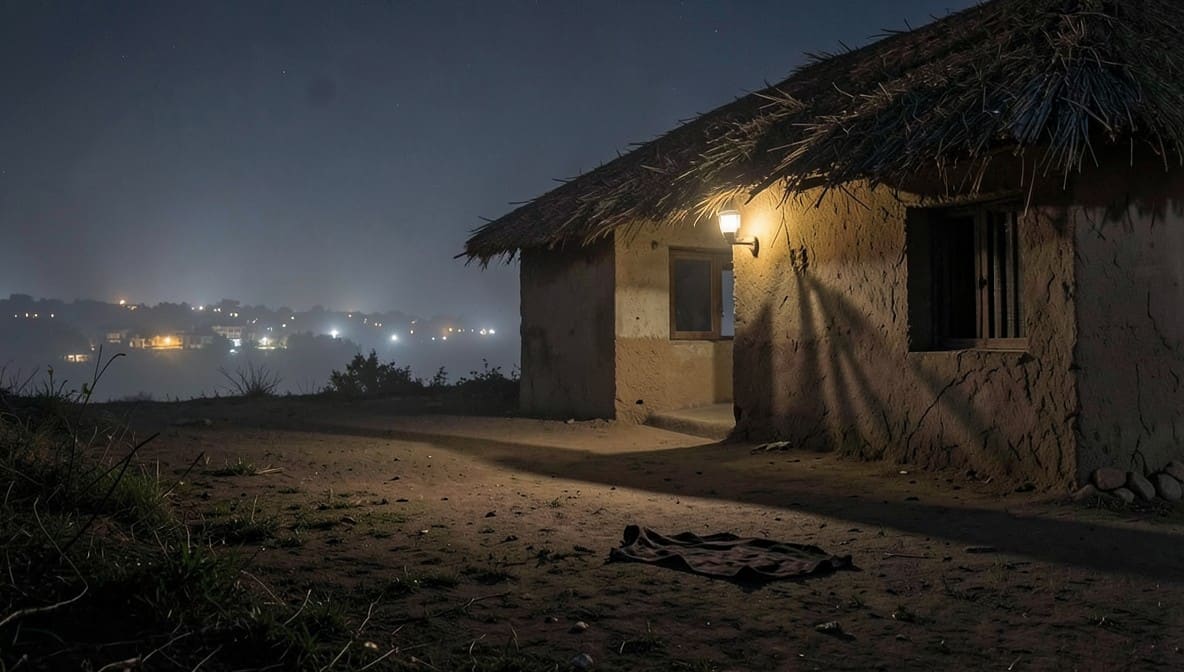
- The incident occurred at approximately 3:00 a.m. on 31.05.1992 in the courtyard of Patiram’s house
- Patiram was asleep on a cot; his wife, Jijjobai, was sleeping on a separate cot nearby
- Jijjobai claimed she awoke upon hearing her husband’s screams and witnessed the appellant strike Patiram twice with an axe on the neck
- The axe remained lodged in Patiram’s neck until Jijjobai removed it
- Patiram was conscious after the attack and named the appellant as his assailant to multiple witnesses
- The axe was seized from the scene and later examined by medical experts
- A dying declaration was recorded by Naib Tehsildar R.S. Chauhan at Obedullaganj Hospital on 31.05.1992 between 1:15 a.m. and 1:30 a.m.
- Patiram’s FIR was lodged at Obedullaganj Police Station on the same night
- Medical reports from Dr. S.S. Rajput (CHC Obedullaganj) and Dr. Yogesh Gautam (Hamidia Hospital, Bhopal) confirmed a deep incised wound on the neck, 3 - 3.5 inches in length, sufficient to cause death
- Post-mortem by Dr. Ashok Rajput (Medicolegal Institute, Bhopal) on 08.06.1992 concluded death resulted from excessive bleeding and shock due to the neck injury, classified as homicidal
- The appellant had a prior dispute with Patiram over cattle damaging crops for two to four months
- No independent eyewitnesses to the actual blow were present, but multiple villagers arrived after the attack
Procedural History
- 31.05.1992: Incident occurred; FIR registered under Section 307 IPC and Section 3(2)(v) of SC/ST Act
- 31.05.1992: Dying declaration recorded by Naib Tehsildar R.S. Chauhan at 1:15 - 1:30 a.m.
- 31.05.1992: Appellant arrested from village Umaria; axe and blood-stained bedding seized
- 08.06.1992: Post-mortem conducted; body released to son Lakhan Singh
- 1992: Trial commenced before Special Judge, SC/ST Act, District Raisen
- 30.12.2015: Trial Court convicted appellant under Section 302 IPC and Section 3(2)(v) of SC/ST Act; sentenced to life imprisonment and one year’s imprisonment
- 16.02.2016: Appeal filed before High Court of Madhya Pradesh, Jabalpur under Section 374(2) Cr.P.C.
- 11.03.2026: Appeal heard and reserved
- 01.04.2026: Judgment delivered by Division Bench
The Parties' Positions
For the Appellant
- Argued that the prosecution case was riddled with contradictions and improbabilities
- Contended that Jijjobai could not have witnessed the assault as she awoke only after the blow was struck
- Questioned the reliability of the dying declaration, alleging it was recorded under duress or influence
- Highlighted absence of light at the scene, making identification unreliable
- Asserted that a single injury, followed by an eight-day survival, indicated intent to cause grievous hurt, not death, thus making Section 304 Part II IPC more appropriate
- Claimed prior enmity rendered the case susceptible to false implication
For the Respondent/State
- Maintained that the evidence, particularly the dying declaration and medical reports, was consistent and credible
- Emphasized that the deceased named the appellant multiple times - first to villagers, then in FIR, and finally in the dying declaration
- Stressed that the timing of the dying declaration (within hours of injury) and the medical certification of the deceased’s fitness to speak lent it authenticity
- Argued that the appellant’s prior dispute with the deceased provided motive
- Contended that the trial court had correctly appreciated the evidence and no grounds for interference existed
Relief Sought
The appellant sought acquittal or, alternatively, reduction of conviction from Section 302 IPC to Section 304 Part II IPC, with a commensurate reduction in sentence. He also sought setting aside of the conviction under the SC/ST Act.
The Legal Issue
Can a conviction under Section 302 IPC be sustained solely on the basis of a dying declaration, when the declaration is uncorroborated by direct eyewitnesses and the accused challenges its voluntariness and reliability?
Arguments Presented
For the Appellant
The appellant’s counsel relied on State of U.P. v. Krishna Murari and Rajendra Singh v. State of M.P. to argue that a dying declaration must be scrutinized with extreme caution, especially when the declarant is illiterate and the circumstances are dark. He contended that Jijjobai’s testimony was inherently contradictory because she claimed to have seen the assault but admitted she awoke only after hearing the scream. He further argued that the absence of any source of light rendered identification impossible and that the delay in recording the dying declaration (10 - 11 hours after injury) cast doubt on its authenticity. He cited Kishan Singh v. State of M.P. to assert that a single injury followed by prolonged survival negates the presumption of intent to kill.
For the Respondent
The State relied on Purshottam Chopra v. State (NCT of Delhi) to argue that a dying declaration need not be corroborated if it inspires confidence. It emphasized that the declaration was recorded by a neutral officer (Naib Tehsildar), with medical certification of the deceased’s fitness, and was consistent with the FIR and medical findings. The State also pointed to the seizure of the axe, its forensic linkage to the injury, and the absence of any motive for fabrication by the deceased or his wife.
The Court's Analysis
The Division Bench undertook a meticulous review of the evidence, focusing on the credibility of the dying declaration and its consistency with other material facts. The Court observed that the deceased, Patiram, was conscious for eight days after the attack and made consistent statements identifying the appellant as his assailant - first to villagers, then in the FIR, and finally in the formal dying declaration.
"The deceased was in a fit state of mind to make a statement, as certified by the Medical Officer and Naib Tehsildar, and his narration remained uniform across all recorded versions."
The Court rejected the appellant’s argument regarding the absence of light, noting that the incident occurred in the courtyard of the deceased’s own home, and the appellant was a known resident of the same village with whom the deceased had a prior dispute. Identification, therefore, was not speculative.
The Court further held that the medical evidence corroborated the nature and cause of death. Dr. Yogesh Gautam and Dr. S.S. Rajput both opined that the injury was caused by a sharp-edged weapon and was sufficient to cause death in the ordinary course of nature. The post-mortem report confirmed homicidal death due to excessive bleeding and shock.
The Court explicitly relied on Purshottam Chopra v. State (NCT of Delhi), holding that a dying declaration can be the sole basis for conviction if it inspires confidence and is free from suspicion. The Court found no evidence of tutoring, prompting, or inconsistency in the declaration. The fact that the declaration was recorded within hours of the injury, with medical clearance, and aligned with the FIR and eyewitness accounts, rendered it reliable.
The Court also dismissed the argument that the eight-day survival negated intent to kill, noting that survival time does not determine the nature of the injury or the intent behind it. A wound sufficient to cause death in the ordinary course of nature, even if not immediately fatal, satisfies the requirements of Section 302 IPC.
The Verdict
The appeal was dismissed. The conviction and sentence under Section 302 IPC and Section 3(2)(v) of the SC/ST (Prevention of Atrocities) Act, 1989 were affirmed. The appellant was sentenced to life imprisonment and one year’s rigorous imprisonment, to run concurrently. The Court directed the trial court to immediately send the record for compliance with the sentence. No monetary relief or modification of sentence was ordered.
What This Means For Similar Cases
Dying Declarations Are Not Automatically Unreliable
- Practitioners must not automatically challenge dying declarations on grounds of illiteracy, delay, or lack of corroboration
- Courts will assess voluntariness, consistency, medical fitness, and timing - not formalities
- A declaration recorded by a neutral officer (e.g., Tehsildar) with medical certification carries high evidentiary weight
Single Injury Does Not Preclude Section 302 IPC
- The duration of survival after injury is irrelevant to determining intent under Section 302 IPC
- If the injury is objectively sufficient to cause death in the ordinary course of nature, Section 302 applies regardless of survival time
- This overrules the misconception that prolonged survival implies only grievous hurt
Identification in Darkness Is Not Fatal to Prosecution
- In rural settings, where accused and victim are known to each other, identification without artificial light is permissible
- Prior enmity and familiarity with the accused strengthen, rather than weaken, identification
- Courts will not require perfect lighting conditions if the relationship and context support reliability