The High Court of Himachal Pradesh has reaffirmed that a conviction cannot rest on dock identification alone when the accused are strangers to the witnesses, the First Information Report is delayed without satisfactory explanation, and no Test Identification Parade was conducted. This judgment underscores the critical importance of procedural safeguards in eyewitness-based prosecutions.
Background & Facts
The Dispute
The State of Himachal Pradesh appealed against the acquittal of five accused persons by the Judicial Magistrate First Class, Shimla, who were charged under Sections 147, 148, 323, 325 and 149 of the Indian Penal Code for an alleged mob assault on 10.11.2009. The prosecution alleged that the accused, including Rinku, Sanju, Rajesh, and Daleep, attacked Babu Ram (PW1) and Jagdish Kumar (PW2) with sticks during a marriage ceremony in Village Paneya, after Babu Ram intervened to stop the beating of Lekh Ram.
Key Facts
- The incident occurred on 10.11.2009 at approximately 9:30 PM during a marriage gathering with 200 - 300 people present.
- The First Information Report (FIR Ext. PW11/B) was registered on 13.11.2009 at 4:05 PM, a delay of over two days.
- Babu Ram (PW1), the complainant, claimed he was injured and unable to file the complaint immediately, but his Medical Legal Certificate (MLC Ext. PW8/A) recorded only simple injuries: a laceration on the left upper eye, a nasal bridge wound, and contusions on the chest, lumbar region, and thigh.
- Dr. Anita Negi (PW8), who examined Babu Ram, did not state that the injuries rendered him immobile or incapacitated.
- Jagdish Kumar (PW2) was examined by Dr. Manjula Gupta (PW9) on 16.11.2009, six days after the incident, and was found to have a fracture of the proximal phalanx of the left index finger.
- The prosecution recovered three sticks (Ext. P1 to P3) from the police station, but no recovery memo established their origin at the scene.
- None of the prosecution witnesses named the accused individually; all used the term "accused persons" in omnibus fashion.
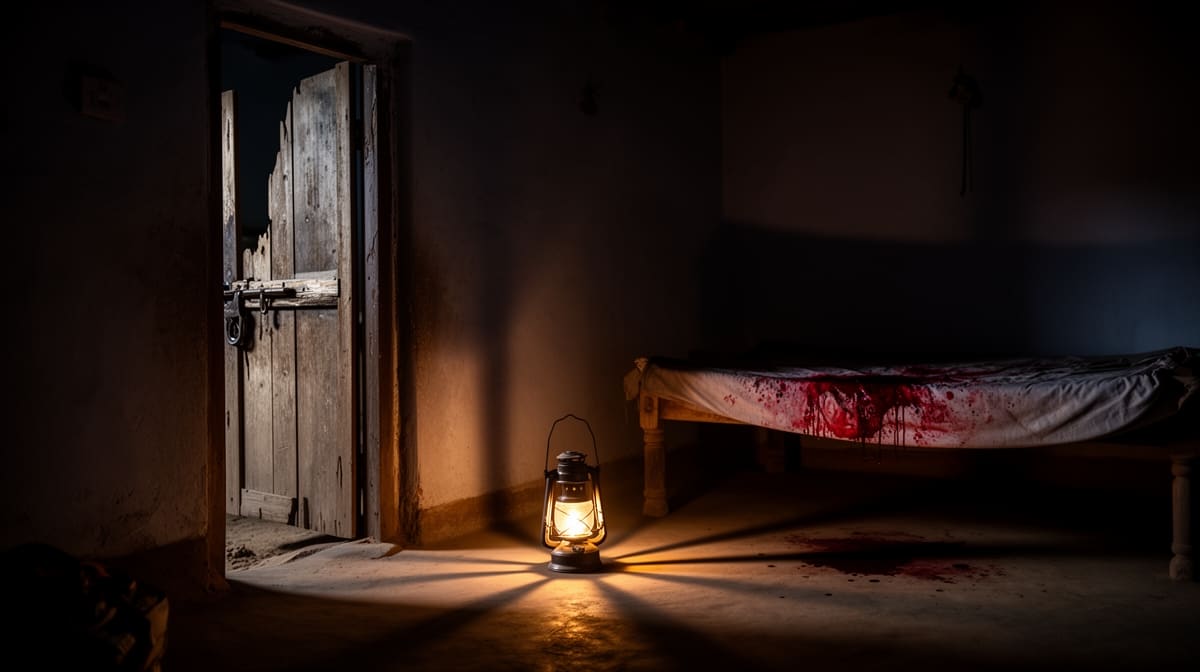
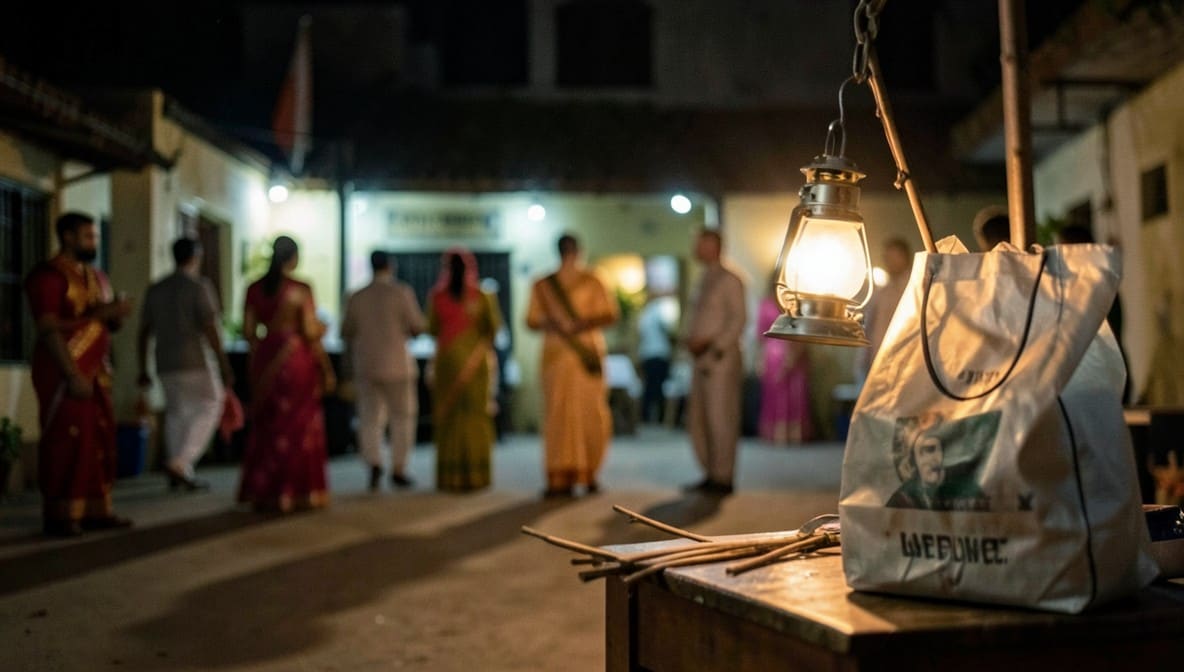
- Lekh Ram (PW5) admitted in cross-examination that the incident occurred in darkness due to a power cut.
- The accused were not known to any of the witnesses prior to the incident.
- No Test Identification Parade (TIP) was conducted by ASI Kushal Kumar (PW11) during the investigation.
- Babu Ram disowned his signature on the written complaint (Ext. PW1/A), stating it was dictated and prepared by the police.
- Tulsi Ram (PW3) admitted in cross-examination that he was not on visiting terms with the accused, raising questions about his presence at the marriage.
Procedural History
- 10.11.2009: Alleged incident occurs at 9:30 PM during a marriage in Village Paneya.
- 13.11.2009 at 4:05 PM: FIR registered with a delay of over 60 hours.
- 16.11.2009: Jagdish Kumar examined by Dr. Manjula Gupta.
- 2010 - 2012: Investigation completed; challan filed before the Trial Court.
- 17.01.2013: Judicial Magistrate First Class, Shimla, acquits all accused, citing unexplained delay in FIR, lack of TIP, weak identification, and absence of corroboration.
- 02.03.2026: Appeal heard before the High Court of Himachal Pradesh.
- 18.03.2026: Judgment reserved and delivered dismissing the appeal.
The Parties' Positions
For the State (Appellant):
- Argued that the testimonies of PW1, PW2, PW4, PW5, and PW6 were consistent and corroborated by medical evidence.
- Contended that the Trial Court erred in discarding eyewitness accounts without cogent reasoning.
- Asserted that the delay in FIR was minor and did not vitiate the case.
For the Accused (Respondents):
- Emphasized the unexplained delay in lodging the FIR.
- Highlighted the absence of TIP despite the accused being strangers to witnesses.
- Pointed out that identification was made for the first time in court during darkness.
- Noted that the complaint was disowned by the complainant and prepared by police.
- Argued that the Trial Court’s acquittal was reasonable and should not be disturbed.
Relief Sought
The State sought reversal of the acquittal, conviction of the accused under Sections 147, 148, 323, 325 and 149 IPC, and appropriate sentencing.
The Legal Issue
The central question was whether a conviction under Section 149 IPC can be sustained when the prosecution relies on dock identification by strangers to the accused, the FIR is delayed without satisfactory explanation, and no Test Identification Parade was conducted.
Arguments Presented
For the Appellant
The State contended that the testimonies of the five eyewitnesses were consistent in describing the assault and the use of sticks. It argued that the medical evidence, particularly the fracture sustained by Jagdish Kumar, corroborated the prosecution’s version. The delay in FIR, it submitted, was explained by the victim’s injuries and should not be fatal. The State relied on P. Sasikumar v. State of T.N. to argue that dock identification is admissible if corroborated by other evidence, and that the Trial Court erred in overemphasizing the absence of TIP.
For the Respondent
The accused argued that the prosecution failed to establish identity, as none of the witnesses knew them prior to the incident. The absence of TIP, they submitted, rendered dock identification inherently unreliable under P. Sasikumar and Jayan v. State of Kerala. The delay in FIR, they asserted, was unexplained and allowed for fabrication. The complaint was disowned by the complainant, and the sticks were not recovered from the scene. The omnibus statements of witnesses were legally insufficient under Pandurang v. State of Hyderabad. The Trial Court’s acquittal, they argued, was well-reasoned and should be upheld.
The Court's Analysis
The Court began by recalling the settled principle from Surendra Singh v. State of Uttarakhand and State of M.P. v. Ramveer Singh that interference with an acquittal is permissible only if the judgment is patently perverse, based on misreading of evidence, or if no reasonable person could have acquitted.
The Court found the delay in lodging the FIR to be unexplained and fatal. Babu Ram claimed he was injured and unable to file the complaint, but the MLC recorded only simple injuries with no indication of immobility. The Court cited Mehraj Singh v. State of U.P. and P Rajagopal v. State of Tamil Nadu to hold that unexplained delay invites suspicion of embellishment and fabrication. The absence of any corroborating evidence - such as a special report to the Magistrate or reference in the inquest report - further undermined the FIR’s authenticity.
The Court then examined the identification of the accused. All witnesses were strangers to the accused. The incident occurred at night during a power cut, with 200 - 300 people present. Lekh Ram (PW5) admitted the darkness made identification impossible. The Court relied on State of Himachal Pradesh v. Ram Sarup and Bollavaram Pedda Narsi Reddy v. State of A.P. to hold that in such circumstances, identification must be corroborated by a TIP. The absence of TIP was not addressed by the Investigating Officer, and the Court cited P. Sasikumar v. State of T.N. to affirm that dock identification by strangers without prior TIP is inherently suspect.
The Court further noted that the testimonies were omnibus in nature, using the phrase "accused persons" without attributing specific acts to specific individuals. Citing Pandurang v. State of Hyderabad, the Court held that such generalizations are legally inadequate for conviction.
The medical evidence was also found wanting. Dr. Anita Negi admitted the injuries could have been caused by a fall, and no patterned wounds indicative of stick blows were recorded. Jagdish Kumar’s fracture was recorded six days after the incident, with no opinion on the timing of injury. The Court concluded that the medical evidence did not conclusively support the prosecution’s version.
Finally, the Court noted that Babu Ram disowned his complaint, stating it was prepared by the police. This cast doubt on the initial version of events. Tulsi Ram’s admission of enmity further weakened his credibility.
"The identification of the accused before the court ought to have been corroborated by the previous TIP, which has not been done. The emphasis of TIP in a given case is of vital importance..."
The Court concluded that the Trial Court’s acquittal was not perverse but was based on a careful, reasonable appreciation of evidence. The prosecution failed to establish guilt beyond reasonable doubt.
The Verdict
The appeal was dismissed. The acquittal of the respondents under Sections 147, 148, 323, 325 and 149 IPC was upheld. The Court directed the respondents to furnish personal bonds of ₹25,000 each with one surety of like amount within four weeks, effective for six months, to ensure their appearance before the Supreme Court in case a Special Leave Petition is filed.
What This Means For Similar Cases
Test Identification Parade Is Mandatory for Stranger Accused
- Practitioners must insist on TIP whenever the accused are strangers to the witness, regardless of dock identification.
- Failure to conduct TIP renders dock identification legally insufficient under P. Sasikumar and Jayan.
- Courts will not accept identification in court as substantive evidence without prior parade.
Delay in FIR Must Be Satisfactorily Explained
- A delay of more than 48 hours without medical or situational justification will be viewed with suspicion.
- Mere assertion of injury is insufficient; the prosecution must prove incapacity to report immediately.
- Absence of special report or inquest reference to FIR will further weaken the case.
Omnibus Statements Are Legally Inadequate
- Witnesses must specify the role of each accused; general statements like "all accused beat him" are legally defective.
- Courts will not convict based on vague, collective allegations.
- Prosecution must establish individual participation under Section 149 IPC with particularized evidence.