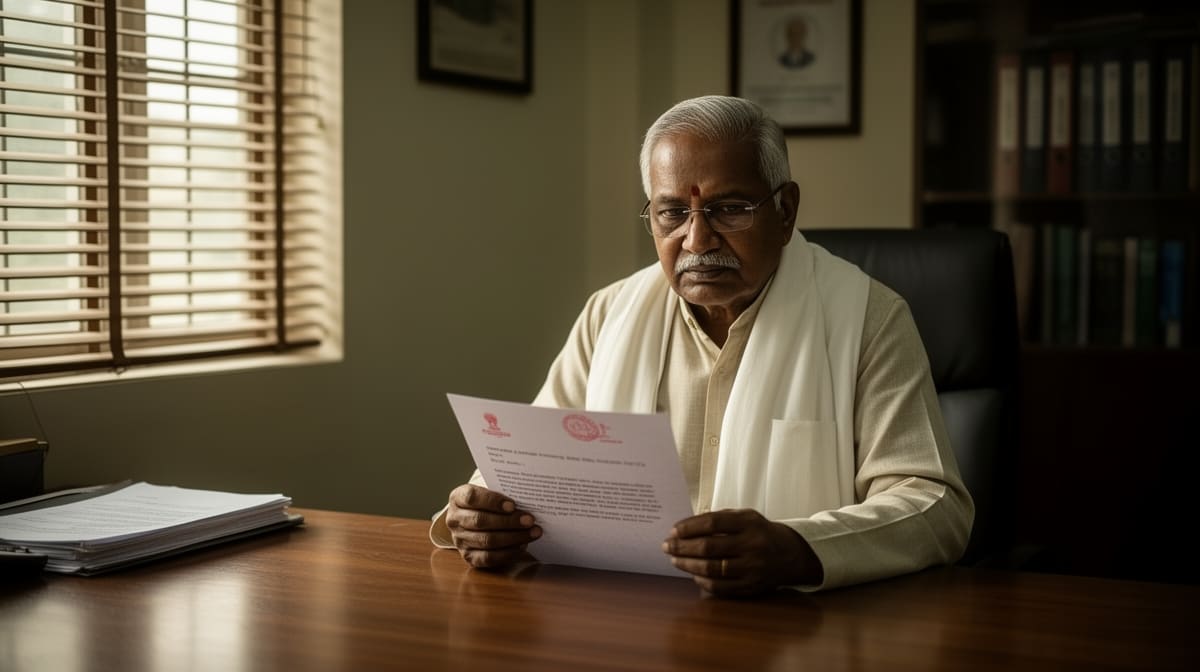
The Patna High Court has delivered a significant ruling affirming that criminal proceedings cannot be sustained where a wage dispute is improperly converted into a prosecution for criminal breach of trust, particularly when the accused is not the legal employer. This judgment reinforces the principle that courts must act as gatekeepers against the misuse of criminal process for civil disputes.
Background & Facts
The Dispute
The complaint was filed by Shambhu Prasad Nunia, a contract employee at R.D.S. College, Salamari, Katihar, alleging that the petitioner, Kewal Jha, as In-charge Principal, failed to pay him Rs. 2,500 per month for 20 months, totaling Rs. 50,000. The complainant claimed the petitioner withheld wages with "bad intention," triggering charges under Section 406 (criminal breach of trust) and Section 504 (intentional insult with intent to provoke breach of peace) of the Indian Penal Code.
Procedural History
- August 2016: Petitioner assumed charge as In-charge Principal of R.D.S. College
- March 2018: Complainant ceased employment; filed complaint alleging non-payment
- October 12, 2018: Additional Chief Judicial Magistrate-VI took cognizance and issued summons against the petitioner
- 2024: Petitioner filed Criminal Miscellaneous Application under Section 482 CrPC seeking quashing of summons and proceedings
Relief Sought
The petitioner sought quashing of the criminal proceedings on grounds that the complaint was frivolous, factually baseless, and misapplied criminal law to a civil wage dispute. He argued he was not the employer and had no personal liability for wage payments.
The Legal Issue
The central question was whether a criminal complaint under Section 406 IPC can be maintained against an individual merely because they held an administrative position at an institution, when the alleged non-payment of wages stems from institutional failure and not personal misappropriation.
Arguments Presented
For the Petitioner
The petitioner’s counsel contended that the complainant was hired by the college under an unauthorized contract, with no approval from B.N. Mandal University, as confirmed by audit reports. Payments were a statutory obligation of the institution, not the petitioner personally. He relied on Sunil Bharti Mittal v. CBI to argue that criminal proceedings must be quashed where no prima facie case exists and the complaint is an abuse of process. He emphasized that the petitioner was merely an acting principal, not the paymaster.
For the Respondent
The State, through the Additional Public Prosecutor, argued that the petitioner, as the in-charge principal, had control over college funds and therefore bore fiduciary responsibility. It was contended that failure to disburse wages despite authority constituted criminal breach of trust. No independent submission was made by the complainant, who did not appear.
The Court's Analysis
The Court undertook a rigorous examination of the complaint’s averments and the legal relationship between the parties. It noted that the complainant’s employment and wage structure were governed by the college and its affiliating university, not by the petitioner. The petitioner had no authority to sanction or disburse salaries independently.
"From the plain reading of the complaint, it is evident that the allegation is with regard to non-payment of the wages, which were to be paid to the complainant/opposite party No. 2 for his services given to the R.D.S. College, Salamari, Katihar."
The Court held that criminal breach of trust under Section 406 IPC requires a fiduciary relationship between the accused and the complainant, which was absent here. The petitioner was not the employer, nor did he hold the wages in trust. The complaint, therefore, lacked the essential ingredient of trust or dominion over property.
The Court further invoked the landmark precedent in State of Haryana v. Ch. Bhajan Lal, emphasizing that courts must intervene to quash proceedings when the complaint, even if taken at face value, discloses no offence or is manifestly frivolous. The Court concluded that the complaint was a clear case of malicious prosecution and abuse of process, designed to harass a retired official over a civil liability.
The Verdict
The petitioner succeeded. The Court held that criminal proceedings under Sections 406 and 504 IPC cannot be maintained against an administrative officer for non-payment of wages by an educational institution, where no personal fiduciary duty exists. The summons and all proceedings arising from Complaint Case No. 678 of 2018 were quashed.
What This Means For Similar Cases
Criminal Breach of Trust Requires Fiduciary Nexus
- Practitioners must challenge Section 406 IPC complaints where the accused is not the employer or paymaster
- Mere administrative control over funds does not equate to fiduciary responsibility under Section 406 IPC
- Courts must scrutinize whether the accused had actual possession or control of the disputed amount
Wage Disputes Are Civil, Not Criminal
- Non-payment of wages by institutions must be pursued through labor forums or civil suits, not criminal courts
- Filing IPC charges to pressure employers in wage disputes constitutes abuse of process
- Petitioners in similar cases may invoke Ch. Bhajan Lal to seek early quashing under Section 482 CrPC
Judicial Gatekeeping Against Frivolous Prosecutions
- Courts have a duty to prevent misuse of criminal law for civil grievances
- Summons issued mechanically without prima facie evidence must be set aside
- Audit reports and institutional records can be decisive in demonstrating absence of personal liability