The Supreme Court has reaffirmed that criminal proceedings for copyright infringement cannot be initiated on vague, unsubstantiated allegations. Where no material evidence establishes similarity between the works, and key exculpatory facts are deliberately concealed, the court must intervene to prevent abuse of process.
Background & Facts
The Dispute
The appellant, a film director and screenwriter, directed the critically acclaimed film 'Kahaani', released on 09.03.2012, for which he received the National Award for Best Screenplay in 2013. He subsequently registered the first half of the script for its sequel, titled 'Kahaani-2: Durga Rani Singh', with the Screen Writers Association (SWA) on 10.10.2013. The full script, then titled 'Karaar', was registered on 02.12.2013. The film 'Kahaani-2' was released on 02.12.2016.
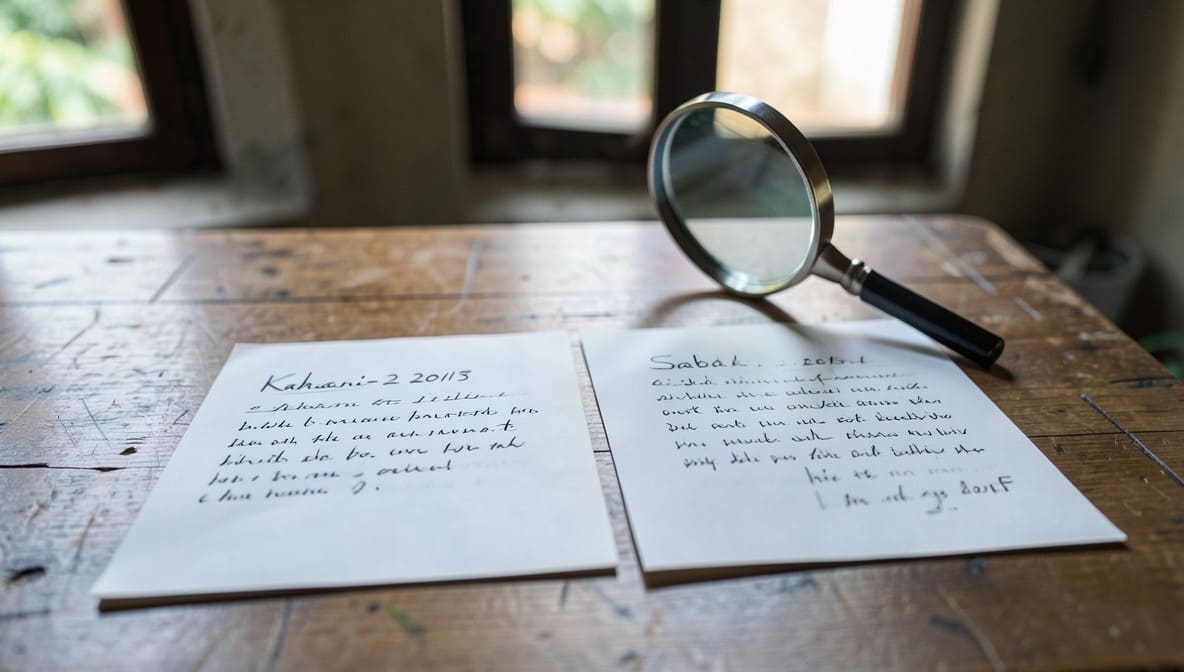
The complainant, a scriptwriter, claimed he met the appellant and one Prabhat Kumar Thakur in Mumbai on 29.06.2015 and left a copy of his script titled 'Sabak' with them for a recommendation letter. He registered his script 'Sabak' with SWA on 31.07.2015. He later alleged that 'Kahaani-2' infringed his copyright.
Key Facts
- The appellant’s screenplay for 'Kahaani-2' was first registered as synopsis under the title 'Kolkata' on 10.12.2012
- Partial script titled 'Durga Rani Singh' registered on 10.10.2013
- Full script titled 'Karaar' registered on 02.12.2013
- Complainant’s script 'Sabak' registered on 31.07.2015
- Complainant filed complaint with SWA on 23.12.2016 alleging copyright infringement
- SWA Dispute Settlement Committee, comprising experts, examined both works and issued an order dated 24.02.2018 finding no similarity and dismissing the complaint
- Complainant concealed the SWA order when filing criminal complaint before CJM, Hazaribagh
- Criminal complaint filed under Sections 63, 65, 65A of the Copyright Act, 1957 and Section 387 IPC on 23.12.2016
- Statements of complainant’s brother (Ajay Kumar Mehta) and cousin (Jai Kishore Mehta) were recorded on 07.06.2018
- No specific passages, scenes, or structural elements from 'Sabak' were identified as copied in any pleading or testimony
Procedural History
- 23.12.2016: Complaint filed with SWA alleging copyright infringement
- 24.02.2018: SWA Dispute Settlement Committee dismissed complaint, finding no similarity between works
- 23.12.2016: Criminal complaint filed before CJM, Hazaribagh (Complaint Case No. 1267 of 2017)
- 07.06.2018: CJM issued summons against appellant and co-accused, holding prima facie case under Section 63 of Copyright Act
- 22.04.2025: High Court of Jharkhand dismissed appellant’s petition under Section 482 CrPC
- 20.03.2026: Supreme Court delivered judgment allowing appeal
Relief Sought
The appellant sought quashing of the summoning order dated 07.06.2018, the High Court’s order dated 22.04.2025, and the entire criminal proceedings pending before the CJM, Hazaribagh, on grounds of abuse of process, lack of prima facie case, and suppression of material evidence.
The Legal Issue
The central question was whether a criminal complaint under the Copyright Act, 1957, can sustain a summoning order when it contains only bald allegations of copying, no specific similarities are identified, and a prior expert finding of no infringement has been deliberately concealed from the court.
Arguments Presented
For the Appellant
The appellant’s counsel argued that the complaint failed to identify any specific scene, dialogue, plot structure, or sequence from 'Sabak' that was allegedly copied in 'Kahaani-2'. The SWA expert panel’s order dated 24.02.2018, which found no similarity, was deliberately suppressed. The appellant’s script was registered over two years before the complainant’s, making infringement impossible. The proceedings were malicious and constituted abuse of process under Birla Corporation Limited v. Adventz Investments and Mohd. Wajid v. State of Uttar Pradesh.
For the Respondent
The complainant’s counsel contended that at the summoning stage, the Magistrate need only determine whether a prima facie case exists, not adjudicate the merits. The allegations in the complaint, though general, were sufficient to trigger criminal process. The High Court correctly held that veracity must be tested at trial, and Section 482 CrPC should not be used to stifle legitimate prosecution, relying on State of Haryana v. Bhajan Lal and Dhariwal Tobacco Products.
The Court's Analysis
The Court emphasized that summoning an accused is a serious step and requires the Magistrate to apply independent mind to the material on record. The order must reflect a reasoned determination that the allegations, if accepted, would constitute an offence. Here, the CJM’s summoning order contained no analysis of similarity between the works, no reference to the SWA report, and no identification of any specific copied elements.
"The complaint only contains a bald and unsubstantiated allegations and do not even prima facie disclose the similarity between the film and the script."
The Court noted that the complainant’s own witnesses failed to point to any concrete similarity. The SWA expert report, dated 24.02.2018, was decisive and predated the summoning order. Its suppression was not merely an oversight but a deliberate act undermining the integrity of the judicial process.
The Court further held that the appellant’s script was registered in 2012 and 2013, well before the complainant’s registration in July 2015. This timeline negated any plausible claim of copying. The Court observed:
"The Court owes a duty to look into many other attending circumstances emerging from the record of the case, over and above the averments... and try to read in between the lines."
The High Court erred in treating the summoning stage as a mere formality. The Court clarified that Section 482 CrPC empowers it to quash proceedings that are manifestly frivolous, vexatious, or malicious, especially when material facts are concealed.
The Verdict
The appeal is allowed. The summoning order dated 07.06.2018 passed by the Chief Judicial Magistrate, Hazaribagh, and the High Court’s order dated 22.04.2025 are quashed and set aside. The criminal proceedings in Complaint Case No. 1267 of 2017 pending before the CJM, Hazaribagh, are quashed and set aside. The appellant is granted costs of Rs. 50,000, payable by the complainant within four weeks.
What This Means For Similar Cases
Allegations Must Specify Similarity
- Practitioners must now insist that copyright infringement complaints identify specific protected elements copied - plot structure, dialogue sequences, character arcs, or scene arrangements
- Vague assertions like "the film copied my script" without detail will not suffice for summoning
Suppression of Expert Reports Is Fatal
- Concealing prior expert findings of no infringement, especially from statutory bodies like SWA, constitutes abuse of process
- Courts will treat such suppression as grounds for quashing, even if the complaint appears facially plausible
Chronology of Registration Is Critical
-
In copyright disputes, the date of registration and creation of the original work is decisive
-
If the accused’s work predates the complainant’s, the burden shifts heavily to the complainant to prove independent creation and copying
-
Always verify registration dates and prior disclosures before filing or defending copyright claims
-
Counsel must proactively obtain and submit expert reports from industry bodies before initiating or opposing criminal proceedings