The Punjab & Haryana High Court has reaffirmed that a pending appeal does not automatically stay the enforcement of a monetary award or operational directive issued by a coordinate bench. The Court found no willful disobedience in this contempt petition after respondents complied with the monetary component of the order, but preserved the petitioners’ right to enforce non-monetary directions.
Background & Facts
The Dispute
The petitioners, Ishita Sharma and another, filed CWP-20321-2023 seeking compensation for serious injuries sustained by petitioner No.1 due to negligence by authorities of Carmel Convent School, Sector 9-D, Chandigarh. The case involved systemic failures in school safety protocols, inadequate supervision, and failure to provide timely medical aid following a severe accident.
Key Facts
- Petitioner No.1, a minor student, suffered catastrophic injuries requiring amputation of an arm and long-term medical rehabilitation.
- Petitioner No.2, her parent, was jointly aggrieved by the administrative and institutional negligence.
- The State had disbursed Rs. 30,00,000/- to the petitioners under the State Disaster Response Fund prior to the judgment.
- On 29.09.2025, a Single Judge of this Court passed a detailed judgment awarding:
- Rs. 50,00,000/- compensation to petitioner No.1
- Rs. 1,00,00,000/- compensation to petitioner No.2
- Total compensation: Rs. 1,50,00,000/-, explicitly stated to be "in addition to" the Rs. 30,00,000/- already paid.
- Additional directions included:
- Full coverage of all medical expenses, including future prosthetic arm or transplantation surgery, whether in India or abroad.
- Waiver of school fees for petitioner No.1 until completion of Senior Secondary Examination.
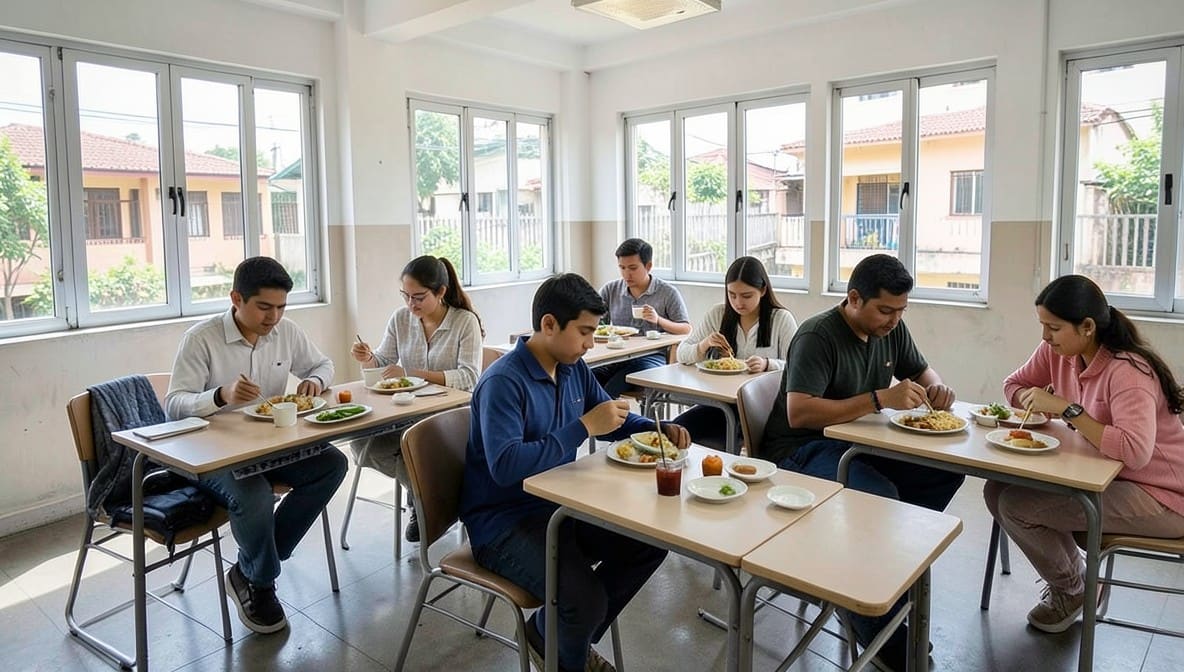
- Mandatory provision of safe, hygienic dining spaces or classroom meal consumption for all students under UT Chandigarh’s administration.
Procedural History
- 29.09.2025: Single Judge’s judgment delivered in CWP-20321-2023.
- 30.01.2026: Legal notice issued by petitioners demanding compliance with the judgment.
- 12.03.2026: Respondents filed LPA No.765-2026 against the judgment.
- 13.03.2026: Contempt petition filed (COCP-1133-2026); Court noted no stay on the judgment and directed compliance report.
- 24.03.2026: Division Bench, while admitting the LPA, ordered respondents to pay the compensation amount within two weeks, subject to final outcome of appeal, and permitted adjustment of prior payments.
- 30.03.2026: Respondents submitted draft payments of Rs. 80,00,000/- (to petitioner No.2) and Rs. 40,00,000/- (to petitioner No.1), totaling Rs. 1,20,00,000/-.
- 09.04.2026: Hearing concluded; petitioners accepted payment but sought liberty to enforce non-monetary directions.
Relief Sought
The petitioners sought initiation of contempt proceedings for non-compliance with the 29.09.2025 judgment, specifically:
- Payment of Rs. 1,50,00,000/- compensation
- Implementation of medical expense coverage under para 47(b)
- Enforcement of school fee waiver under para 47(c)
- Compliance with dining facility directive under para 47(d)
The Parties' Positions
Petitioners: Argued that the compensation of Rs. 1,50,00,000/- was distinct from the Rs. 30,00,000/- already paid and must be paid in full pending appeal, as no stay was granted. They contended that non-payment of the full amount constituted willful disobedience.
Respondents: Submitted that they had complied with the Division Bench’s order dated 24.03.2026 by paying Rs. 1,20,00,000/- (Rs. 1,50,00,000/- minus Rs. 30,00,000/- already disbursed). They emphasized that the appeal was pending and the payment was made in good faith under the Division Bench’s directive.
The Legal Issue
Can a party be held in contempt for failing to pay the full amount of compensation awarded by a Single Judge when a pending appeal has been admitted, but no stay has been granted, and the Division Bench has directed payment of the net balance subject to final outcome?
Arguments Presented
For the Petitioner
The petitioners relied on the principle that an appeal does not operate as a stay unless expressly granted under Section 5 of the Contempt of Courts Act, 1971 or by a competent court. They cited State of Haryana v. Bhajan Lal to argue that compliance with judicial orders is mandatory until stayed. They emphasized that the Division Bench’s order of 24.03.2026 did not suspend the operative part of the judgment but merely conditioned payment on the appeal’s outcome, thereby affirming the enforceability of the award.
For the Respondent
The respondents contended that the Division Bench’s order dated 24.03.2026, which directed payment of the net balance (Rs. 1,20,00,000/-) subject to adjustment, constituted a binding modification of the Single Judge’s order. They argued that compliance with this directive negated any intent to disobey and that contempt proceedings cannot be maintained where the party has acted in accordance with a higher bench’s interim direction.
The Court's Analysis
The Court examined the distinction between a stay of execution and a conditional payment direction. It noted that the Division Bench’s order dated 24.03.2026 did not stay the judgment but directed payment of the balance amount, explicitly stating that the earlier payment of Rs. 30,00,000/- would be adjustable against the final award. This, the Court held, was not a suspension of the judgment’s enforceability but an interim mechanism to ensure compliance pending appeal.
"The Division Bench’s order did not nullify the Single Judge’s directions; it merely provided a pragmatic mechanism for interim compliance. The respondents have discharged their obligation under that interim direction."
The Court further observed that the petitioners’ acceptance of the Rs. 1,20,00,000/- payment, coupled with the absence of any stay order, rendered the claim of contempt regarding compensation moot. However, the Court emphasized that the non-monetary directions under para 47(b) and (d) remained in full force and were not subject to adjustment or conditional compliance.
"Directions concerning medical care, education, and student welfare are not merely monetary awards - they are enforceable obligations rooted in the right to life and dignity under Article 21."
The Court held that while the compensation component was now satisfied per the Division Bench’s interim order, the obligations under clauses (b) and (d) of para 47 remained active and unfulfilled. The respondents’ silence on implementation of medical expense coverage and dining facility norms constituted potential future violations.
The Verdict
The contempt petition is dismissed as the respondents have complied with the monetary obligation under the Division Bench’s interim order by paying Rs. 1,20,00,000/-, adjusted against the Rs. 30,00,000/- previously disbursed. However, liberty is granted to the petitioners to file a fresh contempt petition or an application before the Division Bench to enforce the directions under para 47(b) and (d) of the judgment dated 29.09.2025, including full coverage of medical expenses for transplantation and implementation of safe dining facilities in all UT schools.
What This Means For Similar Cases
Compliance with Interim Directions Does Not Constitute Contempt
- Practitioners must distinguish between a stay order and an interim compliance direction. Payment of the net balance under a Division Bench’s order, even if subject to adjustment, satisfies the obligation pending appeal.
- Contempt cannot be initiated for non-payment of the gross award if the party has complied with the interim directive issued by a higher bench.
Non-Monetary Directives Remain Enforceable
- Directions relating to welfare, safety, education, and medical care are not contingent on the outcome of appeals.
- Failure to implement such directives - e.g., provision of medical treatment, school fee waivers, infrastructure improvements - constitutes independent grounds for contempt, even if compensation has been paid.
- Practitioners should file separate applications or contempt petitions to enforce these non-monetary obligations, as they are not extinguished by the pendency of an appeal.
Procedural Vigilance Required
- Always verify whether an appeal has been stayed. Absence of a stay order means the original judgment remains executable.
- When a higher court issues an interim direction modifying payment terms, document compliance meticulously and obtain written acknowledgment.
- Preserve all correspondence and evidence regarding implementation of non-monetary directives, as these are often overlooked but legally binding.