The Calcutta High Court has clarified that eligibility for compassionate appointment under the West Bengal Scheme for Compassionate Appointment, 2013 hinges on the date of medical declaration of permanent incapacitation, not the date of the retirement application. This ruling reinforces strict adherence to the scheme’s eligibility criteria and has significant implications for families of government employees seeking posthumous or premature compassionate appointments.
Background & Facts
The Dispute
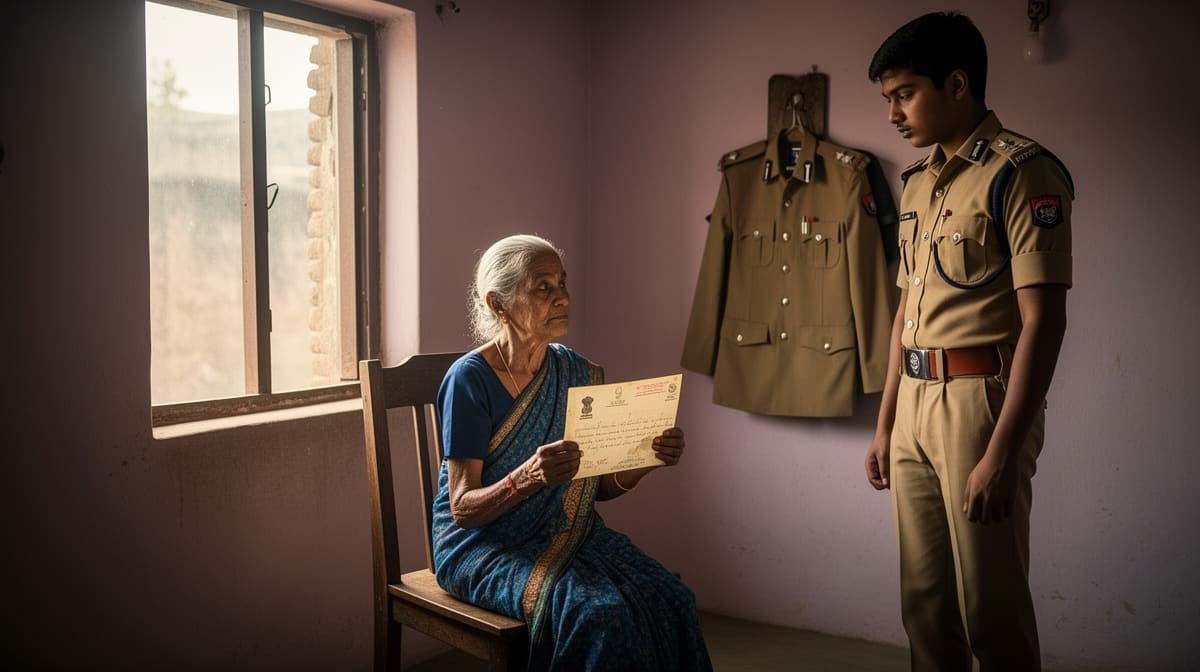
The first petitioner, Kumaresh Naskar, was employed in the judgeship of Howrah. Due to deteriorating health, he applied for premature retirement on medical grounds. His application was accepted, and he was declared permanently incapacitated by a Government-formed Medical Board. He was officially retired on November 1, 2021. The second petitioner, his son, applied for compassionate appointment under the West Bengal Scheme for Compassionate Appointment, 2013. The application was rejected because the first petitioner had less than two years of service remaining until his normal superannuation date of July 31, 2023, at the time of medical declaration.
Key Facts
- The first petitioner was employed in the judgeship of Howrah
- He applied for premature retirement on medical grounds prior to November 1, 2021
- The Medical Board declared him permanently incapacitated on a date prior to November 1, 2021
- His normal age of superannuation was July 31, 2023
- As of the date of medical declaration, he had less than two years of service remaining until superannuation
- The second petitioner, his son, applied for compassionate appointment under the West Bengal Scheme for Compassionate Appointment, 2013
- The appointment authority rejected the application on the ground of non-compliance with the two-year service tenure condition
Procedural History
- Date of medical application for premature retirement: Not specified, but acknowledged as occurring before November 1, 2021
- Date of medical declaration of permanent incapacitation: Prior to November 1, 2021
- Date of premature retirement: November 1, 2021
- Date of compassionate appointment application: Not specified, but filed after November 1, 2021
- Date of rejection of compassionate appointment: Not specified, but prior to filing of writ petition
- Date of filing of Writ Petition (WPA No. 28659 of 2023): Not specified, but heard on April 6, 2026
- Date of judgment: April 6, 2026
Relief Sought
The petitioners sought quashing of the rejection order and a direction to grant compassionate appointment to the second petitioner, arguing that the date of the retirement application, not the date of medical declaration, should be used to calculate the two-year service tenure requirement.
The Legal Issue
The central question was whether the eligibility criterion under the West Bengal Scheme for Compassionate Appointment, 2013 - requiring at least two years of service left until normal superannuation - must be assessed as of the date of the employee’s application for premature retirement or as of the date of official medical declaration and retirement.
Arguments Presented
For the Appellant/Petitioner
The petitioners contended that the date of application for premature retirement should be the reckonable date for determining eligibility under the Scheme. They argued that the employee could not control the timing of the Medical Board’s constitution or decision, and that the application date reflected the employee’s genuine intent to retire on medical grounds. They relied on principles of equity and fair play, asserting that the rigid application of the medical declaration date worked a hardship on families who had acted in good faith.
For the Respondent/State
The State maintained that the Scheme unambiguously requires assessment of the remaining service tenure as of the date the employee is officially declared permanently incapacitated and retired. The State emphasized that the Scheme is a statutory welfare measure with defined conditions, and that deviation from the prescribed criteria would undermine its uniform application and administrative clarity.
The Court's Analysis
The Court undertook a textual analysis of the West Bengal Scheme for Compassionate Appointment, 2013, and found no ambiguity in the eligibility condition. The Scheme explicitly ties eligibility to the employee’s service tenure remaining at the time of being declared permanently incapacitated - not at the time of application.
"The date of application seeking voluntary retirement is not the reckonable date in terms of the Scheme. The date on which the employee is declared medically incapacitated is the actual date which is taken into consideration to ascertain as to whether two years of service period was left for the employee prior to superannuation."
The Court rejected the petitioners’ equitable argument, noting that welfare schemes must be applied as framed by the legislature or executive, and that exceptions cannot be read into clear statutory language. It observed that the employee continued to draw salary and remain in service until the date of medical declaration, and that the administrative process of constituting the Medical Board was beyond the employee’s control - but this did not alter the legal condition prescribed by the Scheme.
The Court further held that the purpose of the two-year requirement is to ensure that compassionate appointments are granted only where the employee’s premature exit is truly unforeseen and disruptive to family finances. If the employee had more than two years left, the Scheme’s intent is preserved; if not, the financial impact is deemed insufficient to warrant the exceptional remedy of compassionate appointment.
The Verdict
The writ petition was dismissed. The Court held that the first petitioner had less than two years of service remaining as of the date of his medical declaration on November 1, 2021, and therefore, the second petitioner was ineligible for compassionate appointment under the West Bengal Scheme for Compassionate Appointment, 2013. No monetary relief or direction for appointment was granted.
What This Means For Similar Cases
Eligibility Is Fixed at Medical Declaration Date
- Practitioners must advise clients that the critical date for eligibility under the West Bengal Scheme is the date of official medical declaration of permanent incapacitation, not the date of retirement application
- Applications filed before the medical declaration are not saved by the timing of the application
- Any argument based on administrative delay in constituting the Medical Board will not override the statutory condition
No Equitable Exception to Clear Scheme Terms
- Courts will not read in equitable exceptions to welfare schemes when eligibility criteria are unambiguous
- Families must plan for the possibility that even long-term medical conditions may not qualify if the employee is close to superannuation
- Legal representations must focus on whether the medical declaration date meets the two-year threshold - not on the fairness of the outcome
Administrative Certainty Over Individual Hardship
- The judgment reinforces that welfare schemes operate on objective, quantifiable criteria to prevent arbitrariness
- Government departments are not required to make case-by-case exceptions, even where hardship is evident
- Petitioners must ensure their applications are filed within the scheme’s parameters - not rely on judicial intervention to expand eligibility