The Central Administrative Tribunal, Srinagar, has reaffirmed that a claim for compassionate appointment cannot be rejected merely because the dependent was a minor at the time of the employee’s death and applied only after attaining majority. The judgment underscores that legal incapacity during minority must not be weaponized to deny relief to families enduring prolonged financial distress.
Background & Facts
The Dispute
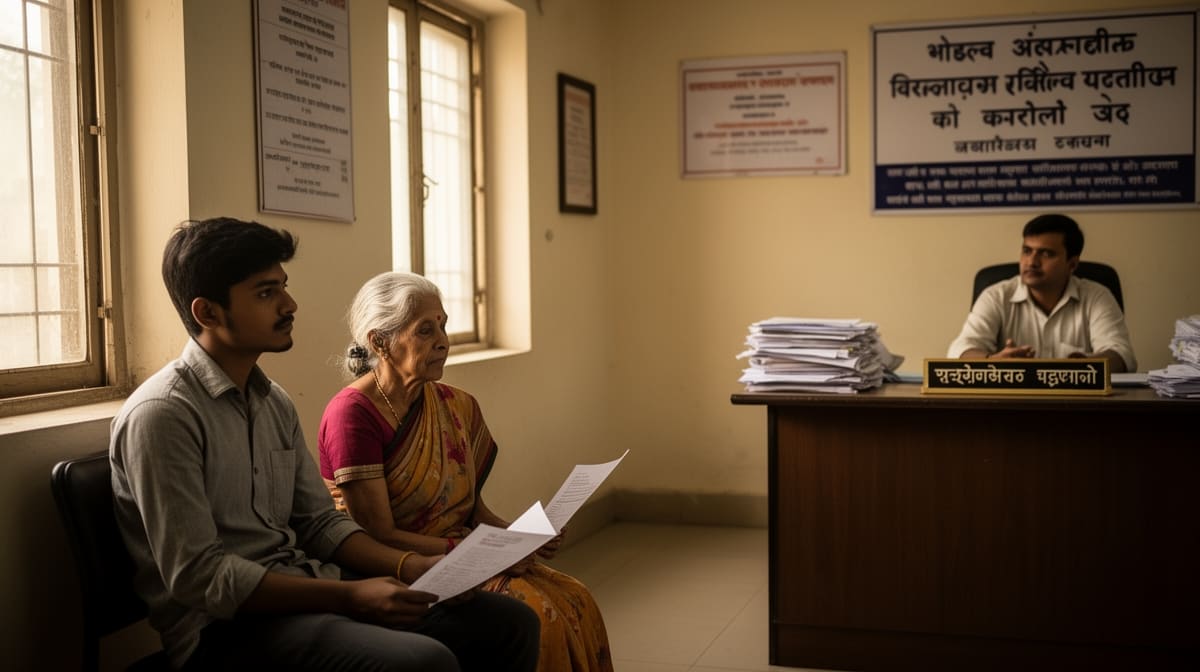
The applicant, Iram Akbar, sought compassionate appointment under the Jammu and Kashmir Compassionate Appointment Rules, 1994 (SRO 43 of 1994), following the death of her father, Mohammad Akbar Ganie, a Lecturer in the Education Department, who died in harness on 12.09.1999. At the time of his death, the applicant was five years old, born on 22.12.1995, and legally incapable of filing any application. She approached the authorities only after attaining majority in December 2013, seeking appointment on compassionate grounds. Her claim was rejected by Order No. 371-DSEK dated 29.03.2017 solely on the ground of delay exceeding the prescribed period.
Key Facts
- Father’s death in service: 12.09.1999
- Applicant’s date of birth: 22.12.1995
- Applicant attained majority: December 2013
- First formal application submitted: 31.07.2012 (via CEO Pulwama, Communication No. CEO/Pul/gaz/12/236/1820)
- High Court referral: 28.10.2015 (Administrative Department, Communication No. Edu/Legal/K/98/2015)
- Impugned rejection order: 29.03.2017
- Succession Certificate issued by District & Sessions Judge, Anantnag: 02.05.2008
- Legal Heir Certificate issued by Assistant Commissioner Revenue, Anantnag: 23.02.2014
- Income Certificate showing meagre monthly income: 23.02.2014
- Family disputes over estate resolved by civil court: 2014 - 2015
- Transfer Application filed before CAT Srinagar: 2021
- Hearing held: 27.04.2026
- Judgment pronounced: 11.05.2026
Procedural History
- 12.09.1999: Death of father in service
- 22.12.1995 - 2013: Applicant a minor; unable to apply
- 31.07.2012: First application submitted through CEO Pulwama
- 02.05.2008 & 23.02.2014: Succession and Legal Heir Certificates obtained
- 28.10.2015: Case referred by Administrative Department to Director School Education
- 29.03.2017: Rejection order passed on ground of delay
- 2021: Transfer Application filed before CAT Srinagar
- 27.04.2026: Hearing concluded
- 11.05.2026: Judgment pronounced
The Parties' Positions
Applicant’s Position: The delay was due to legal disability arising from minority. She applied immediately upon attaining majority. The family continues to suffer financial hardship, as evidenced by income and heir certificates. The authorities failed to apply Rule 4(ii) and Rule 7, which permit relaxation in deserving cases.
Respondents’ Position: Compassionate appointment is not a vested right. The claim was filed 13 years after death, far beyond the stipulated period. No vacancy can be reserved for minors. Pension and other benefits were already paid, negating continued hardship.
Relief Sought
The applicant sought quashing of the impugned order dated 29.03.2017 and a direction to reconsider her claim for compassionate appointment in accordance with law, taking into account her minority, continuing financial distress, and the relaxation provisions under SRO 43 of 1994.
The Legal Issue
The central question was whether a claim for compassionate appointment can be rejected solely on the ground of delay when the dependent was a minor at the time of the employee’s death and applied immediately upon attaining majority.
Arguments Presented
For the Appellant/Petitioner
The applicant relied on Canara Bank v. Ajith Kumar G.K., Saurabh Chourasiya v. State of Madhya Pradesh, S. Vikram Singh v. State of J&K, and R. Sridevi v. Secretary to Government to argue that delay attributable to minority cannot be treated as fatal. She emphasized that the rules contemplate relaxation under Rule 4(ii) and Rule 7, and that financial hardship persists despite receipt of pension. The authorities failed to apply a purposive interpretation and acted mechanically.
For the Respondent/State
The respondents contended that compassionate appointment is an exception, not a right, and is meant for immediate relief. The claim was stale, filed after 13 years, and no provision exists to reserve vacancies until majority. Pension and terminal benefits were already paid, indicating the family had overcome financial distress.
The Court's Analysis
The Tribunal examined the object of compassionate appointment: to provide immediate financial relief to families left destitute by the sudden death of a breadwinner. It held that rigid application of timelines defeats this purpose when the dependent is a minor.
"The doctrine of delay and stale claims cannot be mechanically invoked against a dependent who, due to legal incapacity arising out of minority, was incapable of asserting a legal claim within the prescribed period."
The Court distinguished between procedural delay and legal disability. It noted that a five-year-old child cannot be expected to file applications, nor can she meet educational qualifications before attaining majority. The Tribunal emphasized that the rules themselves provide for relaxation in deserving cases under Rule 4(ii) and Rule 7, indicating flexibility was always intended.
It further held that receipt of pension or gratuity does not ipso facto extinguish financial hardship. The family’s continued indigence, as documented by income and heir certificates, must be assessed holistically. The rejection order failed to consider any of these factors, rendering it arbitrary and violative of natural justice.
The Tribunal also cited Bilal Ahmad Dar v. Union Territory of J&K to reinforce that authorities must adopt a humane, purposive, and beneficial interpretation in cases involving minor dependents. It condemned the practice of keeping such claims pending for years and then rejecting them on technical grounds, referencing Sushma Gosain v. Union of India.
The Verdict
The applicant succeeded. The impugned order dated 29.03.2017 was set aside. The respondents were directed to reconsider the applicant’s claim afresh within eight weeks from the date of service of this order, taking into account: (i) her minority at the time of death; (ii) prompt application upon attaining majority; (iii) continuing financial hardship; (iv) applicability of Rule 4(ii) and Rule 7 of SRO 43 of 1994; and (v) binding precedents. No costs were awarded.
What This Means For Similar Cases
Minor Dependents Cannot Be Penalized for Legal Incapacity
- Practitioners must argue that delay caused by minority is not a valid ground for rejection under any compassionate appointment scheme
- Authorities must calculate limitation from the date of majority, not from the date of death
- Any rejection order that does not address minority as a legal disability is liable to be set aside
Relaxation Clauses Are Mandatory, Not Discretionary
- Rule 4(ii) and Rule 7 of SRO 43 of 1994 are not optional; they are integral to the scheme’s humanitarian purpose
- Authorities must record reasons for rejecting relaxation, not ignore it outright
- Failure to apply relaxation provisions constitutes non-application of mind and renders orders void
Financial Hardship Persists Beyond Pension Receipt
- Pension, gratuity, or retiral benefits do not conclusively prove financial stability
- Income certificates, family size, educational expenses, and medical needs must be independently assessed
- Courts will not presume economic recovery merely because terminal benefits were paid