
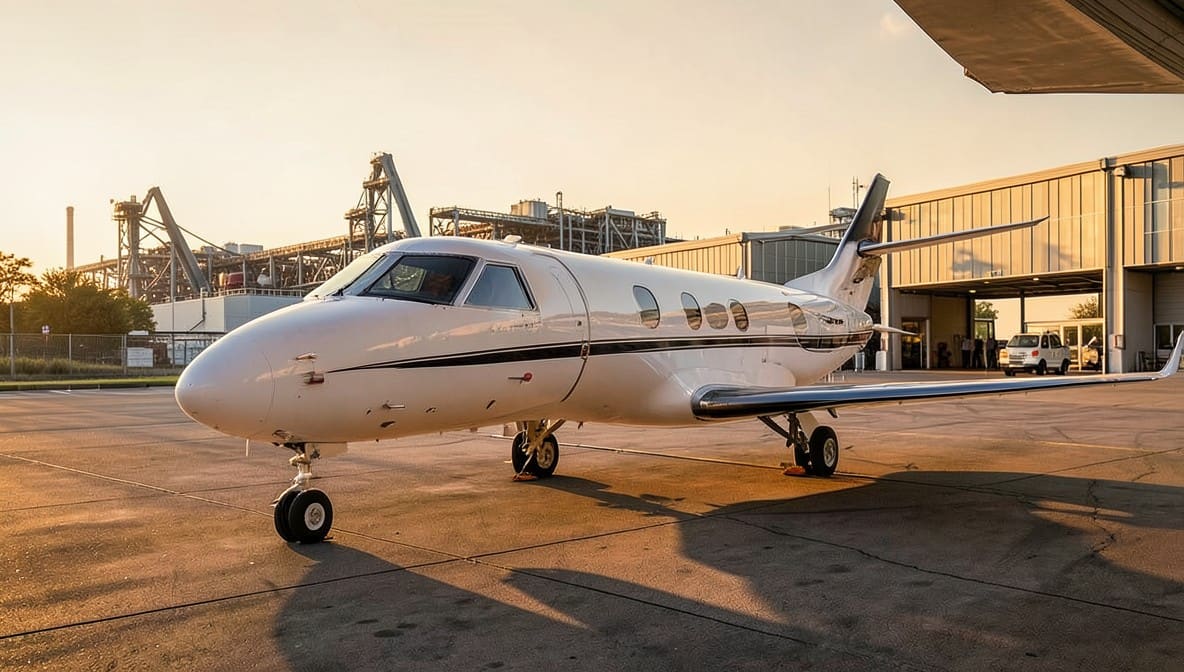
The Central Excise and Service Tax Appellate Tribunal (CESTAT) Bangalore has clarified that input service credit under the CENVAT Credit Rules, 2004 extends to aviation services used for official business travel in manufacturing enterprises, provided there is no evidence of misuse. This ruling reinforces the broad interpretation of 'input service' and sets a critical precedent for manufacturers relying on corporate air travel for operational efficiency.
Background & Facts
The Dispute
The dispute centers on whether Kalyan Jewellers India Ltd., a manufacturer and retailer of gold jewelry, was entitled to claim CENVAT credit on aviation-related services including hiring of an executive jet, aircraft running expenses, landing charges, navigation fees, pilot training, and ground handling services for the period April 2015 to June 2017. The Revenue contended these services were ineligible as they did not directly relate to the manufacture of gold jewelry and constituted personal or non-manufacturing expenses.
Key Facts
- Kalyan Jewellers India Ltd. is engaged in sourcing bullion, manufacturing gold jewelry, and distributing it through retail showrooms across India.
- The company held valid service tax registration and availed CENVAT credit on services such as:
- Hiring of a nine-seater executive jet
- Aircraft running expenses
- Landing and navigation charges
- Ground handling and airworthiness management services
- Training of pilots and cabin crew
- Invoices for all claimed services were issued in the name of the company and service tax was paid on them.
- The services were used for:
- Transporting high-value gold from the central hub in Thrissur to retail outlets nationwide
- Travel of Executive Managers and Directors to oversee operations
- Inauguration of new showrooms
- Brand ambassador events and promotional activities
- The Department initiated audit proceedings in 2021 and issued a show cause notice on 18.02.2021 for the period 01.04.2016 to 30.06.2017.
- The Adjudicating Authority denied the credit on grounds of lack of documentary proof linking services to manufacturing and invoked extended limitation under Section 73 of the Finance Act, 1994.
- Penalty equal to the demand was imposed.
Procedural History
- 18.02.2021: Show cause notice issued by Commissioner of Central Excise & Customs, Kochi.
- 18.07.2024: Order-in-Original passed by Adjudicating Authority denying CENVAT credit and imposing penalty.
- 11.07.2024: Order-in-Appeal by Commissioner (Appeals) allowing the appeal, upholding eligibility of credit and rejecting extended limitation.
- 16.10.2024: Review Order filed by Revenue challenging the Commissioner (Appeals) order.
- 28.04.2026: Hearing before CESTAT Bangalore.
- 15.07.2026: Final Order passed by CESTAT.
Relief Sought
The Revenue sought to:
- Set aside the Commissioner (Appeals) order dated 11.07.2024
- Restore the Adjudicating Authority’s order denying CENVAT credit
- Uphold the demand for recovery of ineligible credit with interest
- Sustain the penalty imposed under Section 73(1) of the Finance Act, 1994
The Parties' Positions
Appellant (Revenue): Argued that aviation services are excluded under Rule 2(l)(BA) of CENVAT Credit Rules, 2004 as they relate to motor vehicles (analogously extended to aircraft) and are not capital goods. Also alleged willful suppression of facts to evade duty.
Respondent (Kalyan Jewellers): Contended that the services were used directly or indirectly in relation to manufacturing and distribution of final products. Cited multiple tribunal precedents and emphasized absence of evidence of misuse.
The Legal Issue
Can a manufacturer claim CENVAT credit on aviation services such as hiring of an executive jet and related expenses if those services are used for business travel, transportation of high-value goods, and promotional activities, even if not directly tied to the physical production process?
Arguments Presented
For the Appellant
The Revenue relied on Rule 2(l)(BA) of the CENVAT Credit Rules, 2004, which excludes maintenance and repair services of motor vehicles not classified as capital goods. It analogously argued that aircraft hiring and running expenses fall outside the scope of 'input service' as they are not integral to manufacturing. It further alleged that the respondent suppressed the true nature of usage by failing to segregate personal from business travel, thereby invoking the extended period of limitation under Section 73(1) of the Finance Act, 1994. The Revenue cited the principle that tax benefits must be strictly construed and that absence of explicit linkage to manufacturing negates eligibility.
For the Respondent
The respondent argued that the definition of 'input service' under Rule 2(l) is inclusive and expansive, covering services used directly or indirectly in or in relation to the manufacture of final products. It cited Sanmar Foundries Ltd. v. Commissioner of Central Excise and Lakshmi Machine Works Ltd. v. Commissioner, Coimbatore, where tribunals allowed credit for helicopter and aircraft services used for managerial travel. It emphasized that invoices were in the company’s name, service tax was paid, and no evidence existed to prove personal or non-business use. It further relied on Pushpam Pharmaceuticals Co. v. UOI to argue that 'suppression of facts' requires deliberate intent with fraud or collusion, which was absent here.
The Court's Analysis
The Tribunal examined the definition of 'input service' under Rule 2(l) of the CENVAT Credit Rules, 2004, which includes services used "directly or indirectly in or in relation to the manufacture of final products." The Court noted that the definition is inclusive and not exhaustive, and that the Tribunal has consistently interpreted it broadly to encompass ancillary business activities that support manufacturing and distribution.
"I find that there is no restriction for the availment of cenvat credit on such services availed by the appellant in terms of the definition of input service as these services were used directly or indirectly and in or in relation to the manufacture of the final product."
The Court rejected the Revenue’s attempt to analogize aircraft to motor vehicles under Rule 2(l)(BA), observing that the exclusion applies specifically to motor vehicles under Chapters 8702 - 8711 and does not extend to aircraft. The Tribunal further held that the mere fact that services are used for managerial or promotional travel does not disqualify them, provided they are integral to the business operation.
The Court emphasized that the burden of proving suppression of facts lies with the Revenue, and mere non-disclosure or error in return filing does not constitute willful suppression. The Revenue failed to produce any evidence that the jet was used for personal travel, entertainment, or non-business purposes. The invoices, payment records, and business context established a prima facie link to manufacturing and distribution.
The Tribunal also affirmed the Commissioner (Appeals)’s finding that the extended period of limitation could not be invoked without proof of fraud, collusion, or willful default, as required by Pushpam Pharmaceuticals. The absence of such evidence rendered the demand under extended limitation unsustainable.
The Verdict
The appeal filed by the Revenue was dismissed. The CESTAT upheld the Commissioner (Appeals) order dated 11.07.2024, confirming that Kalyan Jewellers India Ltd. is eligible for CENVAT credit on aircraft running expenses and hiring charges of the executive jet for the period 01.04.2016 to 30.06.2017. The demand for recovery of Rs. 1,25,00,000 (approximate value based on credit availed) with interest, and the penalty of equal amount, were set aside. The Tribunal directed that no further proceedings be initiated on the same subject matter.
What This Means For Similar Cases
Input Service Definition Is Broadly Interpreted
- Practitioners can now confidently claim CENVAT credit for aviation, helicopter, or luxury transport services used for business travel by executives, managers, or brand representatives in manufacturing units.
- The definition of 'input service' under Rule 2(l) includes any service that supports the business ecosystem of manufacturing, even if not directly involved in physical production.
Evidence of Misuse Is Essential for Denial
- Revenue authorities cannot deny credit merely on suspicion or absence of detailed logs.
- Denial requires concrete evidence of personal use, diversion, or non-business purpose.
- Invoices in the company’s name and payment of service tax are sufficient prima facie proof.
Extended Limitation Requires High Threshold
-
The doctrine of 'suppression of facts' under Section 73(1) of the Finance Act, 1994 demands proof of deliberate intent to evade duty.
-
Mere errors in return filing, omission, or lack of documentation do not constitute suppression.
-
Practitioners should document business rationale for all claimed services to preempt disputes.
-
Claimants must retain invoices, travel itineraries, and internal memos linking services to business activities.
-
Tax audits should proactively classify aviation and transport services under 'input service' with clear business justification.
-
Appeals against denial of such credits should cite Sanmar Foundries, Lakshmi Machine Works, and Pushpam Pharmaceuticals as binding precedents.