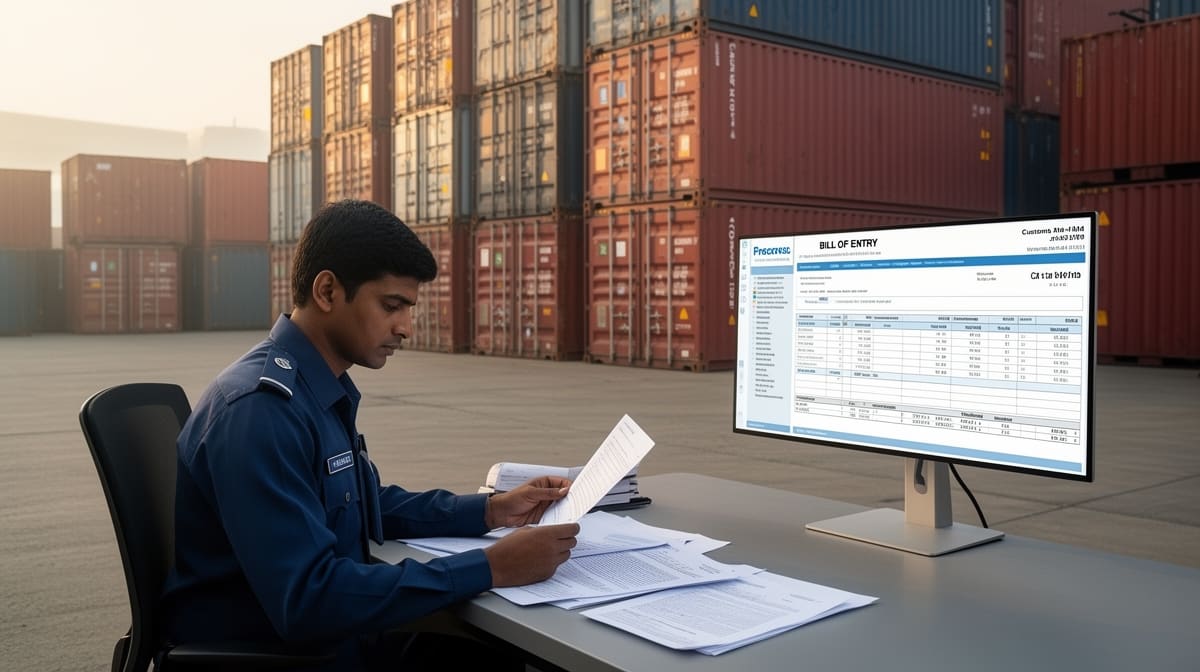
The Chennai Regional Bench of the Customs, Excise & Service Tax Appellate Tribunal has delivered a significant ruling clarifying the threshold for departmental appeals under the National Litigation Policy. The Tribunal held that when no duty or tax is in dispute, and the only quantified financial element is a penalty, that penalty alone determines whether an appeal is maintainable before CESTAT. This decision reinforces the binding nature of CBIC circulars and curtails the Revenue’s ability to litigate low-value penalty cases.
Background & Facts
The Dispute
The dispute arose from a search operation conducted by the Directorate of Revenue Intelligence on 08.10.2018 at the residence of Shri R. Kumaresan @ Mukesh and a farm owned by his spouse in Tamil Nadu. The search resulted in the seizure of exotic birds and animals, cash, bank balances, and two vehicles. The authorities alleged these items were smuggled and formed part of an illegal trade in protected wildlife. The seized items were handed over to the Arignar Anna Zoological Park, Vandalur, Chennai, for safe custody.
Key Facts
- Seizure occurred on 08.10.2018
- Seized items included exotic birds, animals, cash, bank balances, and two vehicles
- No duty or tax was assessed or quantified in the adjudication order
- The Adjudicating Authority, by Order-in-Original dated 10.12.2019, imposed:
- Absolute confiscation of seized birds, animals, cash, bank balances, and vehicles
- Penalty of Rs. 20 Lakhs under Section 112(a) of the Customs Act, 1962
- Penalty of Rs. 10 Lakhs under Section 114AA
- Total penalty imposed: Rs. 30 Lakhs
- The Respondent appealed before the Commissioner of GST & Central Excise (Appeals), Trichy
- The Commissioner (Appeals), by Order-in-Appeal dated 24.06.2024, set aside the confiscations and penalties, holding that the Revenue failed to establish smuggling
Procedural History
- 08.10.2018: Search and seizure conducted by DRI
- 10.12.2019: Order-in-Original passed by Adjudicating Authority imposing Rs. 30 Lakhs penalty and absolute confiscation
- 24.06.2024: Commissioner (Appeals) allowed Respondent’s appeal, setting aside confiscations and penalties
- 2024: Department filed Customs Appeal No. 40796 of 2024 before CESTAT Chennai
- 16.09.2025: Respondent filed Miscellaneous Application No. 40906/2025 raising issue of monetary jurisdiction
- 14.11.2025: Tribunal granted out-of-turn hearing to the appeal based on the Respondent’s applications
- 07.04.2026: Hearing held on maintainability and merits
- 16.04.2026: Final Order passed dismissing appeal on grounds of non-maintainability
The Parties' Positions
Appellant (Revenue): Argued that absolute confiscation without redemption fine equates to a revenue loss equivalent to the market value of seized goods, and that such value should be used to compute the monetary limit for appeal. Relied on judgments from the Supreme Court, Kerala, Allahabad, and Meghalaya High Courts.
Respondent (Shri R. Kumaresan): Contended that the only financial element in dispute is the penalty of Rs. 30 Lakhs, which is below the CESTAT threshold of Rs. 50 Lakhs under CBIC Instruction F.No. 390/Misc./30/2023-JC. Argued that the value of seized goods is irrelevant where no duty is in dispute.
Relief Sought
The Appellant sought to set aside the Commissioner (Appeals)’s order dated 24.06.2024 and restore the Order-in-Original dated 10.12.2019, including the confiscations and penalties. The Respondent sought dismissal of the appeal on grounds of non-maintainability.
The Legal Issue
The central question was whether the monetary limit for filing a departmental appeal before CESTAT, under CBIC Instruction F.No. 390/Misc./30/2023-JC, is determined by the penalty imposed when no duty or tax is in dispute, or whether the market value of confiscated goods must be considered.
Arguments Presented
For the Appellant
The Revenue argued that in cases of absolute confiscation, the market value of the seized goods constitutes the effective "fine" since redemption is not permitted. It contended that this value represents the total revenue impact and must be aggregated with the penalty to determine maintainability. Reliance was placed on Commissioner of Customs v. Harish Chander (2023), P.V. Rasheed (2024), Disha Tulsiani (2024), and Daleep Kumar Verma (2024), which, it claimed, supported using seizure value as the basis for jurisdiction. It further argued that the Respondent’s plea on jurisdiction was not formally raised via cross objections and was therefore dehors the record.
For the Respondent
The Respondent countered that the CBIC Instruction of 02.11.2023 explicitly states that the "determinative element" is the duty or tax under dispute, and where penalty alone is contested, it is the penalty amount that matters. He emphasized that the Rs. 30 Lakhs penalty is below the Rs. 50 Lakhs threshold. He distinguished the cited judgments on factual grounds, noting that all involved either duty assessments or notified goods under Section 123 of the Customs Act, unlike the present case involving non-notified wildlife. He also cited Commissioner of Customs v. Balaji Overseas (2024) and Manipur High Court (2025) to show that courts have consistently held that seizure value is irrelevant in the absence of duty.
The Court's Analysis
The Tribunal undertook a detailed examination of the evolution of CBIC’s monetary limit instructions from 2010 to 2023. It observed that the consistent and unambiguous language across all iterations - including the 2023 instruction - identifies the "determinative element" as the duty or tax under dispute. The 2011 instruction explicitly clarified that where penalty alone is in dispute and exceeds the limit, an appeal may be filed; conversely, if the penalty is below the limit, no appeal is permissible.
"In a case involving duty of Rs. 5 lakhs or below with equal penalty and interest, as the case may be, no appeal shall be filed in the Tribunal."
The Tribunal emphasized that the 2023 instruction did not modify this core principle - it only increased the monetary thresholds. The absence of any exception for absolute confiscation, despite its common occurrence, was deemed a deliberate policy choice by the Board to reduce litigation.
The Court rejected the Revenue’s attempt to equate absolute confiscation with a "fine" equivalent to market value, noting that such a reading would introduce an exception not contemplated in the instruction. It held that the Board, as the issuing authority, is presumed to be aware of such scenarios and chose not to include them among the three exceptions listed in Para 2 of the 2023 instruction: constitutional challenges, ultra vires notifications, and recurring classification/refund issues.
The Tribunal also dismissed the Revenue’s procedural objections, holding that jurisdictional challenges can be raised at any stage before final order, and that the Respondent had raised the issue in two prior miscellaneous applications, thereby satisfying the requirement of notice and opportunity.
The Court further affirmed the binding nature of CBIC instructions under Union of India v. Arviva Industries and Vijay Krishnaswami v. Deputy Director, Income Tax, holding that the Revenue cannot litigate contrary to its own policy directives. The Manipur High Court’s 2025 decision, which declined to read "smuggled goods" into the exceptions, was cited with approval.
The Verdict
The Revenue’s appeal was dismissed as not maintainable. The Tribunal held that the sole financial element in dispute was the penalty of Rs. 30 Lakhs, which is below the CESTAT monetary threshold of Rs. 50 Lakhs prescribed under CBIC Instruction F.No. 390/Misc./30/2023-JC. The appeal was therefore barred by the National Litigation Policy. The miscellaneous applications were disposed of as otiose. The order of the Commissioner (Appeals) dated 24.06.2024, setting aside the confiscations and penalties, stands affirmed.
What This Means For Similar Cases
Penalty Alone Determines Appeal Maintainability
- Practitioners must now assess the monetary limit for departmental appeals based solely on the penalty amount when no duty or tax is in dispute
- Market value of seized goods, even in cases of absolute confiscation, cannot be aggregated with penalty to exceed the threshold
- Revenue must refrain from filing appeals where penalty is below Rs. 50 Lakhs, regardless of the nature or value of confiscated goods
CBIC Instructions Are Binding and Non-Negotiable
- Revenue authorities cannot invoke judicial precedents to circumvent CBIC instructions
- Courts will not read implied exceptions into instructions where none are expressly stated
- Failure to comply with these instructions may expose the Revenue to allegations of bad faith litigation
Jurisdictional Objections Are Permissible at Any Stage
- A party may raise lack of monetary jurisdiction even if not formally pleaded in cross objections
- Procedural technicalities cannot override substantive jurisdictional bars under policy directives
- Tribunals have inherent power under Rule 10 of CESTAT Procedure Rules to consider jurisdictional issues sua sponte