The Madhya Pradesh High Court has reaffirmed that bail cannot be denied solely on the basis of criminal antecedents or familial association with an alleged kingpin, where no concrete evidence suggests flight risk or tampering with evidence. The judgment underscores the presumption of innocence and the necessity of individualized assessment under Section 483 of the Bharatiya Nagarik Suraksha Sanhita, 2023.
Background & Facts
The Dispute
The applicant, Mohammad Sarfaraz, is accused in Crime No. 256/2024 registered at Police Station Cantt, Jabalpur, for offences under Sections 147, 148, 149, 409, 420, 458, 365, 384, 386, 294, 323, 506, 120B, and 34 of the Indian Penal Code, 1860. The allegations stem from a fraudulent loan scheme orchestrated by his father, Abdul Razzak, and associates. The complainant, Mohammad Imran Khan, alleged that he was induced to apply for a bank loan, which was subsequently fraudulently withdrawn using blank cheques. He further alleged that on 25.12.2024, he was assaulted, abducted, and threatened by a group including Sarfaraz, to prevent him from reporting the fraud.
Key Facts
- The FIR was lodged on 26.09.2024, over nine months after the alleged incident on 25.12.2024, with no explanation for the delay.
- The complainant’s statement under Section 183 of the Bharatiya Nagarik Suraksha Sanhita did not implicate Sarfaraz in the initial fraudulent transaction.
- Sarfaraz’s alleged involvement surfaced only in connection with the incident of 25.12.2024.
- Sarfaraz was arrested on 10.11.2025 and has remained in judicial custody since.
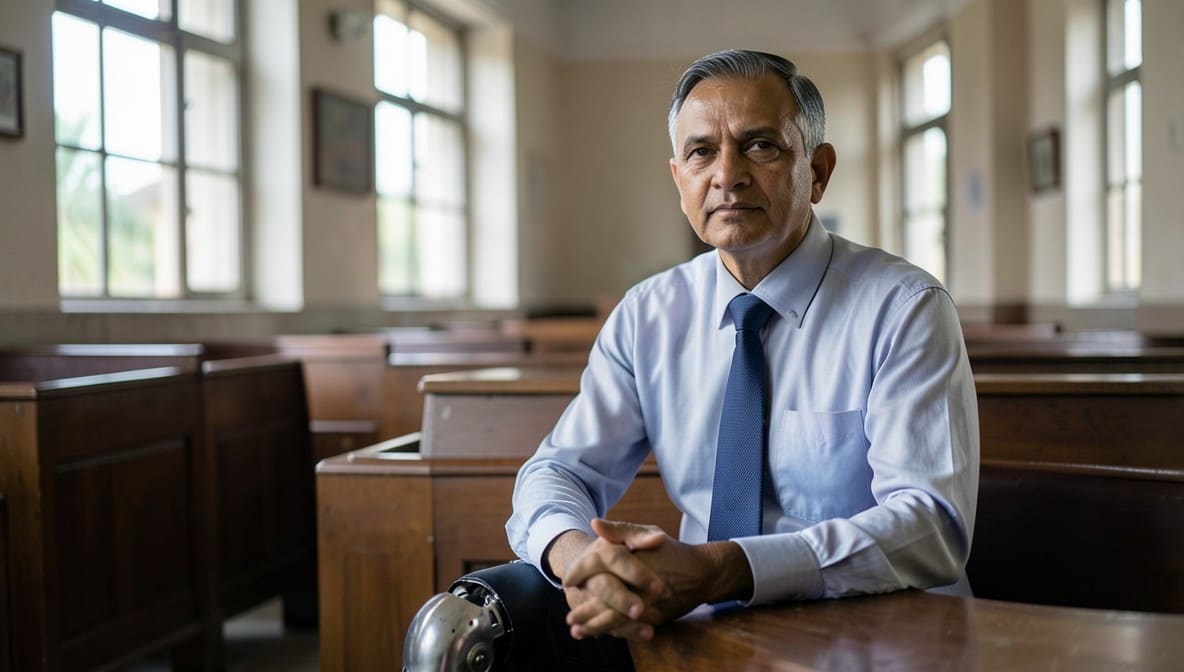
- He holds a disability certificate indicating 70% permanent locomotor disability, including amputation below the left knee and stiffness in the upper body.
- He is a businessman with established family roots and property in Jabalpur.
- He has no prior conviction; he was acquitted in Crime Nos. 200/2000 and 579/2003.
- Three pending cases (Crime Nos. 429/2021, 113/2023, 101/2024) are under investigation or trial, and he has been granted bail in all.
- He was previously arrested on 10.07.2025 in Crime Nos. 101/2024 and 374/2024, granted bail on 04.11.2024, and rearrested in the present case.
- The State alleges eight prior criminal antecedents against him since 2020.
Procedural History
- 25.12.2024: Alleged assault, abduction, and threat to complainant.
- 26.09.2024: FIR registered at Police Station Cantt, Jabalpur.
- 10.07.2025: Arrested in Crime Nos. 101/2024 and 374/2024.
- 04.11.2024: Granted bail in Crime Nos. 101/2024 and 374/2024.
- 10.11.2025: Arrested in present case (Crime No. 256/2024).
- 10.11.2025: Commenced judicial custody.
- 04.05.2026: Application for bail filed under Section 483 of BNSS, 2023.
- 04.05.2026: Judgment delivered by the High Court.
The Parties' Positions
For the Applicant
- Sarfaraz is falsely implicated due to his familial connection to Abdul Razzak.
- No evidence links him to the initial fraud or loan withdrawal.
- His disability renders him physically incapable of fleeing or intimidating witnesses.
- He has no prior conviction and has cooperated with investigations in prior cases.
- He is a settled businessman with family responsibilities and property.
- Jail incarceration is causing severe hardship to him and his dependents.
- He is ready to cooperate fully in trial proceedings.
For the Respondent/State
- Sarfaraz is an active associate of Abdul Razzak’s organized crime syndicate.
- He has eight prior criminal antecedents since 2020.
- The syndicate has a pattern of threatening witnesses and defrauding loan applicants.
- There is a real risk of witness tampering and evidence destruction.
- His repeated arrests indicate a pattern of criminal conduct.
Relief Sought
The applicant sought bail in Crime No. 256/2024, with conditions ensuring his presence in court and non-interference with the investigation.
The Legal Issue
The central question was whether Section 483 of the Bharatiya Nagarik Suraksha Sanhita, 2023 permits denial of bail solely on the basis of criminal antecedents and familial association, absent concrete evidence of flight risk or likelihood of tampering with evidence.
Arguments Presented
For the Appellant/Petitioner
The applicant’s counsel relied on the principle that bail is the rule and jail the exception, citing State of Rajasthan v. Balchand and Sanjay Chandra v. CBI. He emphasized the applicant’s physical disability, lack of prior conviction, established residence, and absence of any attempt to flee or intimidate witnesses. He argued that the delay in filing the FIR and the late emergence of the applicant’s name in the complaint undermine the prosecution’s case. He further submitted that the applicant’s cooperation in prior cases and acquittals demonstrate his willingness to face trial.
For the Respondent/State
The State contended that the applicant’s repeated involvement in criminal matters since 2020, including eight prior antecedents, establishes him as a habitual offender. It argued that his association with Abdul Razzak, a known kingpin of an organized crime syndicate, creates a high risk of witness intimidation and evidence tampering. The State relied on the nature of the offences - particularly those involving threats and abduction - to argue that bail would endanger public order and the integrity of the investigation.
The Court's Analysis
The Court examined the nature of the allegations, the applicant’s personal circumstances, and the absence of any direct evidence linking him to the core fraudulent act. It noted that the complainant’s initial statement did not implicate the applicant, and his involvement was alleged only in connection with the subsequent incident of assault and abduction.
"The veracity of prosecution and complicity of the applicant will be determined after evidence in the trial."
The Court observed that the applicant’s 70% permanent physical disability significantly curtails his mobility and capacity to flee or intimidate witnesses. It further noted his established business, family roots, and property in Jabalpur as strong indicators of stability. The Court rejected the State’s reliance on criminal antecedents alone, holding that prior arrests without conviction do not justify denial of bail where no evidence of tampering or flight risk exists.
The Court distinguished between mere association and active participation, stating that familial ties cannot substitute for proof of criminal intent or conduct. It emphasized that the burden of demonstrating a real threat to the investigation lies with the prosecution, which failed to adduce specific evidence of witness intimidation or evidence destruction.
The Court also noted that the applicant had been granted bail in three other pending cases without any breach, indicating his reliability. The delay in filing the FIR, without explanation, further weakened the prosecution’s credibility.
The Verdict
The applicant succeeded. The Court granted bail in Crime No. 256/2024 upon furnishing a personal bond of Rs. 1,00,000 and one surety of the same amount. The applicant must comply with six stringent conditions, including monthly reporting to the police station on the first Saturday of each month, no contact with witnesses, and full cooperation in trial proceedings. The bail order is effective until the conclusion of the trial and may be cancelled for breach. The trial court is directed to reproduce the conditions on the bond and ensure comprehension by the accused and surety.
What This Means For Similar Cases
Criminal Antecedents Alone Cannot Justify Bail Denial
- Practitioners must argue that prior arrests without conviction are irrelevant unless tied to specific conduct indicating flight risk or tampering.
- Courts must conduct individualized assessments under Section 483 BNSS, not apply blanket denials based on association or history.
- Disability, age, and socio-economic stability are material factors under Section 483.
Burden of Proof Lies with the Prosecution
- The State must provide concrete, case-specific evidence of witness intimidation or evidence tampering - not speculative fears.
- Generalized claims about organized crime syndicates cannot override the presumption of innocence.
- Delay in FIR registration without explanation weakens the prosecution’s case and supports bail.
Bail Conditions Must Be Tailored, Not Standardized
- Courts may impose stringent but reasonable conditions (e.g., monthly police reporting) to balance liberty and public interest.
- Conditions must be clearly explained and documented on bonds, with certification if the accused cannot read.
- Bail orders must specify their duration and consequences of breach.