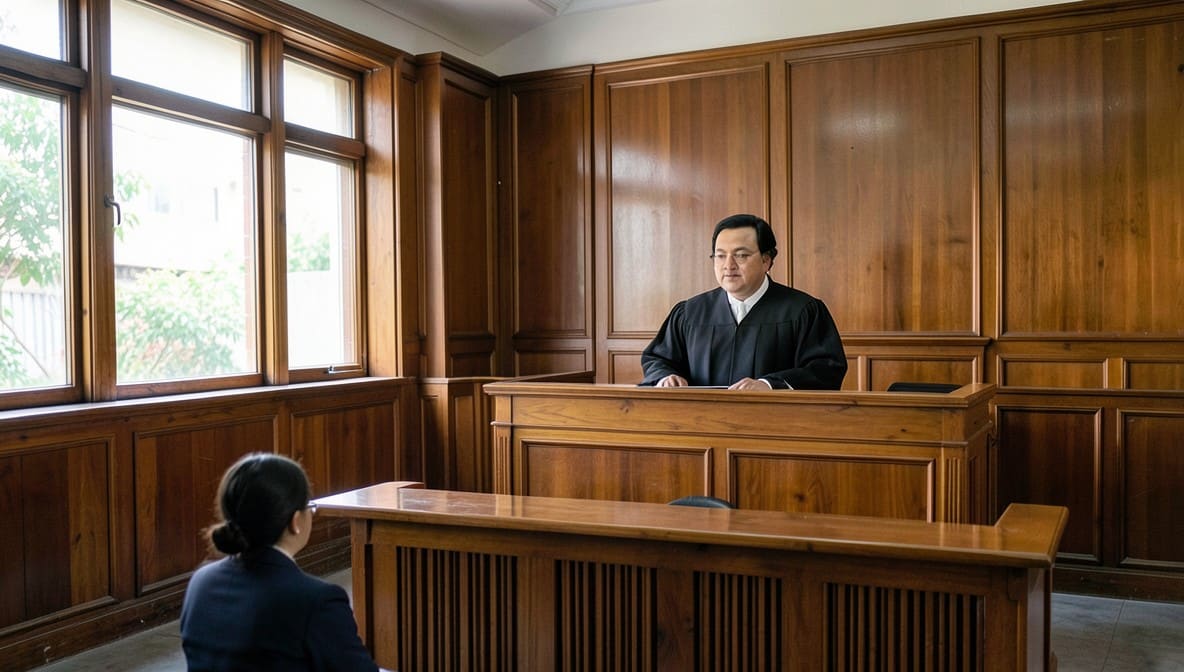
The Allahabad High Court has affirmed that the right to a pre-cognizance hearing under Section 223 of the Bharatiya Nagarik Suraksha Sanhita, 2023 is non-negotiable, even in cases initiated by complaint under the Narcotic Drugs and Psychotropic Substances Act. This ruling reinforces procedural fairness as a foundational element of criminal jurisprudence, particularly where special statutes permit complaint-based initiation of proceedings.
Background & Facts
The Dispute
The applicant, accused in Sessions Case No. 1078 of 2025, was subjected to a complaint-based prosecution under Sections 8(c), 20, 27A and 29 of the Narcotic Drugs and Psychotropic Substances Act, 1985, initiated by the Narcotics Control Bureau (NCB). The Special Judge, NDPS Act, Lucknow, took cognizance of the offence on 14.07.2025 without affording the applicant any opportunity to be heard prior to the order.
Key Facts
- The complaint was filed by the NCB on 14.07.2025, after the Bharatiya Nagarik Suraksha Sanhita, 2023 (BNSS) came into force on 01.07.2024.
- Section 36A(1)(d) of the NDPS Act permits a Special Court to take cognizance upon complaint by an authorized officer of the Central Government, without prior commitment for trial.
- The cognizance order dated 14.07.2025 contained the Hindi phrase "सुना तथा पिरवाद के साथ संलग्न समस्त प्रपत्रों का अवलोकन िकया", which translates to "listened and examined all documents attached" - but does not indicate any hearing was granted to the accused.
- No record exists of the applicant being called upon to file objections, make submissions, or otherwise participate before cognizance was taken.
- The applicant was remanded on the same date as cognizance was taken, 14.07.2025.
- Charges were framed on 08.08.2025, but no challenge was made to the cognizance order prior to that stage.
Procedural History
- 14.07.2025: NCB filed complaint; Special Judge took cognizance without hearing the accused.
- 14.07.2025: Applicant remanded in custody.
- 08.08.2025: Charges framed by the Special Judge.
- 18.04.2026: Application under Section 528 BNSS filed before the Allahabad High Court seeking setting aside of the cognizance order.
- 19.05.2026: Hearing concluded before Justice Brij Raj Singh.
The Parties' Positions
Applicant: Argued that Section 223(1) BNSS, which came into force on 01.07.2024, mandates that no court shall take cognizance of an offence on complaint without affording the accused an opportunity to be heard. The first proviso is mandatory, not directory. Relied on Kushal Kumar Agarwal v. Enforcement Directorate, Pushpraj Bajaj v. Union of India, and Tutu Ghosh v. Enforcement Directorate to establish that this requirement applies to complaints under special laws like NDPS Act.
Respondent (NCB): Contended that the phrase "सुना तथा पिरवाद के साथ संलग्न समस्त प्रपत्रों का अवलोकन िकया" indicates that the court had heard the matter. Argued that the applicant had ample opportunity to challenge the cognizance order before charges were framed on 08.08.2025, and his failure to do so waives any procedural defect.
Relief Sought
The applicant sought:
- Setting aside of the cognizance order dated 14.07.2025.
- Quashing of the entire proceedings in Sessions Case No. 1078 of 2025 (later withdrawn in part).
- Direction to the Special Judge to afford a pre-cognizance hearing in accordance with Section 223(1) BNSS.
The Legal Issue
The central question was whether Section 223(1) of the Bharatiya Nagarik Suraksha Sanhita, 2023 requires a Magistrate or Special Court to afford the accused an opportunity of hearing before taking cognizance of an offence based on a complaint under the NDPS Act, despite the special provisions in Section 36A(1)(d) permitting cognizance without commitment.
Arguments Presented
For the Appellant/Petitioner
The applicant’s counsel argued that Section 223(1) BNSS is a mandatory procedural safeguard applicable to all complaint-based proceedings, including those under special laws like the NDPS Act. Citing Kushal Kumar Agarwal, the counsel emphasized that the Supreme Court has held that Chapter XVI of BNSS (Sections 223 - 226) applies to complaints under Section 44(1)(b) of the PMLA, which is structurally identical to Section 36A(1)(d) of the NDPS Act. The Calcutta High Court in Tutu Ghosh held that violation of the first proviso to Section 223 vitiates the cognizance order outright, without requiring the accused to prove prejudice. The absence of explicit exclusion of special law complaints in Section 223 means the proviso applies universally.
For the Respondent/State
The NCB’s counsel contended that the phrase in the cognizance order, though in Hindi, indicates that the court had examined the complaint and documents, which constitutes sufficient "hearing." It was further argued that the applicant had the opportunity to challenge the cognizance order before charges were framed and failed to do so, thereby acquiescing to the procedure. The counsel relied on the doctrine of waiver and sought to distinguish the matter from Tutu Ghosh, arguing that the court’s review of documents amounted to an implicit hearing.
The Court's Analysis
The Court undertook a detailed textual and comparative analysis of Section 223(1) BNSS and Section 36A(1)(d) NDPS. It noted that while Section 36A(1)(d) permits a Special Court to take cognizance without commitment, it does not override the procedural mandate of BNSS. The Court held that the two provisions operate in tandem: the special law governs the source of cognizance (complaint vs. charge sheet), while BNSS governs the procedure for taking cognizance.
"The denial of the right of prior hearing, as enumerated in the first proviso to Section 223 of the BNSS, is sufficient to vitiate the order taking cognizance, without any further requirement on the part of the accused to prove prejudice and/or miscarriage of justice."
The Court relied on the reasoning in Tutu Ghosh, which held that the absence of the words "including any complaint filed by a person authorised under Special Law" in Section 223 does not exclude its application to special law complaints. The Court further rejected the NCB’s argument that the Hindi phrase "सुना तथा..." equated to a hearing. It observed that "examining documents" is not equivalent to affording the accused an opportunity to file objections, present submissions, or contest the prima facie case. The phrase lacks any indication of the accused being summoned, heard, or given a chance to respond.
The Court also dismissed the argument of waiver, noting that procedural rights under BNSS are not subject to waiver by silence or inaction, especially when the violation occurs at the threshold stage of initiating criminal proceedings. The Court emphasized that the right to be heard before being formally accused is a fundamental aspect of natural justice, now codified in BNSS.
The Verdict
The application was allowed. The cognizance order dated 14.07.2025 is set aside. The applicant is directed to appear before the Special Judge, NDPS Act, Lucknow, on 29.05.2026, along with any objections. The Special Judge shall afford the applicant a full opportunity of hearing in accordance with the first proviso to Section 223(1) BNSS before passing any order on cognizance. The proceedings shall proceed only after compliance with this mandatory procedural requirement.
What This Means For Similar Cases
Pre-Cognizance Hearing Is Non-Negotiable
- Practitioners must now treat the first proviso to Section 223 BNSS as a mandatory condition precedent in all complaint-based prosecutions, including under NDPS, PMLA, and other special laws.
- Any cognizance order passed without recording that the accused was heard is void ab initio and subject to immediate challenge under Section 528 BNSS.
Special Laws Do Not Override BNSS Procedure
- Statutes like NDPS Act or PMLA that permit cognizance without commitment do not exempt courts from complying with BNSS procedural safeguards.
- Courts must now explicitly record in writing that the accused was given an opportunity to file objections before cognizance is taken.
Waiver Cannot Cure Procedural Defects at Threshold
-
Failure to challenge a cognizance order before framing of charges does not validate a procedurally defective order.
-
The right to pre-cognizance hearing is a substantive right, not a formality, and cannot be waived by silence or delay.
-
Always file a Section 528 BNSS application immediately upon discovering a cognizance order without recorded hearing.
-
In pleadings, cite Tutu Ghosh v. Enforcement Directorate and Kushal Kumar Agarwal to establish that prejudice need not be proved.
-
Draft objections to cognizance orders with explicit reference to the absence of hearing under Section 223(1) proviso.