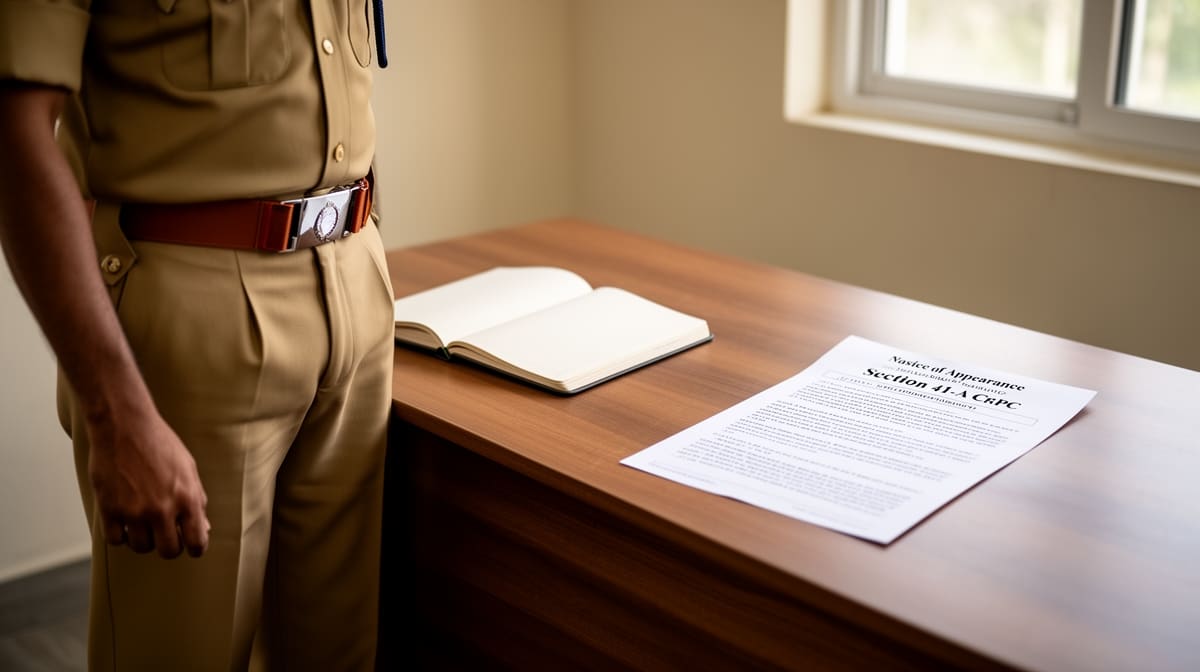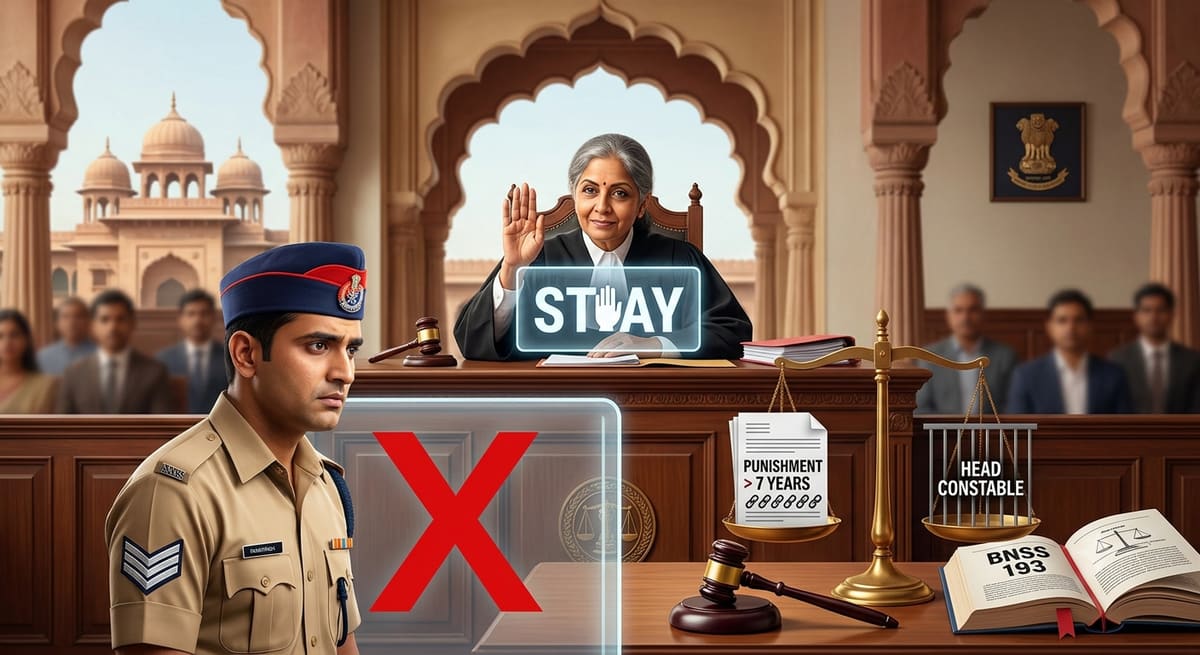
In a significant order addressing the competence of investigating officers under the Bharatiya Nyaya Sanhita (BNS), the Rajasthan High Court has raised critical questions about the authority of a Head Constable to investigate offences punishable with imprisonment exceeding seven years. The Court issued notice and stayed the criminal trial pending before the Additional Sessions Judge, Jodhpur, highlighting the need for clarity on procedural compliance in criminal investigations under the new legal framework.
Background & Facts
The Dispute
The petitioners, Mohan Ram, Deva Ram, and Girdhari Ram, residents of Mornavada, Khedapa, District Jodhpur, are accused in FIR No. 167/2024 dated 24.07.2024, lodged at Police Station Khedapa. The FIR alleges offences under multiple provisions of the Bharatiya Nyaya Sanhita (BNS), including Sections 189(2), 190, 324(5), 115(2), 307, 329(3), 118(1), 118(2), 117(2), and 109. Several of these offences carry penalties extending beyond ten years of imprisonment.
Key Facts
24.07.2024: FIR No. 167/2024 registered at Police Station Khedapa, alleging serious offences under the BNS
Investigation Conducted By: Head Constable of Police Station Khedapa
Chargesheet Filed Under: Section 193 of the Bharatiya Nagarik Suraksha Sanhita (BNSS)
Offences Alleged: Multiple provisions of the BNS, including Section 307 (attempt to murder), which carries imprisonment for life or up to ten years
Pending Trial: Criminal Case No. 96/24 (Sessions Case No. 20/24) before the Additional Sessions Judge, Jodhpur
Procedural History
24.07.2024: FIR lodged at Police Station Khedapa
Investigation Period: Conducted by Head Constable, culminating in a chargesheet under Section 193 BNSS
Filing of Chargesheet: Details of submission date not specified, but trial initiated before Additional Sessions Judge, Jodhpur
01.07.2026: S.B. Criminal Revision Petition No. 701/2026 filed before the Rajasthan High Court, Jodhpur Bench
01.07.2026: High Court issues notice to respondents and stays the trial pending further orders
The Parties' Positions
For the Petitioners
The petitioners contended that a Head Constable is not competent to investigate offences punishable with imprisonment of seven years or more under the BNSS. They argued that the investigation in this case, which involves offences carrying penalties beyond ten years, was conducted in violation of procedural norms and should have been handled by an officer superior in rank to a Head Constable.
For the Respondents
The State, represented by the Public Prosecutor, accepted notice, while notice was issued to the second respondent, Om Prakash, the complainant. No counter-arguments were presented at this stage, as the matter was listed for consideration of the stay application.
Relief Sought
The petitioners sought the following reliefs:
Quashing of the chargesheet filed by the Head Constable
Stay of the criminal trial pending before the Additional Sessions Judge, Jodhpur
Directions to ensure compliance with the procedural requirements under the BNSS for investigation of serious offences
The Legal Issue
The central legal question before the Court was whether a Head Constable is competent to investigate offences under the Bharatiya Nyaya Sanhita (BNS) that are punishable with imprisonment exceeding seven years, particularly when such offences are triable by a Court of Session. The Court was called upon to interpret the provisions of the Bharatiya Nagarik Suraksha Sanhita (BNSS) regarding the hierarchy of investigating officers and their authority to handle serious criminal cases.
Arguments Presented
For the Petitioner
Learned counsel for the petitioners argued that the BNSS prescribes a hierarchy of investigating officers, and a Head Constable lacks the authority to investigate offences punishable with imprisonment beyond seven years. Relying on the scheme of the BNSS, the counsel submitted that such investigations must be conducted by an officer of a rank superior to that of a Head Constable. The counsel emphasized that the offences alleged in the FIR, including Section 307 BNS (attempt to murder), carry penalties extending beyond ten years, making the investigation by a Head Constable procedurally invalid.
For the Respondent
At this stage, the State, through the Public Prosecutor, did not present any counter-arguments, as the matter was adjourned for consideration of the stay application. The second respondent, Om Prakash, was yet to be served with notice.
The Court's Analysis
The Court observed that the petitioners' contention regarding the competence of the investigating officer raises a substantial question of law under the BNSS. While the Court did not deliver a final determination, it acknowledged the gravity of the issue and the potential implications for criminal procedure under the new legal framework.
The Court noted that the BNSS, which replaced the Code of Criminal Procedure (CrPC), 1973, introduces significant changes to the investigation and trial process. The Court emphasized the need to examine whether the hierarchy of investigating officers under the BNSS aligns with the severity of the offences alleged. Specifically, the Court considered whether a Head Constable is empowered to investigate offences triable by a Court of Session, which typically involve serious crimes punishable with imprisonment beyond seven years.
"Learned counsel for the petitioners submitted that a Head Constable of Police Department is not competent to investigate offences punishable with imprisonment for seven years or more. He submitted that in the present case, Head Constable of P.S. Khedapa after conducting investigation in relation to the FIR No.167/2024 dated 24.07.2024 lodged at Police Station Khedapa has submitted police report (challan) under Section 193 of BNSS against the petitioners-accused persons for the offences punishable under Sections 189(2), 190, 324(5), 115(2), 307, 329(3), 118(1), 118(2), 117(2) and 109 BNS. Learned counsel submitted that the offences are punishable with imprisonment extending beyond ten years and, therefore, the investigation ought to have been conducted by the officer superior to the rank of Head Constable. The matter requires consideration."
The Court, while refraining from a conclusive finding at this stage, recognized the potential procedural irregularity and the need for a detailed examination of the BNSS provisions governing the competence of investigating officers. The Court's decision to issue notice and stay the trial underscores the significance of the issue and the necessity for clarity in the application of the new criminal procedure code.
The Verdict
The Rajasthan High Court issued notice to the respondents and stayed the criminal trial pending before the Additional Sessions Judge, Jodhpur, in Criminal Case No. 96/24 (Sessions Case No. 20/24). The Court directed that the trial shall remain stayed till further orders, pending consideration of the revision petition. No final determination on the merits was made at this stage, but the Court acknowledged the substantial question of law regarding the competence of the investigating officer under the BNSS.
What This Means For Similar Cases
Competence of Investigating Officers Under BNSS
This case raises critical questions about the hierarchy of investigating officers under the Bharatiya Nagarik Suraksha Sanhita (BNSS). Practitioners must now:
Scrutinize the rank of the investigating officer in cases involving serious offences punishable with imprisonment beyond seven years
Challenge chargesheets filed by incompetent officers, particularly in cases triable by a Court of Session
Argue for procedural compliance under the BNSS, emphasizing that investigations for serious offences must be conducted by officers of appropriate rank
Implications for Criminal Trials
Trial Stay: Courts may stay trials where investigations are conducted by officers lacking competence, pending resolution of procedural challenges
Remedial Measures: Accused persons may seek quashing of chargesheets or reinvestigation by competent officers
Precedential Value: This case could set a precedent for interpreting the BNSS provisions on investigating officers, influencing future criminal proceedings
Practical Takeaways for Legal Practitioners
File Revision Petitions: Where investigations are conducted by incompetent officers, file revision petitions challenging the procedural validity
Highlight Offence Severity: Emphasize the punishment prescribed for the offences to argue for the necessity of a higher-ranking investigating officer
Monitor Legislative Clarity: Advocate for clearer guidelines under the BNSS to prevent procedural irregularities in criminal investigations