The Gauhati High Court has clarified that the right to default bail under the Bharatiya Nagarik Suraksha Sanhita, 2023, is extinguished upon timely filing of the charge sheet, even if cognizance is taken after the statutory period expires. The judgment affirms that judicial acknowledgment of charge sheet submission - through an order recording its presentation - is sufficient compliance, rejecting the notion that magistrate initials or formal registration are mandatory.
Background & Facts
The Dispute
The petitioner, Babna Mahato alias Baban, was arrested on 16.10.2025 in connection with a POCSO case involving the sexual assault of a 15-year-old girl. The incident occurred on 14.10.2025, when the victim was abducted by auto drivers in Tinsukia, Assam, and subjected to repeated sexual violence. The complainant, Smti. Dipthi Handique Pradhan, lodged an FIR at Tinsukia Police Station on 15.10.2025. The case was registered as Tinsukia P.S. Case No. 378/2025 under Section 6 of the Protection of Children from Sexual Offences Act, 2012, read with Sections 64(2), 65, and 70(2) of the Bharatiya Nagarik Suraksha Sanhita, 2023 (BNS).
Key Facts
- The victim was found crying near Tinsukia Police Station on the morning of 15.10.2025
- The petitioner was arrested on 16.10.2025 and produced before the Special Judge, POCSO, Tinsukia, on the same day
- He was remanded to judicial custody on 16.10.2025
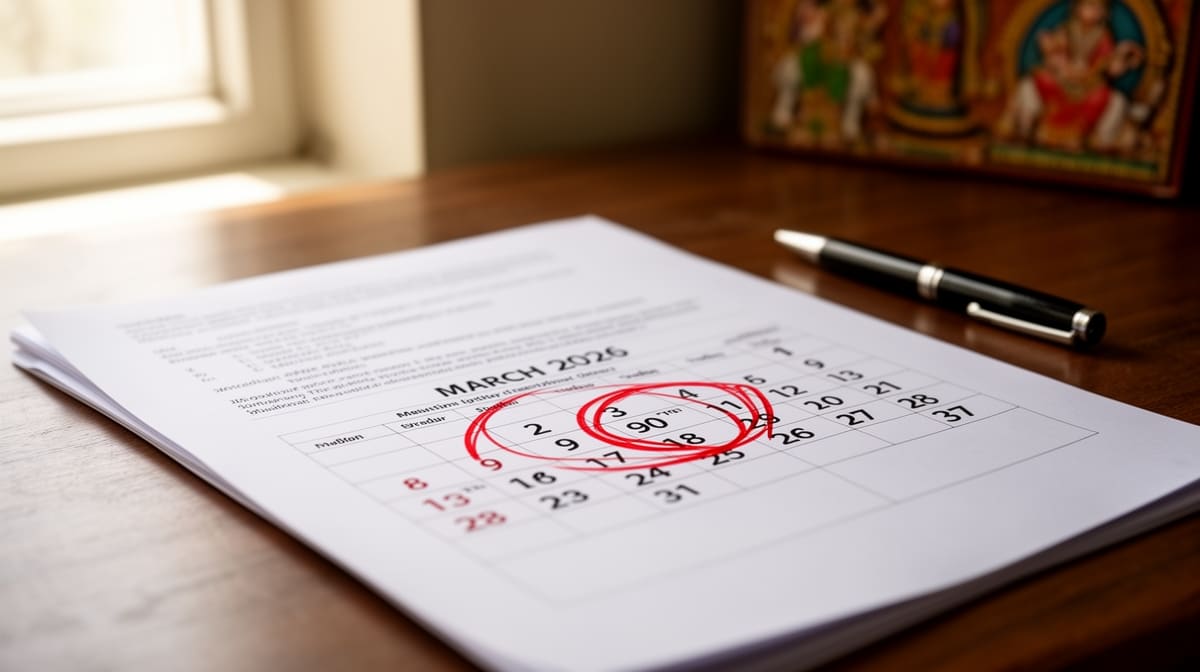
- The statutory period for completion of investigation and filing of charge sheet under Section 187(3) of the BNSS (corresponding to Section 167(2) CrPC) is 90 days for offences punishable with 10 years or more imprisonment
- The 90-day period expired on 14.01.2026
- The charge sheet was filed in the office of the Special Judge on 30.11.2025
- On 08.01.2026, the court passed an order stating: "The I.O. of the case has already submitted charge sheet against the accused persons... Fixed 22.01.2026 for production of the accused persons/N.O on charge sheet."
- Cognizance of the offence was taken on 04.02.2026
- The petitioner applied for default bail on 15.01.2026, arguing that the charge sheet was not "effectively submitted" until cognizance was taken on 04.02.2026
Procedural History
- 14.10.2025: Alleged sexual assault of minor victim
- 15.10.2025: FIR lodged at Tinsukia Police Station
- 16.10.2025: Petitioner arrested and remanded to judicial custody
- 30.11.2025: Charge sheet filed in the office of the Special Judge, POCSO, Tinsukia
- 08.01.2026: Court order recorded: "I.O. has submitted charge sheet"; accused remanded till 22.01.2026
- 14.01.2026: Statutory 90-day period expired
- 15.01.2026: Petitioner applied for default bail
- 04.02.2026: Cognizance taken by the Special Judge
- 22.04.2026: Hearing held before Justice Sanjeev Kumar Sharma
- 30.04.2026: Judgment pronounced dismissing bail application
Relief Sought
The petitioner sought default bail under Section 187(3) of the BNSS, arguing that since cognizance was taken after 14.01.2026, the charge sheet was not effectively submitted within the statutory period, thereby entitling him to release on default bail.
The Legal Issue
The central question was whether the filing of a charge sheet in the court’s office within the statutory period, followed by judicial acknowledgment via an order recording its presentation, constitutes sufficient compliance under Section 187(3) of the BNSS to extinguish the right to default bail, or whether cognizance must be taken within the statutory period for the right to be defeated.
Arguments Presented
For the Petitioner
The petitioner’s counsel relied on Samsun Noor Alias Samsul Noor v. State of Assam (2022) 5 GLT 405, arguing that under Section 173(2) CrPC and Rule 38 and 69 of the Assam Police Manual, the charge sheet is only deemed submitted when the Magistrate initials it and records it in the register. Since no such initials appeared on the charge sheet and cognizance was taken on 04.02.2026 - after the 90-day period expired - the petitioner was entitled to default bail. He contended that the mere filing in the office without judicial acknowledgment did not satisfy statutory requirements.
For the Respondent
The Additional Public Prosecutor relied on Suresh Kumar Bhikamchand Jain v. State of Maharashtra (2013) 3 SCC 77 and SFIO v. Rahul Modi (2023) 15 SCC 311, asserting that once the charge sheet is filed within the statutory period, the right to default bail is extinguished, regardless of when cognizance is taken. He emphasized that the court’s order dated 08.01.2026, which explicitly recorded the submission of the charge sheet, constituted valid proof of compliance under Section 193(3)(i) of the BNSS. The submission of the charge sheet, not its cognizance, is the decisive event under Section 187(3).
The Court's Analysis
The Court undertook a detailed examination of the statutory framework under Section 187(3) of the BNSS, which mirrors Section 167(2) CrPC, and the jurisprudence developed by the Supreme Court. It noted that the purpose of the statutory period is to prevent prolonged detention without trial, and that the filing of the charge sheet signifies the completion of investigation, thereby triggering the next stage of the criminal process.
"The scheme of CrPC is such that once the investigation stage is completed, the court proceeds to the next stage, which is the taking of cognizance and trial. An accused has to remain in custody of some court. During the period of investigation, the accused is under the custody of the Magistrate... In the event, an investigating authority fails to file the charge-sheet within the stipulated period, the accused is entitled to be released on statutory bail."
The Court held that the decision in Samsun Noor was distinguishable because it dealt with a situation where no judicial order recorded the submission of the charge sheet, and the court relied on executive guidelines under the Assam Police Manual. In the present case, the order dated 08.01.2026 explicitly recorded that the Investigating Officer had submitted the charge sheet, and the accused were remanded accordingly. This judicial record constituted conclusive evidence of compliance.
The Court further observed that the Assam Police Manual, being an executive instruction, cannot override the procedural rules of the court. No provision in the Criminal Rules and Orders of the Gauhati High Court mandates magistrate initials on the charge sheet or register. A judicial order confirming submission is sufficient.
The Court emphasized that the Supreme Court has consistently held that cognizance is irrelevant to the question of default bail. The triggering event is the filing of the charge sheet within the statutory period, not the court’s subsequent action of taking cognizance.
The Verdict
The petition for default bail was dismissed. The Court held that the charge sheet was effectively submitted within the statutory 90-day period, as evidenced by the judicial order dated 08.01.2026, which recorded its presentation before the court. The petitioner’s right to default bail was extinguished on that date. The petitioner remains in judicial custody pending trial. No bail was granted.
What This Means For Similar Cases
Judicial Order Suffices for Charge Sheet Submission
- Practitioners must now treat any court order explicitly recording the submission of a charge sheet as conclusive proof of compliance under Section 187(3) BNSS
- The absence of magistrate initials or register entries is no longer fatal if a judicial record exists
- This applies equally to cases under POCSO, NDPS, and other special statutes with 90-day statutory periods
Cognizance Date Is Irrelevant for Default Bail
- The date of cognizance cannot be used to extend the statutory period or revive a lapsed right to default bail
- Applications for default bail filed after cognizance but before trial must be evaluated solely on whether the charge sheet was filed within the statutory period
- Courts must not conflate the completion of investigation with the commencement of trial
Police Manuals Do Not Bind Judicial Procedure
- Executive guidelines like the Assam Police Manual cannot impose additional procedural requirements on courts
- Courts are governed by their own procedural rules and statutory mandates under BNSS/CrPC
- Advocates should challenge reliance on police manuals in bail applications by citing Bhikamchand Jain and SFIO v. Rahul Modi