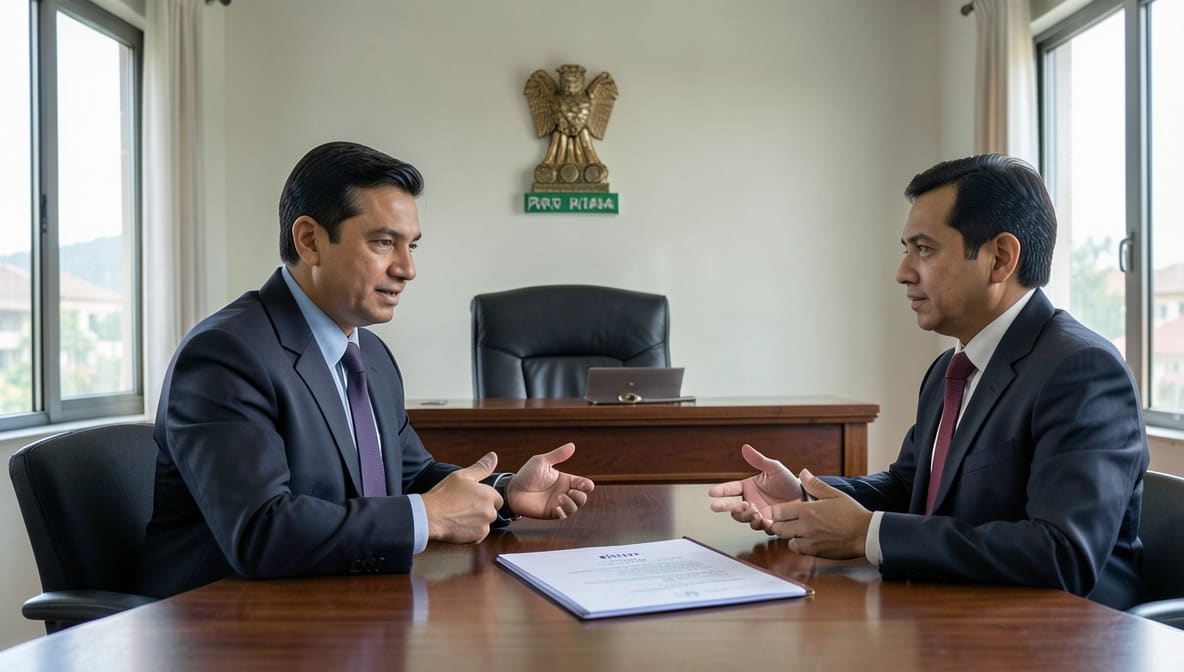
The Bombay High Court has quashed an FIR registered under Section 69 of the Bhartiya Nyaya Sanhita, 2023 (BNS) after the parties amicably settled their dispute. The Court emphasized that where the offence does not involve public policy and the complainant has unequivocally expressed her desire not to pursue the case, the continuation of criminal proceedings would serve no useful purpose and would amount to abuse of process. The judgment underscores the Court's discretion under Section 482 CrPC to secure the ends of justice, even in cases involving serious allegations, when the facts and circumstances so warrant.
Background & Facts
The Genesis
The applicants, Anusaya Raosaheb Navpute, Priyanka Chandrakant Navpute, and Chandrakant Raosaheb Navpute, filed Criminal Application Nos. 2117 and 2118 of 2026 seeking quashment of FIR No. 0138 of 2026 registered with Cantonment (Chavani) Police Station, Chhatrapati Sambhajinagar. The FIR was registered on 11.04.2026 for offences punishable under Sections 69, 115(2), 352, 351(2), 351(3), and 3(5) of the Bhartiya Nyaya Sanhita, 2023 (BNS).
Key Facts
- The applicants and the informant entered into an amicable settlement on 16.06.2026, wherein the informant withdrew all allegations against the applicants.
- The settlement was recorded in a pursis signed by all parties, including the informant, and was also reflected in the report of the learned Registrar (Judicial) of the Court dated 17.06.2026.
- The settlement terms included a mutual understanding that the parties would not interfere in each other's lives and would not create any hurdles in their respective lives in the future.
- The offence under Section 69 BNS involves sexual intercourse by employing deceitful means, such as making a false promise of marriage without any intention of fulfilling it, but does not amount to rape under Section 63 or 64 BNS.
Procedural History
- 11.04.2026: FIR No. 0138 of 2026 registered with Cantonment (Chavani) Police Station, Chhatrapati Sambhajinagar.
- 16.06.2026: Parties filed a common settlement pursis before the Court.
- 17.06.2026: Learned Registrar (Judicial) submitted a report reflecting the amicable settlement.
- 21.07.2026: Arguments reserved by the Court.
- 23.07.2026: Judgment pronounced, allowing the applications and quashing the FIR.
The Parties' Positions
The applicants contended that the FIR was filed as a reactionary measure and that the informant had unequivocally expressed her desire not to pursue the case. They relied on the Supreme Court's judgment in Madhukar and others v. The State of Maharashtra and another (2025 INSC 819) to support their plea for quashing the FIR.
The State, represented by the APP, did not oppose the quashing of the FIR in view of the amicable settlement and the informant's stance.
Relief Sought
The applicants sought quashment of the FIR/Crime No. 0138 of 2026 registered with Cantonment (Chavani) Police Station, Chhatrapati Sambhajinagar, for offences punishable under Sections 69, 115(2), 352, 351(2), 351(3), and 3(5) of the BNS, 2023.
The Legal Issue
The central question was whether the Court could exercise its inherent jurisdiction under Section 482 CrPC to quash criminal proceedings under Section 69 BNS, where the parties had amicably settled their dispute and the complainant had unequivocally expressed her desire not to pursue the case.
Arguments Presented
For the Applicants
The applicants relied on the Supreme Court's judgment in Madhukar and others v. The State of Maharashtra and another (2025 INSC 819), wherein the Court held that the power of the Court under Section 482 CrPC to secure the ends of justice is not constrained by a rigid formula and must be exercised with reference to the facts of each case. They argued that the offence under Section 69 BNS does not involve public policy and that the continuation of the proceedings would serve no useful purpose.
For the Respondent-State
The State, represented by the APP, did not oppose the quashing of the FIR in view of the amicable settlement and the informant's stance. The State submitted that no public policy was involved and that the dispute was purely personal in nature.
The Court's Analysis
The Court examined the Supreme Court's judgment in Madhukar and others v. The State of Maharashtra and another (2025 INSC 819), wherein the Hon'ble Apex Court held that the power of the Court under Section 482 CrPC to secure the ends of justice is not constrained by a rigid formula and must be exercised with reference to the facts of each case. The Court observed:
"6. At the outset, we recognise that the offence under Section 376 IPC is undoubtedly of a grave and heinous nature. Ordinarily, quashing proceedings involving such offences on the ground of settlement between the parties is discouraged and should not be permitted lightly. However, the power of the Court under Section 482 CrPC to secure the ends of justice is not constrained by a rigid formula and must be exercised with reference to the facts of each case."
The Court noted that the offence under Section 69 BNS does not amount to rape and does not involve public policy. It further observed that the complainant had unequivocally expressed her desire not to pursue the case and had submitted that continuing with the criminal proceedings would only disturb her peace and stability. The Court held:
"In the instant case, the offence is not under Section 376 IPC (corresponding Sections 63 & 64 BNS), rather, it is under Section 69 of BNS which deals with indulging in sexual intercourse by employing deceitful means. It would be fruitful to reproduce the provision laid down in Section 69 of BNS which reads as under : '69. Sexual intercourse by employing deceitful means, etc.- Whoever, by deceitful means or by making promise to marry to a woman without any intention of fulfilling the same, has sexual intercourse with her, such sexual intercourse not amounting to the offence of rape, shall be punished with imprisonment of either description for a term which may extend to ten years and shall also be liable to fine.'"
The Court concluded that since no public policy was involved and the dispute was purely personal, the continuation of the criminal proceedings would serve no useful purpose and would amount to abuse of process.
The Verdict
The Court allowed both Criminal Application Nos. 2117 and 2118 of 2026. The FIR/Crime No. 0138 of 2026 dated 11.04.2026 registered with Cantonment (Chavani) Police Station, Chhatrapati Sambhajinagar, for offences punishable under Sections 69, 115(2), 352, 351(2), 351(3), and 3(5) of the Bhartiya Nyaya Sanhita, 2023 was quashed and set aside. The applications were accordingly disposed of.
What This Means For Similar Cases
Quashing Is Permissible Where Parties Amicably Settle Personal Disputes
- The Court's discretion under Section 482 CrPC to quash criminal proceedings is not constrained by a rigid formula and must be exercised with reference to the facts of each case.
- Where the offence does not involve public policy and the complainant has unequivocally expressed her desire not to pursue the case, the continuation of criminal proceedings would serve no useful purpose and would amount to abuse of process.
The Supreme Court's Approach in Madhukar Is Applicable
- The Court relied on the Supreme Court's judgment in Madhukar and others v. The State of Maharashtra and another (2025 INSC 819) to hold that the power of the Court under Section 482 CrPC to secure the ends of justice is not constrained by a rigid formula.
- The Court emphasized that the facts and circumstances of each case must guide the exercise of its inherent jurisdiction.
Offences Under Section 69 BNS Are Distinct From Rape
- The Court distinguished the offence under Section 69 BNS from rape under Sections 63 or 64 BNS, noting that the former does not involve public policy.
- This distinction is crucial for practitioners advising clients in similar cases, as it expands the scope for quashing proceedings where the dispute is purely personal and the parties have amicably settled their differences.