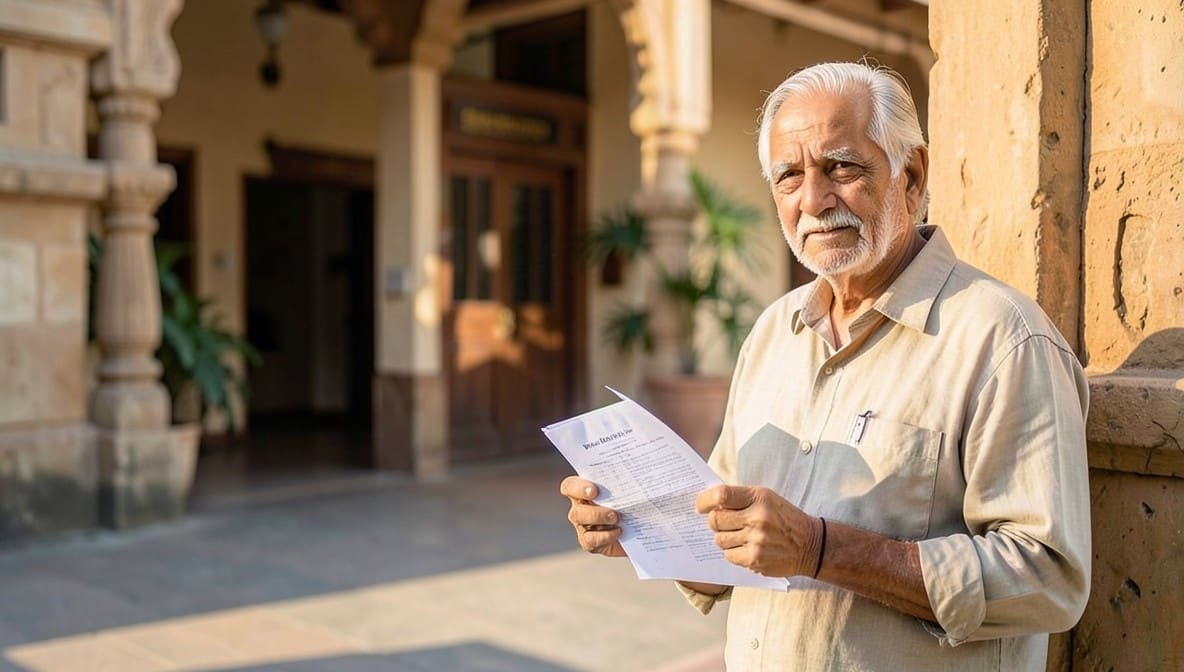
The Rajasthan High Court has reaffirmed that prolonged delay in filing an FIR, coupled with the release of co-accused and absence of flight risk, can justify bail even in cases involving multiple non-bailable offences under the IPC. This decision underscores the importance of procedural fairness and proportionality in bail jurisprudence.
Background & Facts
The Dispute
The petitioner, Nirmal Singh, aged about 59 years, resident of Soni Market, Udasar, Bikaner, was arrested in connection with FIR No. 48/2024 registered at Police Station Pugal, District Bikaner. The case involves allegations of offences under Sections 419 (cheating by impersonation), 420 (cheating and dishonestly inducing delivery of property), 467 (forgery of valuable security), 468 (forgery for purpose of cheating), and 471 (using as genuine a forged document) of the Indian Penal Code, 1860. The alleged offence pertains to the preparation of a forged power of attorney document in the year 2019.
Key Facts
- The alleged forgery of the power of attorney occurred in 2019
- The FIR was registered on an unspecified date in 2024, nearly five years after the incident
- No explanation was offered by the prosecution for the inordinate delay in registration of the FIR
- The petitioner is alleged to be a subsequent purchaser of the property in question
- The co-accused, Roop Singh and Chunni Singh, in whose favour the power of attorney was executed, were granted bail by coordinate benches of the same High Court on 19.05.2026 and 24.03.2026 respectively
- The petitioner has been in judicial custody since 13.05.2026
- The offences are triable by a Court of Magistrate
- No property or proceeds of crime are alleged to have been recovered from the petitioner
- The petitioner has no history of absconding or non-appearance before courts
Procedural History
- 2019: Alleged execution of forged power of attorney
- 2024: FIR No. 48/2024 registered at Police Station Pugal, Bikaner
- 13.05.2026: Petitioner arrested and placed in judicial custody
- 22.06.2026: Bail application filed under Section 483 of the Bharatiya Nagarik Suraksha Sanhita (BNSS), equivalent to Section 439 Cr.P.C.
Relief Sought
The petitioner sought bail on the grounds of prolonged delay in filing the FIR, release of co-accused, non-violent nature of the offences, and the likelihood of a prolonged trial. He requested release on personal bond and sureties, subject to conditions of appearance before the trial court.
The Legal Issue
The central question was whether the combination of an unexplained five-year delay in registering the FIR, the prior grant of bail to co-accused, the non-violent and non-serious nature of the offences, and the absence of any apprehension of flight, justifies the grant of bail under Section 483 BNSS despite the offences being non-bailable.
Arguments Presented
For the Petitioner
Learned counsel, Mr. Manish Dadhich, submitted that the delay of five years in registering the FIR was unexplained and undermined the credibility of the prosecution’s case. He relied on the fact that the two co-accused, Roop Singh and Chunni Singh, had already been granted bail by coordinate benches of the same High Court, indicating that the prosecution’s case against them was not considered sufficiently strong to warrant continued custody. He emphasized that the petitioner was a senior citizen with no prior criminal record, the offences were non-violent and triable by a Magistrate, and there was no risk of tampering with evidence or fleeing. He further argued that continued custody would amount to punishment without trial.
For the Respondent
The learned Public Prosecutor, Mr. Narendra Gehlot, and the complainant’s counsel, Mr. V.K. Bhadu, opposed the bail application, arguing that the offences under Sections 467, 468, and 471 IPC are serious and involve forgery of legal documents, which affects public trust in official records. They contended that the delay in filing the FIR could not be a ground for bail and that the court should not prejudge the merits of the case. They also argued that the release of co-accused did not automatically entitle the petitioner to bail.
The Court's Analysis
The Court, per Hon’ble Mr. Justice Baljinder Singh Sandhu, examined the facts holistically and declined to treat the grant of bail to co-accused as determinative, but treated it as a relevant circumstance. The Court noted that the alleged offences, while non-bailable, are not of a violent or heinous nature and are triable by a Magistrate, which inherently suggests a lower degree of seriousness. The Court emphasized that the prosecution had not demonstrated any apprehension that the petitioner would abscond or tamper with evidence if released on bail.
"The delay of nearly five years in registering the FIR, without any explanation, casts serious doubt on the prosecution’s case and weakens the urgency of continued custody."
The Court further observed that the petitioner had been in custody since 13.05.2026, and the trial, given the nature of documentary evidence involved, was likely to take a considerable time. The Court held that the principle of proportionality must guide bail decisions, and that the right to liberty under Article 21 of the Constitution must be balanced against the interests of investigation. The Court found no material to suggest that the petitioner posed a threat to the investigation or public order.
The Court also noted that the co-accused had been granted bail on similar grounds, and denying bail to the petitioner without a discernible distinction would violate the principle of equality before law.
The Verdict
The bail application was allowed. The petitioner, Nirmal Singh, shall be released on bail upon furnishing a personal bond of Rs. 50,000 and two sureties of Rs. 25,000 each, to the satisfaction of the trial court. He must appear before the trial court on every date of hearing and whenever called upon until the conclusion of the trial. The order is subject to the condition that he is not wanted in any other case.
What This Means For Similar Cases
Delay Without Explanation Undermines Prosecution’s Urgency
- Practitioners may now argue that unexplained delays of more than three to five years in FIR registration, especially in non-violent, document-based offences, constitute a material factor favouring bail
- The burden shifts to the prosecution to justify the delay; silence or vague explanations will not suffice
- This principle applies even where the offences are non-bailable under the IPC
Co-Accused Bail Is a Relevant, Though Not Conclusive, Factor
- Grant of bail to co-accused by coordinate benches creates a presumption of parity in treatment
- Denial of bail to one accused without distinguishing factual or legal grounds may violate Article 14
- Practitioners should cite such parallel grants as persuasive authority in bail applications
Non-Violent, Non-Heinous Offences Warrant Liberal Bail
-
Offences under Sections 419, 420, 467, 468, and 471 IPC, while serious, are not inherently violent
-
Courts must assess the nature of the document forged and the actual harm caused
-
Where no recovery is involved and the accused is not a flight risk, bail should be the norm, not the exception
-
Always highlight the triable-by-Magistrate status of the offence as a mitigating factor
-
Emphasize the accused’s age, employment, family ties, and absence of prior record
-
Request bail conditions that ensure appearance without imposing excessive financial burdens