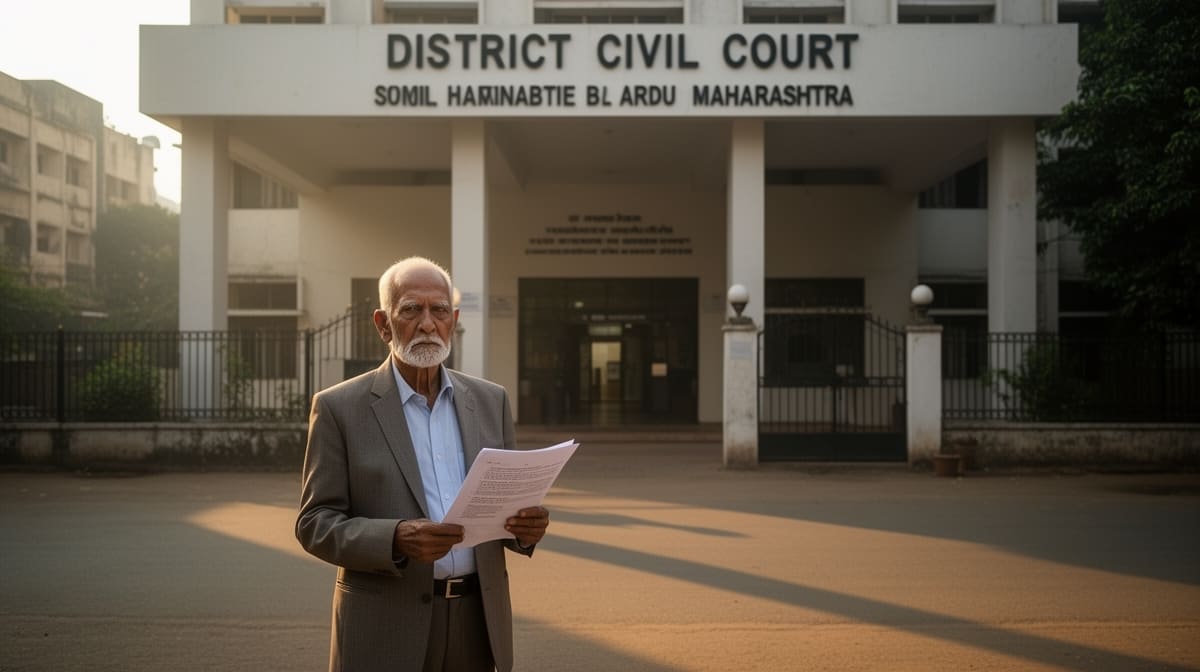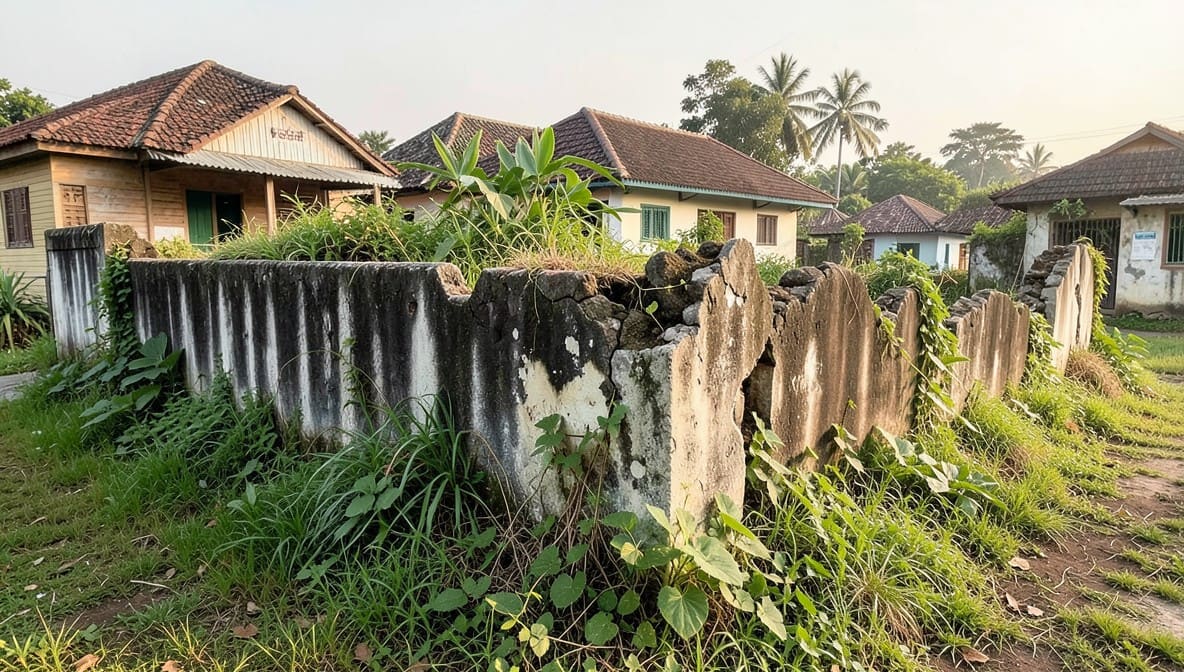
The Kerala High Court has reaffirmed that the limitation period for executing a compromise decree begins from the date of the decree itself, not from any subsequent alleged breach. A petition filed 16 years after the decree was dismissed for being time-barred, underscoring the non-negotiable nature of limitation in execution proceedings.
Background & Facts
The Dispute
The petitioner, Udayabhanu, filed a suit in 2000 seeking mandatory injunction and other reliefs against the respondent, Sidharthan. The dispute arose over boundary alignment and construction rights on adjacent properties. The parties reached a compromise, which was recorded as a decree by the Principal Munsiff Court, Cherthala, on 21.03.2002.
Key Facts
- The compromise decree mandated the petitioner to construct a wall along the DE line as per the Commissioner’s report dated 27.12.2000.
- The petitioner claims the wall was constructed in 2002 in compliance with the decree.
- The respondent allegedly demolished the wall in 2013.
- No legal action was taken by the petitioner between 2002 and 2013.
- A police complaint was filed in 2013, but no civil proceedings followed.
- The execution petition was filed only on 11.12.2018 - 16 years and 9 months after the decree.
- The decree copy (Ext.P2) does not contain the DE plan as an annexure.
- The original Commissioner’s report (27.12.2000) is not on record.
- The petitioner’s execution petition (Ext.P1) did not initially mention the demolition of the wall.
- An application for amendment was filed on 31.07.2023, introducing the 2013 demolition as a new cause of action.
- An Advocate Commissioner submitted a sketch (Ext.P4) in 2024, but no schedule of property was appended to the execution petition.
- The property has changed hands since the decree; the current boundaries and ownership are disputed.
Procedural History
- 21.03.2002: Compromise decree passed by Principal Munsiff Court, Cherthala, in OS No. 1075 of 2000.
- 2013: Alleged demolition of the wall; police complaint filed; no civil proceedings initiated.
- 11.12.2018: Execution petition (EP No. 452/2018) filed seeking enforcement of wall construction.
- 31.01.2024: Respondent filed objections to the execution petition, citing limitation and non-executability.
- 31.07.2023: Petitioner filed application to amend execution petition to include allegation of demolition in 2013.
- 15.01.2024: Advocate Commissioner submitted report and sketch (Ext.P4).
- 02.06.2025: Principal Munsiff Court dismissed the execution petition, holding it barred by limitation and not executable.
- 30.06.2026: Kerala High Court dismissed the original petition challenging the dismissal.
Relief Sought
The petitioner sought enforcement of the compromise decree by directing the construction of a wall along the DE line under the supervision of a Commissioner, along with costs and any incidental relief.
The Legal Issue
The central question was whether an execution petition filed 16 years after a compromise decree is maintainable under Section 48 of the Code of Civil Procedure, 1908, and whether a subsequent alleged breach in 2013 can revive the limitation period.
Arguments Presented
For the Petitioner
The petitioner argued that the cause of action arose in 2013 when the wall was demolished, and therefore the execution petition filed in 2018 was within limitation. Reliance was placed on the principle that where a decree involves continuous obligations, each breach gives rise to a fresh cause of action. The petitioner contended that the amendment to the execution petition merely clarified the existing claim and should not be treated as introducing a new cause of action.
For the Respondent
The respondent contended that the limitation for execution begins from the date of the decree, not from any subsequent breach. The execution petition was filed beyond the 12-year limitation period under Article 136 of the Limitation Act, 1963, which applies to execution of decrees for specific performance. The respondent further argued that the decree was not executable because the DE plan was not annexed to it, the property boundaries could not be identified, and the petitioner failed to prove performance of his part of the compromise.
The Court's Analysis
The Court examined the nature of the compromise decree and the applicable limitation period under Article 136 of the Limitation Act, 1963, which prescribes a period of 12 years for execution of a decree for specific performance. The Court held that the limitation period commences from the date of the decree - 21.03.2002 - and not from any subsequent act or omission.
"Even if one is to accept that a wall was constructed as per the terms of the decree and it was demolished in 2013, the petition ought to have been filed at least by 2016. In the case on hand, the execution petition is filed in 2018, 16 years after the decree."
The Court rejected the petitioner’s argument that the demolition in 2013 constituted a fresh cause of action, noting that the decree was not for a continuing obligation but for a one-time act - construction of a wall. The Court emphasized that the amendment introduced in 2023 could not cure the initial defect of limitation, as it sought to introduce a new factual basis not pleaded at the time of filing.
The Court further found that the decree was not executable because the plan referenced in the compromise (DE plan dated 27.12.2000) was not annexed to the decree, and no schedule of property was attached to the execution petition. Without a clear description of the property or the boundary line, enforcement was impossible. The Court also noted that the petitioner had not demonstrated performance of his part of the compromise, a prerequisite for seeking execution.
The Court concluded that the execution court had correctly applied the law and appreciated the evidence. There was no error in dismissing the petition on grounds of limitation and non-executability.
The Verdict
The original petition was dismissed. The Kerala High Court upheld the order dated 02.06.2025 of the Principal Munsiff Court, which had dismissed the execution petition. The Court held that the petition was barred by limitation under Article 136 of the Limitation Act, 1963, and the decree was not executable due to lack of specificity and non-performance. No monetary relief, costs, or enforcement direction was granted.
What This Means For Similar Cases
Limitation Begins at Decree Date, Not Breach
- Practitioners must file execution petitions within 12 years from the date of the decree for specific performance - not from the date of alleged non-compliance.
- Delay cannot be excused by citing subsequent breaches unless the decree imposes a continuing obligation.
Decree Must Be Clearly Executable
- Execution petitions must be accompanied by the plan or schedule referenced in the decree.
- If the decree lacks specificity (e.g., no annexed plan, no property schedule), it may be deemed non-executable regardless of delay.
Amendments Cannot Cure Limitation Defects
- Amendments introducing new causes of action after limitation has expired are not permitted.
- Courts will not allow parties to reframe their claims to circumvent limitation.