The Bombay High Court has clarified that a suit challenging a gift of ancestral property must be filed within 12 years under Article 109 of the Limitation Act, not within three years as contended by the transferee. The judgment also affirms that valid adoption under Hindu law may be established through conduct, family recognition, and circumstantial evidence, even in the absence of formal documentation by both natural parents.
Background & Facts
The Dispute
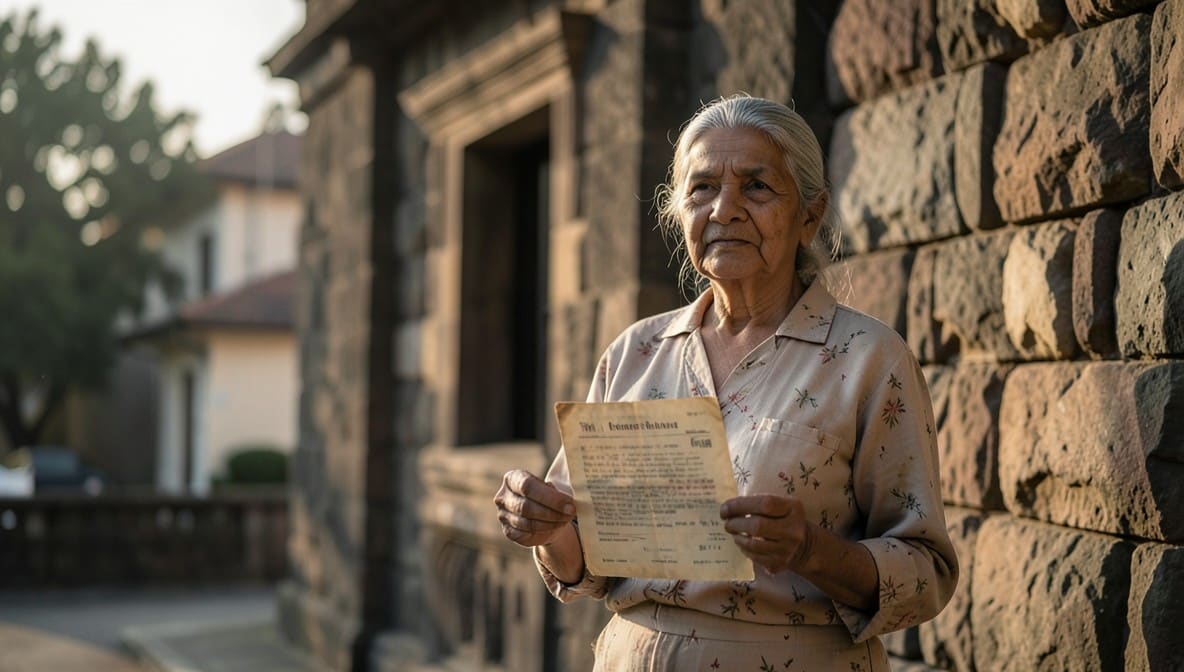
The dispute centers on the validity of a registered gift-deed dated 15.04.1968, executed by late Ramdayal Agrawal in favor of his long-time business associate, defendant Shyamsunder Khandelwal, transferring House No.258 in Kudwa Line, Gondia. The plaintiff, Chandraprakash Agrawal, claimed to be the adopted son of Ramdayal and his wife Laxmibai, and sought possession of the property on the ground that the gift was executed without legal necessity and was void as against the interests of the joint Hindu family. The suit was filed on 15.10.1979.
Key Facts
- House No.258 was purchased by Ramdayal on 03.12.1931 (Exh.133) at age 18, with his father-in-law acting as guardian.
- House No.261 was purchased on 11.12.1926 (Exh.132), prior to defendant’s entry into the business.
- Defendant joined Ramdayal’s business as accountant in 1933-34 and later as working partner.
- On 22.01.1968, an agreement (Exh.160) was executed between Ramdayal and defendant, stating that Ramdayal would gift House No.258 to defendant, and defendant would vacate House No.261 within four years.
- The gift-deed (Exh.188) was executed on 15.04.1968 and registered on 26.04.1968.
- Plaintiff No.1 was allegedly adopted on 09.12.1953 by Ramdayal and Laxmibai, when he was three years old.
- Adoption-deed dated 09.12.1953 (Exh.129) was executed by plaintiff’s natural father, Harinarayan Agrawal, but not by his mother, Rukhminibai.
- A declaration of adoption dated 12.07.1971 (Exh.130) was executed by Ramdayal and registered.
- Succession certificate dated 11.04.1975 (Exh.131) was issued in joint names of plaintiff No.1 and Laxmibai for Ramdayal’s bank deposits and shares.
- Plaintiff No.1 performed last rites of both Ramdayal (d. 19.12.1971) and Laxmibai.
- Defendant’s wife admitted plaintiff No.1 resided with Ramdayal since age 3-4, attended his marriage, and treated him as family.
- Defendant’s witness Ramkrushna Khandelwal, attesting witness to the adoption-deed, admitted Ramdayal treated plaintiff as his son and that the community recognized him as such.
Procedural History
- 15.10.1979: Original suit (No.18/1979) filed by plaintiff seeking declaration that gift-deed is void and possession of House No.258.
- 08.02.1982: Issues framed by Trial Court, including status of plaintiff as adopted son.
- 1981: Plaintiff No.2 (Laxmibai) died; her name was deleted as plaintiff No.1 was held to be her sole heir.
- 01.02.2003: Trial Court decreed suit, holding property ancestral, gift void for lack of legal necessity, and adoption valid.
- 03.04.2007: First Appellate Court dismissed appeal, upholding Trial Court’s findings.
- 26.11.2007: Second Appeal admitted on substantial questions of law.
- 12.12.2024: Substantial questions modified and expanded.
- 15.05.2026: Judgment delivered by Bombay High Court (Nagpur Bench).
The Parties' Positions
Plaintiff (Respondent): Argued that the suit properties were ancestral, the gift was void without legal necessity, and adoption was valid under Hindu law despite absence of mother’s signature on the deed. Relied on conduct, succession certificate, and performance of last rites.
Defendant (Appellant): Contended that the property was partnership property, not ancestral; that the gift was valid; that limitation period was three years under Articles 58/59; and that adoption was invalid due to absence of mother’s consent and lack of proof of rituals.
Relief Sought
The plaintiff sought: (1) declaration that the gift-deed dated 15.04.1968 is void; (2) possession of House No.258; and (3) costs. The defendant sought dismissal of the suit on grounds of limitation and invalid adoption.
The Legal Issue
The central questions were: (1) Whether the limitation period for challenging a gift of ancestral property is governed by Article 109 (12 years) or Articles 58/59 (3 years) of the Limitation Act; and (2) Whether a valid adoption under Hindu law can be established without the consent or signature of the natural mother, and whether conduct and circumstantial evidence suffice in the absence of formal proof of rituals.
Arguments Presented
For the Appellant
The appellant, through Senior Advocate J.T. Gilda, argued that the gift-deed was a registered document and its challenge was subject to a three-year limitation under Article 58 or 59 of the Limitation Act, commencing from the date of registration (26.04.1968). The suit filed on 15.10.1979 was thus time-barred. He further contended that adoption was invalid because the natural mother did not sign the adoption-deed, and the rituals of Datta Homam were not conclusively proved. He relied on Shri Kishori Lal v. Mst. Chaltibai to argue that the burden of proving adoption is heavy and requires strict proof of ceremonies. He also argued that the plaintiff’s pleadings claimed him as a natural son, making evidence of adoption inadmissible under Abubakar Abdul Inamadar and Biraji Alias Brijraji.
For the Respondent
Respondent’s counsel, S.C. Mehadia, argued that the property was ancestral, and Article 109 applied, giving a 12-year limitation from the date of the gift (15.04.1968), making the suit timely. He contended that adoption was valid under Hindu law as the natural father and adoptive parents performed the ceremony, and the child was treated as a son throughout life. He relied on L. Debi Prasad v. Smt. Tribeni Devi to argue that conduct and recognition by family are decisive in ancient adoptions. He emphasized that the defendant had admitted the plaintiff’s status as son in his written statement and led evidence on adoption, thereby waiving any pleading defect.
The Court's Analysis
The Court first addressed the limitation issue. It held that the suit property was ancestral, as evidenced by its acquisition by Ramdayal as a minor using ancestral funds, and the sale-deeds predated the defendant’s entry into the partnership. The Court observed: > "The sale-deeds with respect to both the suit properties are prior to the date on which the defendant joined the firm as working partner. The suit properties are therefore not properties of the firm as contended by the defendant."
Since the property was ancestral, the gift by a coparcener without legal necessity was voidable, and the limitation period for challenging such alienation was governed by Article 109 of the Limitation Act, which provides 12 years from the date the transferee takes possession. The gift was executed on 15.04.1968, and the suit was filed on 15.10.1979 - well within the 12-year period.
The Court rejected the appellant’s reliance on Articles 58 and 59, noting those apply to suits challenging registered documents as void ab initio, not to suits challenging alienation of ancestral property by a coparcener.
On the issue of adoption, the Court held that while the natural mother did not sign the adoption-deed, her presence at the ceremony and consent were established by the testimony of the natural father, PW-3, who deposed that both parents gave the child in adoption. The Court noted: > "The natural father has entered the witness box. He has categorically deposed that he and his wife were present in the adoption ceremony... and that they had given the plaintiff No.1 in adoption to the plaintiff No.2 and her husband together by placing him on their lap."
The Court further emphasized that the adoptive mother, Laxmibai, had joined the suit as plaintiff, thereby demonstrating her consent. The Court relied on L. Debi Prasad to hold that in cases of ancient transactions, conduct assumes primacy: > "The most important evidence is likely to be that the alleged adoptive father held out the person claiming to have been adopted as his son; the latter treated the former as his father and their relations and friends treated them as father and son."
The Court found overwhelming evidence: performance of last rites, joint succession certificate, marriage conducted by adoptive parents, and recognition by the defendant himself. The attesting witness, examined by the defendant, admitted the plaintiff was treated as a son. The Court concluded: > "The evidence gives a clear inference that not only the natural and adoptive parents... but the defendant also recognized the plaintiff No.1 as adopted son of Ramdayal and plaintiff No.2 and dealt with him as such."
The Court also rejected the appellant’s application under Order VI Rule 17 to amend the written statement after 46 years, holding it was an attempt to introduce a new case at the final stage.
The Verdict
The Second Appeal was dismissed. The Court upheld the concurrent findings of the lower courts that the suit property was ancestral, the gift-deed was void for lack of legal necessity, and the adoption of plaintiff No.1 was valid. The decree for possession of House No.258 in favor of the plaintiff was confirmed. The application for amendment of the written statement was rejected. No order as to costs was made. The request for a stay of judgment pending appeal to the Supreme Court was also rejected.
What This Means For Similar Cases
Limitation for Challenging Ancestral Property Gifts Is 12 Years
- Practitioners must now treat any challenge to a gift of ancestral property by a coparcener as governed by Article 109 of the Limitation Act, not Articles 58 or 59.
- The limitation period commences from the date of transfer of possession by the transferee, not from registration of the document.
- A suit filed within 12 years of the gift is maintainable, even if the document is registered.
Adoption Can Be Proven by Conduct and Recognition
- Valid adoption under Hindu law does not require strict proof of rituals if the transaction is ancient.
- Conduct - including treatment as a son, performance of last rites, joint succession, and family recognition - is sufficient to establish adoption.
- The absence of a signature by the natural mother is not fatal if her presence and consent are inferred from circumstances.
- Courts will not permit technical objections to defeat substantive justice where the child has been integrated into the family for decades.
Pleading Defects May Be Waived If Parties Litigate the Issue
- Evidence not strictly pleaded may be admitted if the opposing party has joined the issue, led evidence, and suffered no prejudice.
- Framing of an issue on adoption by the Trial Court, coupled with evidence led by both sides, waives the requirement of formal pleadings.
- The test is whether the party had a fair opportunity to meet the case - not whether the pleadings were perfect.