The Allahabad High Court has underscored a critical evidentiary principle in criminal trials involving illegal possession of firearms: recovery evidence under Section 25 of the Arms Act cannot survive independently when the genesis of the prosecution case is found unreliable. In this appeal, the Court set aside the appellant's conviction, holding that the trial court erred in convicting the accused based on the same set of evidence that failed to establish the primary charge of attempted murder.
Background & Facts
The Dispute
The appellant, Bhagwan Singh, was convicted by the 12th Additional Sessions Judge, Agra, under Section 25 of the Arms Act and sentenced to rigorous imprisonment for 18 months. The conviction arose from an alleged encounter on 27.04.1977, where police claimed to have apprehended the appellant and others while they were preparing to commit dacoity.
Key Facts
- 27.04.1977: Police received information about miscreants assembling in the kothari of Net Ram Kachhi to commit robbery against truck occupants.
- 10:00 p.m.: Police party, divided into two teams, raided the kothari. Upon being challenged, the miscreants allegedly opened fire, leading to an exchange of fire.
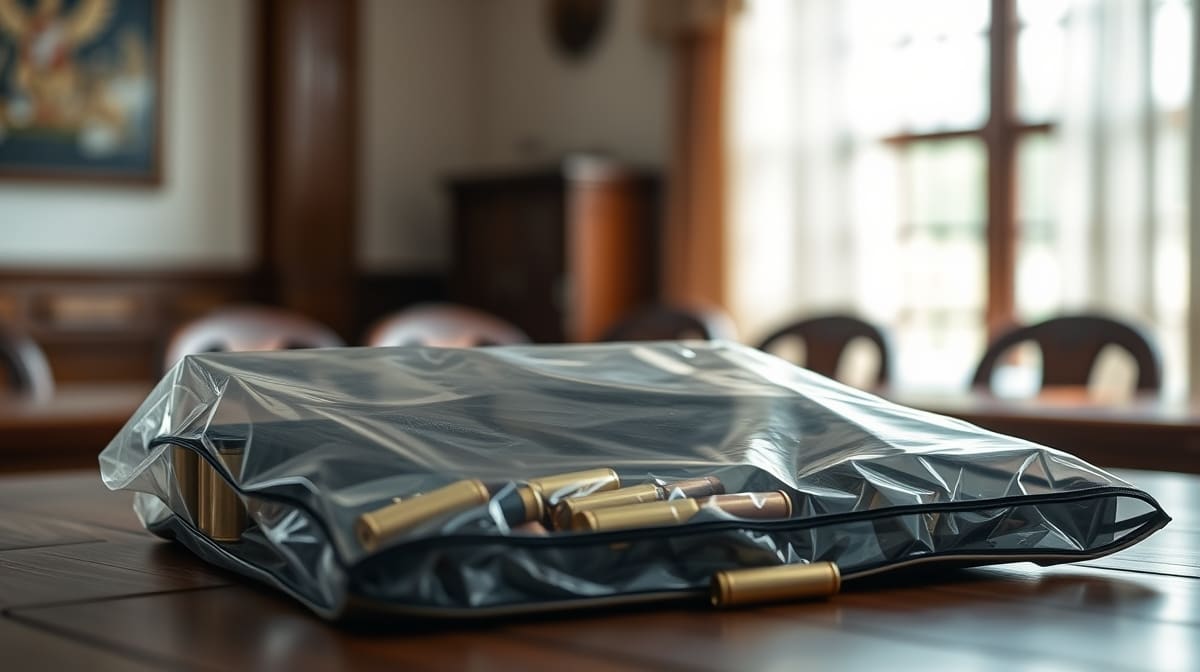
- On-spot arrest: The appellant, Cheta, and Sher Singh were apprehended. From the appellant's possession, a country-made pistol (tamancha), two live cartridges, and one empty cartridge were recovered.
- Recovery memos: Exhibits Ka-5 to Ka-8 (firearm and cartridges) and Exhibit Ka-9 (lathi) were prepared and sealed.
- Prosecution witnesses: Constable Munshi Singh (P.W.-1), Karan Singh (P.W.-2), Constable Ram Baboo (P.W.-3), and Constable Ram Prakash (P.W.-4) deposed in support of the recovery.
- Defence witness: Net Ram (D.W.-1) denied the existence of the kothari or the incident.
Procedural History
- 04.10.1983: Charge framed under Sections 147, 148, 307/149 IPC and Section 25 Arms Act.
- 20.12.1983: Trial court acquitted the appellant of the IPC charges but convicted him under Section 25 Arms Act.
- 1984: Criminal Appeal No. 151 of 1984 filed before the Allahabad High Court.
- 23.06.2026: High Court delivered judgment, setting aside the conviction.
Relief Sought
The appellant sought acquittal from the conviction under Section 25 Arms Act, arguing that the recovery evidence was unreliable and contradictory, and that the trial court erred in convicting him based on the same set of evidence that failed to prove the primary charges.
The Legal Issue
The central question was whether conviction under Section 25 of the Arms Act can stand independently when the main prosecution story (here, the alleged attempt to murder) is found unreliable and unsupported by corroborative evidence.
Arguments Presented
For the Appellant
- The trial court acquitted the appellant of the IPC charges but convicted him under Section 25 Arms Act based on the same evidence, rendering the conviction legally unsustainable.
- The recovery of the firearm was doubtful, as no independent witnesses were examined, and the prosecution witnesses were police personnel whose testimony was unreliable.
- No ballistic/FSL report was produced to establish the working condition of the firearm or its nexus with the alleged incident.
- Reliance was placed on Sans Pal Singh vs. State of Delhi (1997 SCC (Cri.) 124) and Krishan Chander vs. State of Delhi (AIR 2016 SC 11) to argue that conviction under Section 25 Arms Act requires independent corroboration when public witnesses are available but not joined.
For the Respondent
- The recovery of the firearm was duly proved by prosecution witnesses, and the trial court rightly appreciated the evidence.
- The judgment did not suffer from any illegality or infirmity, and no interference was warranted.
The Court's Analysis
The Court critically examined the evidentiary foundation of the prosecution case and identified glaring inconsistencies:
-
Unreliable Genesis of Prosecution Story: The trial court acquitted the appellant of the IPC charges, finding the prosecution story regarding the alleged attempt to murder unreliable. However, it convicted the appellant under Section 25 Arms Act based on the same set of evidence, leading to a contradictory and legally vulnerable finding.
-
Lack of Independent Corroboration: The Court noted that the prosecution relied solely on police witnesses, whose testimony fell into the 'partly reliable' or 'unreliable' category. Indian law mandates that an accused cannot be convicted based on such testimony without independent and reliable corroboration. No public witnesses were examined despite their availability.
-
Absence of Ballistic Evidence: The Court emphasized that ballistic/FSL reports are crucial to establish the nexus between the recovered firearm and the alleged incident. The absence of such evidence weakened the prosecution's case.
-
Precedents Applied: The Court relied on Sans Pal Singh vs. State of Delhi and Krishan Chander vs. State of Delhi to hold that conviction under Section 25 Arms Act cannot stand when the recovery is not supported by independent witnesses or material corroboration.
"When a partial prosecution story concerning the main occurrence (committing attempt to murder) is found to be doubtful, but simultaneously the conviction under Section 25 of the Arms Act arising out of the same transaction is recorded on the same set of evidence, thus, such finding becomes legally vulnerable and contradictory."
The Court further observed that while the principle of falsus in uno, falsus in omnibus is not applicable in India, once the genesis of the prosecution case becomes doubtful, ancillary recoveries cannot survive independently without reliable corroboration.
The Verdict
The Allahabad High Court allowed the appeal, setting aside the impugned judgment and order dated 20.12.1983 passed by the 12th Additional Sessions Judge, Agra. The appellant was acquitted of all charges under Section 25 of the Arms Act. The Court directed that the appellant, who was on bail, need not surrender, and his bail bonds and sureties stood discharged.
What This Means For Similar Cases
Recovery Evidence Must Stand Independently
- Courts must ensure that recovery evidence under Section 25 Arms Act is not merely an ancillary finding based on the same unreliable evidence that failed to prove the primary charges.
- Independent corroboration is essential when the prosecution relies on police witnesses alone, especially when public witnesses are available but not examined.
Ballistic Evidence Is Non-Negotiable
- FSL/ballistic reports are critical to establish the working condition of the firearm and its nexus with the alleged incident. Their absence can fatality weaken the prosecution's case.
- Practitioners should argue for mandatory ballistic examination in cases involving recovery of firearms to avoid acquittals on technical grounds.
Judicial Scrutiny of Contradictory Findings
- Trial courts must avoid contradictory findings where the main prosecution story is disbelieved, but ancillary charges (like illegal possession) are upheld based on the same evidence.
- Appellate courts will closely scrutinize such judgments for legal sustainability, as seen in this case where the High Court set aside the conviction for lack of evidentiary foundation.