The Himachal Pradesh High Court permitted the prosecution to lead additional evidence at the appellate stage to substantiate the victim's date of birth in a POCSO conviction, holding that such evidence is essential for a just decision when it does not introduce new facts but merely corroborates the prosecution's existing case. The court clarified that Section 432 of the Bharatiya Nagrik Suraksha Sanhita, 2023 (corresponding to Section 391 of the Cr.P.C.) empowers appellate courts to take additional evidence to prevent failure of justice, provided it is exercised judiciously and not as a disguise for retrial.
Background & Facts
The Dispute
The respondent-State filed an application under Section 432 of the Bharatiya Nagrik Suraksha Sanhita, 2023 (BNSS) seeking to place on record the Matriculation Certificate of the child victim and to re-examine/examine the victim and school authorities to prove her date of birth, which is a prerequisite for conviction under Section 4(2) of the Protection of Children from Sexual Offences Act, 2012 (POCSO Act). The appellant, Kulwinder Singh, had been convicted under Sections 354A, 354D, 376, 506 of the Indian Penal Code and Section 4(2) of the POCSO Act, sentenced to 20 years' rigorous imprisonment under the POCSO Act, with additional sentences and fines.
Key Facts
- The offence occurred on 27.02.2020, leading to FIR No. 25/2020 dated 27.02.2020 registered at Police Station Kot-Kehloor, District Bilaspur, H.P.
- The victim's date of birth was asserted by the prosecution as 09.08.2004 throughout the trial.
- During trial, the prosecution proved the victim's date of birth through:
- Ex. P-1/PW-20: Date of Birth certificate issued by Sodhi Ram, Secretary, Gram Panchayat Bhakhra, under the Registration of Births and Deaths Act, 1969
- Ex. P-4/PW-23: Pariwar Register indicating date of birth as 09.08.2004
- The prosecution did not produce the victim's Matriculation Certificate during trial, despite the victim having passed matriculation examination at the time of the incident.
- The Investigating Officer failed to collect school-related age proof due to negligence or ignorance regarding Section 94 of the Juvenile Justice (Care and Protection of Children) Act, 2015.
- The Sessions Court convicted the appellant based on the available evidence, including the Birth Certificate and Pariwar Register.
Procedural History
- 27.02.2020: FIR No. 25/2020 registered at Police Station Kot-Kehloor, District Bilaspur, H.P.
- 19.12.2025: Impugned judgment and order passed in Sessions Trial No. 13/7 of 2020, convicting the appellant
- 09.09.2026: Application reserved for hearing
- 15.09.2026: Judgment decided and uploaded
- 28.09.2026: Directed date for Registrar (Judicial) to list application before court for fixing date of recording additional evidence
- Within three days from notice: Steps for re-calling/summoning witnesses to be taken
- 15.10.2026: Deadline for Director General of Police, Himachal Pradesh to circulate Section 94 JJ Act guidelines to all Investigating Officers
The Parties' Positions
For the Applicant/State:
- Submitted that the prosecution had already proved the date of birth via Birth Certificate and Pariwar Register, so it was not a case of 'no evidence' but an inadvertent mistake.
- Relied on past applications (Cr.MP No. 3682 of 2024 and Cr.MP No. 5315 of 2025) where similar relief was granted under Sections 311 and 391 of Cr.P.C.
- Argued that leading additional evidence would not prejudice the accused as it substantiates, not contradicts, the prosecution's case.
- Emphasized the interest of justice and victim protection under the POCSO Act.
For the Non-applicant/Appellant:
- Contended the application was not maintainable at the appellate stage as it sought to fill lacunae in the prosecution's case.
- Relied on Swapan Kumar Chatterjee Vs. Central Bureau of Investigation (2019) 14 SCC 328 to argue that power under Section 311 Cr.P.C. must not be exercised as an abuse of process.
- Cited Jagdeep Kumar Vs. Himachal Pradesh State Cooperative Bank Limited (2019) (3) SLC 1354 to state that Section 391 Cr.P.C. is not intended to remedy prosecution negligence.
- Asserted that the facts in past cases where relief was granted were materially different from the present case.
Relief Sought
The respondent-State sought permission to:
- Re-examine PW-1 (the victim) and examine the Record Keeper/Office Superintendent/Incharge/Principal of the concerned school
- Produce on record the Matriculation Certificate of the victim along with relevant school records
- Prove the date of birth of the victim in consonance with Section 94 of the Juvenile Justice Act, 2015
- Have the entire relevant record summoned for recording statements regarding the Matriculation Certificate and date of birth
The Legal Issue
The central question was whether the respondent-State could be permitted to lead additional evidence (specifically the Matriculation Certificate of the victim) at the appellate stage under Section 432 of the Bharatiya Nagrik Suraksha Sanhita, 2023 to prove the victim's date of birth, when such evidence was not produced during the trial despite being available, and whether doing so would constitute an improper exercise of power to fill lacunae in the prosecution's case or serve the ends of justice by substantiating an already asserted fact without causing prejudice to the accused.
Arguments Presented
For the Applicant/State
The learned Senior Additional Advocate General submitted that Section 432 BNSS (old Section 391 Cr.P.C.) confers wide discretion on appellate courts to take additional evidence essential for a just decision. He emphasized that the prosecution had already proved the victim's date of birth through Ex. P-1/PW-20 (Birth Certificate) and Ex. P-4/PW-23 (Pariwar Register), so the application did not seek to introduce a new fact but merely to substantiate the existing case with corroborative evidence required under Section 94 of the Juvenile Justice Act, 2015. He referred to the court's own observations in Cr.MP No. 3682 of 2024 and Cr.MP No. 5315 of 2025, where similar applications were allowed, arguing that the power must be exercised to meet the ends of justice when the omission stems from inadvertence rather than deliberate suppression. Crucially, he contended that allowing the State to lead the Matriculation Certificate would not prejudice the accused, as the evidence aligns with the prosecution's case throughout and merely seeks to remove an irregularity in age proof without altering the nature of the offence.
For the Non-applicant/Appellant
Learned counsel for the appellant argued that the application was not maintainable at this stage, as it sought to remedy the prosecution's failure to produce vital evidence during trial. He relied heavily on Swapan Kumar Chatterjee Vs. Central Bureau of Investigation (2019) 14 SCC 328, which held that power under Section 311 Cr.P.C. must be exercised only for strong and valid reasons and not as an abuse of process. He further cited Jagdeep Kumar Vs. Himachal Pradesh State Cooperative Bank Limited (2019) (3) SLC 1354 to assert that Section 391 Cr.P.C. is not intended to rectify prosecutorial negligence or laches. Counsel stressed that the facts and circumstances in past cases where relief was granted (Cr.MP No. 3682 of 2024 and Cr.MP No. 5315 of 2021) were fundamentally different from the present case, rendering those precedents inapplicable. He maintained that permitting the State to lead the Matriculation Certificate now would effectively allow a retrial by filling evidentiary gaps, thereby violating the doctrine of finality and causing grave prejudice to the accused who had already faced conviction based on the record as it stood.
The Court's Analysis
The Court began by noting that Sections 348 and 432 of BNSS correspond to Sections 311 and 391 of the Cr.P.C., extracting the core principle that appellate courts may take additional evidence if it is essential to arrive at a just decision. Drawing from Natasha Singh Vs. Central Bureau of Investigation (2013) 5 SCC 741, the Court affirmed that Section 311 Cr.P.C. empowers courts to examine persons present or summon witnesses at any stage if their evidence is essential for justice, but this discretion must be exercised judiciously and not arbitrarily. The Court further relied on Varsha Garg Vs. State of Madhya Pradesh (2022) SC 3707 to stress that the power must be invoked only to meet the ends of justice for strong and valid reasons, with great caution to prevent it from becoming a disguise for retrial.
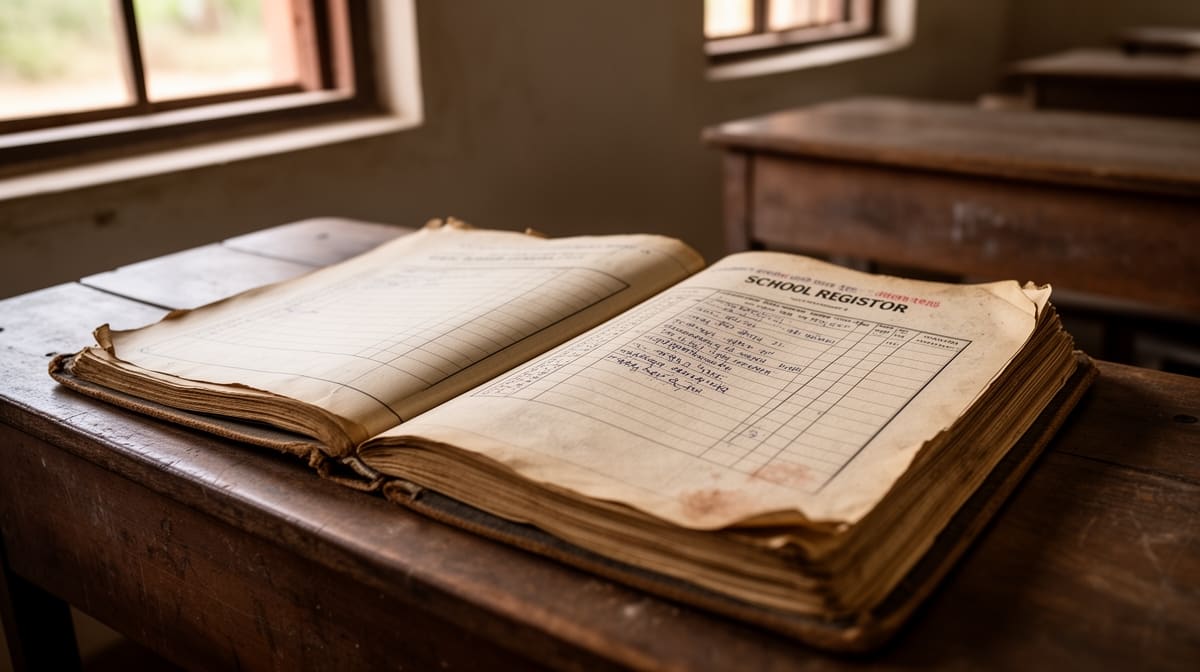
Critically, the Court observed that the prosecution had not led no evidence regarding the victim's date of birth but had proved it through the Birth Certificate and Pariwar Register. The omission of the Matriculation Certificate stemmed from the Investigating Officer's negligence or ignorance about Section 94 of the Juvenile Justice Act, 2015, which mandates that a child's date of birth in conflict with law must be proved via school records when available. The Court held that since the victim had passed matriculation at the time of the incident, the Matriculation Certificate was not merely corroborative but legally necessary to substantiate the date of birth under the JJ Act. It emphasized that the application did not seek to introduce a new fact but to prove the already asserted date of birth in conformity with statutory requirements.
The Court rejected the appellant's prejudice argument, noting that the additional evidence would not change the prosecution's case but only strengthen its proof on an undisputed point. It relied on Rambhau Vs. State of Maharashtra (2001) 4 SCC 759 to affirm that Section 391 Cr.P.C. is an exception to the general rule of deciding appeals on trial evidence, but must be exercised with caution to serve justice without violating finality. The Court concluded that in the interest of justice and to protect the minor victim, it was essential to ascertain the victim's age correctly, and the proposed evidence would not run counter to the concept of justice as it merely cured an inadvertent irregularity.
The Verdict
The application filed by the respondent-State under Section 432 of the Bharatiya Nagrik Suraksha Sanhita, 2023 was allowed. The Court directed the State/prosecution to re-examine PW-1 (the victim) and examine the Record Keeper/Office Superintendent/Incharge/Principal of the concerned school along with necessary records to prove on record the Matriculation Certificate and date of birth of the victim. The witnesses were to be summoned along with entire relevant record for recording their statements. The Registrar (Judicial) was directed to list the matter before the court on 28.09.2026 for fixing a date of recording additional evidence, with steps for re-calling/summoning witnesses to be taken within three days from notice. Furthermore, the Director General of Police, Himachal Pradesh was directed to circulate the provisions of Section 94 of the Juvenile Justice (Care and Protection of Children) Act, 2015, along with necessary guidelines, to all Investigating Officers in the State by 15.10.2026 to ensure proper age-proof collection in future cases involving minors in conflict with law.
What This Means For Similar Cases
Timing Is Critical But Not Absolute
The judgment clarifies that while appellate courts must exercise caution under Section 432 BNSS, the mere fact that evidence was available during trial does not automatically bar its reception at appeal stage. Practitioners should focus on whether the additional evidence seeks to prove a new fact or merely substantiate an already asserted case. Here, the Court distinguished between introducing novel allegations (which would be impermissible) and curing evidentiary gaps in proof of an existing fact (which may be allowed if essential for justice). This means prosecutors can still seek to remedy inadvertent omissions in statutory compliance - such as missing school records for age proof under the JJ Act - provided they can show the evidence aligns with the original case theory and does not prejudice the accused.
Substantiation Versus New Evidence
A key takeaway is the Court's clear demarcation between evidence that substantiates the prosecution's case and evidence that introduces new facts. The judgment holds that additional evidence is permissible when it does not alter the narrative of the offence but merely strengthens proof on an undisputed element (here, the victim's date of birth). For POCSO and JJ Act cases, this means prosecutors can now confidently apply to lead Matriculation Certificates or school records at appellate stage if they had relied solely on Birth Certificates or Pariwar Registers during trial, so long as they can demonstrate that such documents were reasonably available and their omission was inadvertent. Defence counsel, however, should vigilantly object if the proposed evidence seeks to change the case's foundation or contradict earlier assertions.
Procedural Safeguards Prevent Prejudice
The judgment embeds critical safeguards to prevent misuse of Section 432 BNSS: the accused must be given an opportunity to cross-examine witnesses on the additional evidence, and the Court must be satisfied that the evidence is essential for a just decision without causing prejudice. Practitioners should insist on these safeguards being rigorously applied - specifically, that the accused gets a full chance to rebut the additional evidence and that the Court records its satisfaction on the 'essentiality' test. The direction to the DGP HP to circulate Section 94 JJ Act guidelines also signals a systemic shift: investigating officers must now prioritize school-based age proof for minor victims, reducing future reliance on appellate corrections. This turns the judgment into both a procedural guide and a preventive directive for trial compliance.