The Customs, Excise and Service Tax Appellate Tribunal (CESTAT), Hyderabad, has reaffirmed that for ad valorem export duties, the transaction value declared in the final invoice and realized through bank channels must govern duty assessment, irrespective of discrepancies in moisture content between load and discharge port tests. The ruling underscores the primacy of contractual pricing and procedural fairness under the Customs Act.
Background & Facts
The Dispute
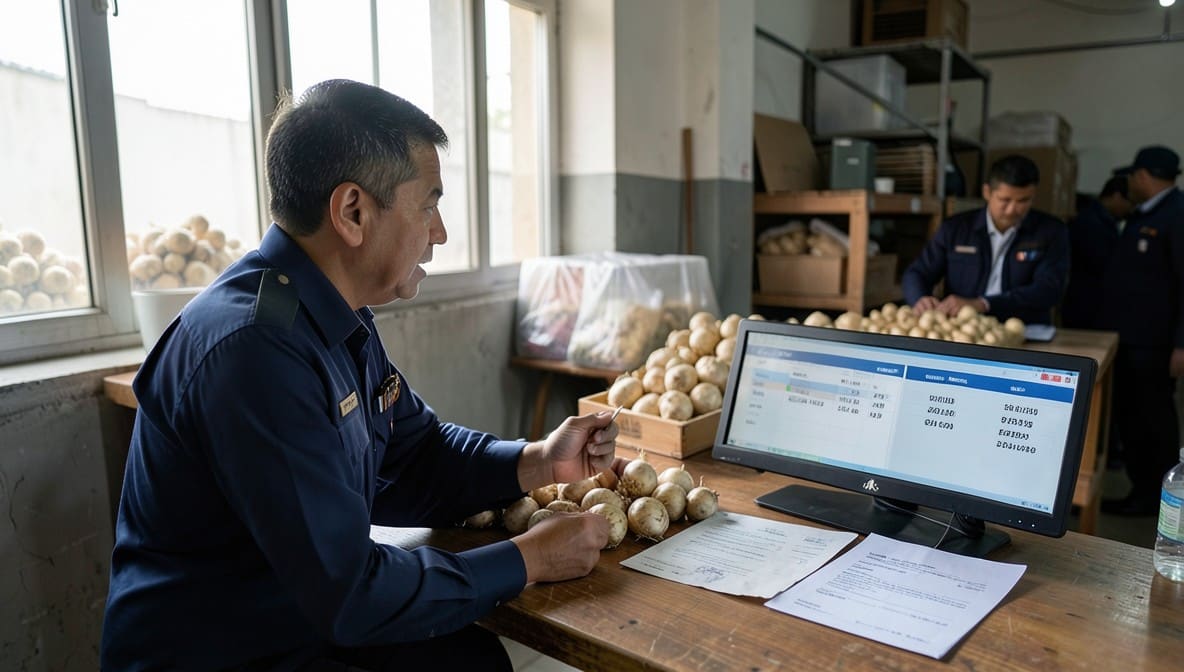
M/s Mangilall Rungta (Appellant), an exporter of iron ore fines, shipped 7,700 WMT of iron ore with 63.5% Fe content under a contract dated 04.11.2011 to M/s Sinosteel International Macao Commercial Offshore Ltd., Macau. The total FOB value was Rs. 5,41,64,707. The shipping bill GP-400 dated 05.12.2011 declared a moisture content of 8%. The Customs authorities provisionally assessed the value pending final documentation and execution of a PD bond, with a revenue deposit secured for the differential moisture content between the declared 8% and the Customs Lab’s test result of 4.1%.
Key Facts
- The final invoice issued by the Appellant reflected a transaction value of USD 165 CFR PDMT, based on discharge port analysis
- The Appellant received the full invoice amount of Rs. 5,41,64,707 via bank transfer, with no evidence of under-invoicing or flow-back
- Load port test report (submitted by Appellant): 8% moisture content
- Customs House Laboratory report (relied upon by Assessing Authority): 4.1% moisture content
- The difference in moisture content affected the calculated dry metric tonne (DMT) weight, thereby increasing duty liability
- The Appellant was not provided with the Customs Laboratory report prior to final assessment
- No query memo was issued to the Appellant seeking clarification or additional evidence
- No personal hearing was granted before rejecting the declared moisture content
Procedural History
- 04.11.2011: Export contract executed between Appellant and Sinosteel International
- 05.12.2011: Shipping Bill GP-400 filed with declared moisture content of 8%
- 04.09.2012: Original Authority issued Order-in-Original (OIO) rejecting declared moisture and demanding recovery of Rs. 1,02,082/- plus interest
- 03.04.2014: Commissioner of Customs (Appeals) issued Order-in-Appeal No. 47/2014-VCH, dismissing the Appellant’s appeal
- 27.04.2026: CESTAT Hyderabad delivered final order on Customs Appeal No. 20965 of 2015
The Parties' Positions
For the Appellant
- The transaction value is the price actually paid or payable, as mandated by Section 14 of the Customs Act
- The final invoice value, supported by Bank Realization Certificate (BRC), reflects the true value of the transaction
- The variation in moisture content (8% vs. 4.1%) was within contractual tolerance limits
- Board’s Circular No. 12/2014 dated 17.11.2014 explicitly states that where variation is within contract limits and does not impinge on declared price, assessment must be based on transaction value
- The Assessing Authority violated principles of natural justice by not sharing the Customs Lab report or granting a hearing
For the Respondent
- The Customs Lab report (4.1% moisture) is more accurate and should govern duty calculation
- Higher moisture implies higher wet weight, which may inflate duty if not adjusted
- The Appellant’s declared value is unreliable without corroborating lab data
- The Commissioner (Appeals) had sufficient grounds to reject the declared moisture content
Relief Sought
The Appellant sought:
- Setting aside of the Commissioner (Appeals)’s order dated 03.04.2014
- Direction to finalize assessment based on transaction value as per final invoice and BRC
- Cancellation of the demand of Rs. 1,02,082/- and associated interest
The Legal Issue
The central question was whether, for export duties levied on an ad valorem basis, the transaction value must be determined by the final invoice and realized proceeds, even when there is a discrepancy between load port and discharge port moisture content tests, and whether the failure to provide the relied-upon laboratory report and grant a hearing vitiates the assessment under principles of natural justice.
Arguments Presented
For the Appellant
The Appellant relied on Section 14 of the Customs Act, which defines transaction value as the price actually paid or payable. It cited Eicher Tractors Ltd. v. Union of India [2000 (122) ELT 321 (SC)], which holds that transaction value can be rejected only for valid and cogent reasons. The Appellant emphasized that no evidence of undervaluation, relationship, or flow-back existed. It further relied on Circular No. 12/2014, which permits reliance on transaction value where moisture variation is within contract limits. The Appellant also cited CC v. Sesa Goa [2014 (37) ELT 385 (Tri-Kol)] and its own prior decision in Bonai Industrial Co. Pvt. Ltd. (CESTAT Order No. A/30317-30324/2024), both holding that for ad valorem duties, duty is based on value, not weight, and that realized invoice value must prevail.
For the Respondent
The Respondent contended that the Customs Lab’s moisture analysis (4.1%) was scientifically accurate and should override the Appellant’s declared 8%. It argued that moisture content directly affects the dry weight and thus the duty base. It maintained that the Commissioner (Appeals) had sufficient grounds to reject the declared value and that the procedural lapse, while noted, did not affect the outcome.
The Court's Analysis
The Tribunal observed that the dispute was not about the Fe content or unit price, but solely about moisture content variation. Crucially, the Commissioner (Appeals) himself admitted in the impugned order that the Assessing Authority failed to provide the Customs Laboratory report to the Appellant and denied a personal hearing. The Tribunal quoted the Commissioner’s own words:
"Not following Principles of Natural Justice, which is basic to any democratic jurisprudence, is bad in law and ideally I should have remanded the case back to Lower Authority to pass a reasoned order. However, since Act/Rule has not given me power to remand, I proceed to decide the case on merits."
The Tribunal held that this admission was fatal to the assessment. The principles of natural justice require that a party be given access to evidence relied upon and an opportunity to respond. The failure to provide the Customs Lab report rendered the assessment procedurally invalid.
Further, the Tribunal examined the nature of the duty. Export duty during the relevant period was ad valorem, meaning it was levied on the value of goods, not on weight or composition. The Tribunal relied on Sesa Goa and Bonai Industrial, both holding that when duty is ad valorem, the transaction value as per invoice and realized through bank channels must govern. The Court noted:
"The appellant has realised only the value shown in the total value shown in the invoices. Hence, the value for Export Duty has to be taken as per Transaction Value only."
The Tribunal rejected the Respondent’s argument that moisture content should override contractual pricing, emphasizing that the parties had agreed on a value based on discharge port analysis, and the Appellant had received no more than that amount. The Circular No. 12/2014 further supported this position.
The Tribunal concluded that the impugned order was legally unsustainable due to procedural violation and misapplication of law. The assessment based on discharge port moisture content was not legally tenable when the transaction value was clear, undisputed, and fully realized.
The Verdict
The Appellant succeeded. The Tribunal set aside the Commissioner (Appeals)’s order dated 03.04.2014. The matter was remanded to the Adjudicating Authority with directions to re-assess the export duty based on the transaction value as per the final invoice and Bank Realization Certificate, without considering the disputed moisture content. The demand of Rs. 1,02,082/- and associated interest stands cancelled. The Appellant is entitled to a fresh hearing with full access to all documents relied upon by the Department.
What This Means For Similar Cases
Transaction Value Prevails Over Lab Discrepancies in Ad Valorem Duties
- Practitioners must argue that for ad valorem duties, the invoice value and BRC are conclusive unless fraud or undervaluation is proven
- Moisture, Fe content, or weight variations cannot override contractual pricing if the transaction value is fully realized
- Circular No. 12/2014 is binding and must be applied where variation is within contract limits
Natural Justice Is Non-Negotiable in Customs Assessments
- Failure to share relied-upon lab reports or grant a hearing renders assessments void ab initio
- Even if the outcome appears correct, procedural lapses invalidate the order
- Practitioners should routinely raise violations of natural justice as a ground for appeal, regardless of merits
Ad Valorem Duty Is Value-Based, Not Quantity-Based
- Duty calculations must not be manipulated by redefining weight through lab reports when value is fixed by contract
- Courts and tribunals will not permit the Department to use technical discrepancies to inflate duty where the price is undisputed
- Exporters should ensure contracts clearly specify the basis of valuation (e.g., discharge port analysis) and include tolerance clauses for moisture