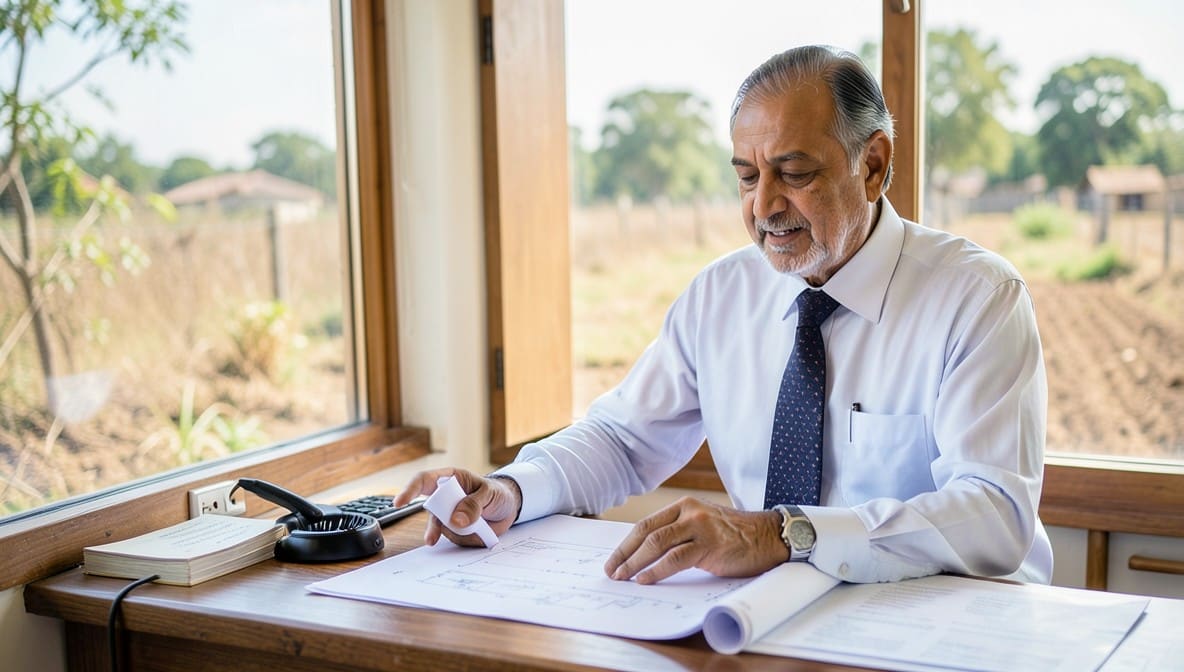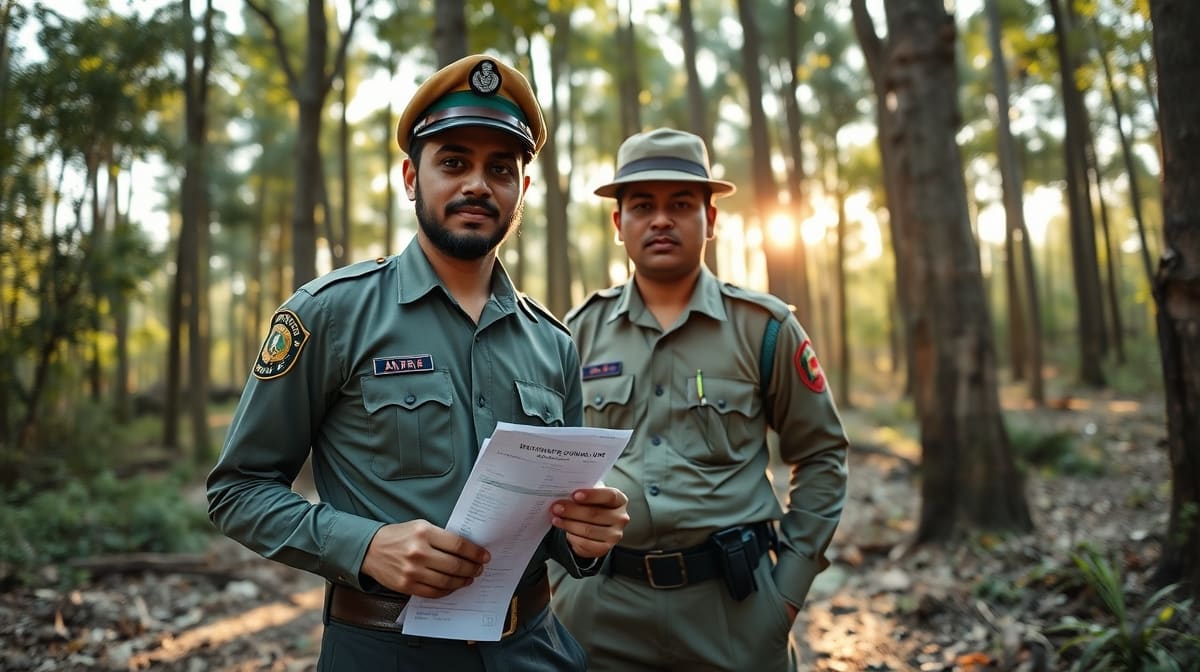
The Allahabad High Court has affirmed that daily wage workers in the forest department are entitled to minimum pay scale under the 7th Pay Commission, provided their claims are substantiated by binding precedents. The judgment, while not adjudicating the merits directly, establishes a clear procedural pathway for redressal and reinforces the obligation of state authorities to implement judicial directives without delay.
Background & Facts
The Dispute
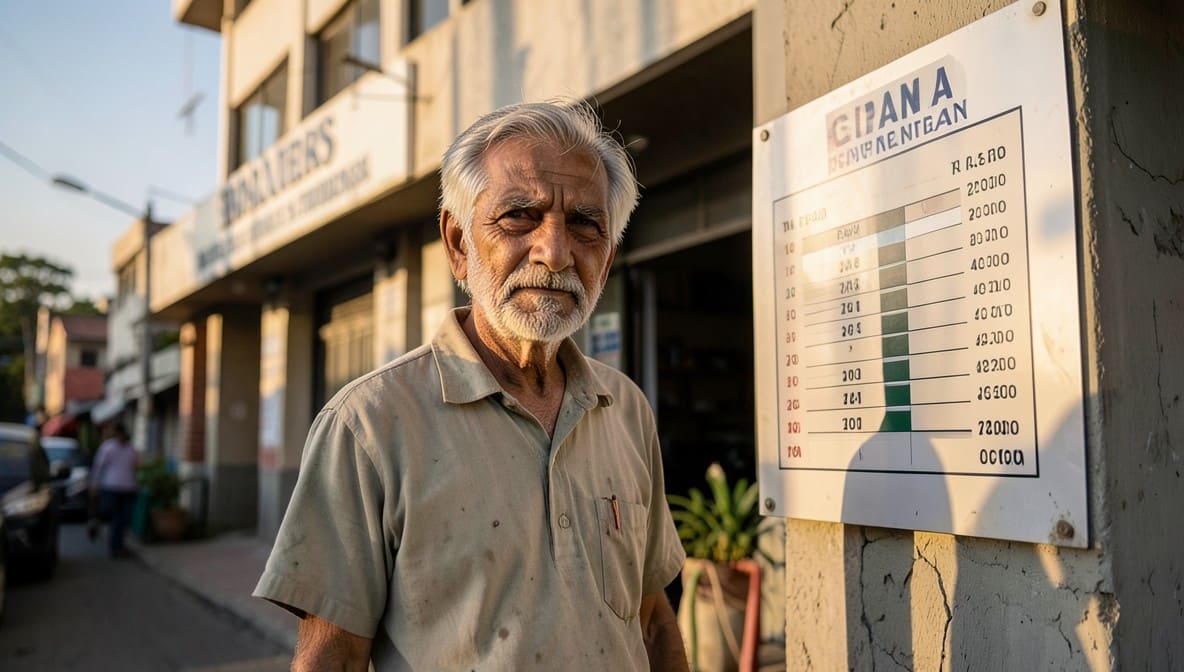
The petitioner, Radhey Shyam, is a daily wage employee in the Uttar Pradesh Forest Department. He contends that despite performing duties equivalent to regular staff, he has not been paid the minimum wage of Rs.18,000 per month as mandated by the 7th Central Pay Commission. He submitted multiple representations to higher authorities, but no action was taken.
Key Facts
- The petitioner has been employed as a daily wager in the forest department for an extended period, though the exact start date is not specified in the judgment.
- He has repeatedly sought payment of minimum wages, with no response from the department.
- On 05.04.2023, the Principal Chief Forest Conservator, Uttar Pradesh, issued a circular directing all forest officers to comply with the judgment in Mohan Swaroop and Another v. State of U.P. and Others (Writ-A No.11964 of 2018).
- The circular referenced three orders dated 20.03.2023, 22.02.2023, and 03.04.2023, which directed payment of Rs.18,000 per month with arrears from 01.04.2018 to employees covered by the Mohan Swaroop judgment.
- The circular explicitly stated that the Mohan Swaroop judgment recognized daily wagers as entitled to minimum pay scale under the 7th Pay Commission.
- The Principal Chief Conservator also admitted in Writ-A No.624 of 2023 that petitioners in similar cases were entitled to Rs.18,000 per month with arrears from April 2018.
Procedural History
- The petitioner filed the present writ petition (Writ-A No.7376 of 2026) seeking a writ of mandamus for payment of minimum wages.
- The petition was heard on 15.05.2026 before Justice Prakash Padia.
- No prior litigation history involving this specific petitioner is recorded in the judgment.
The Parties' Positions
For the Petitioner:
- Argued that he is entitled to the same minimum wage as other daily wagers who have been granted relief under Mohan Swaroop and Sabha Shankar Dube.
- Highlighted the administrative circular dated 05.04.2023 as proof that the department acknowledges the legal obligation.
- Contended that continued inaction violates the principle of equal pay for equal work and Article 14 of the Constitution.
For the Respondent (State of U.P.):
- Did not contest the legal principle but argued that the matter should be resolved through a fresh representation to avoid unnecessary litigation.
- Accepted that if the petitioner’s case falls within the scope of the Mohan Swaroop and Sabha Shankar Dube judgments, payment is legally mandated.
Relief Sought
The petitioner sought a writ of mandamus directing the respondents to pay him a minimum wage of Rs.18,000 per month with arrears from 01.04.2018, in accordance with the 7th Pay Commission and the binding judgments in Mohan Swaroop and Sabha Shankar Dube.
The Legal Issue
The central question was whether a daily wage worker in the forest department, whose claim is substantively identical to those granted relief in Mohan Swaroop v. State of U.P. and Sabha Shankar Dube v. Divisional Forest Officer, is entitled to minimum pay scale of Rs.18,000 per month with arrears from 01.04.2018, and whether the state can delay implementation pending formal representation.
Arguments Presented
For the Petitioner
The petitioner relied on the binding judgments in Sabha Shankar Dube v. Divisional Forest Officer & Others (Civil Appeal Nos.10957-10963 of 2018) and Mohan Swaroop v. State of U.P. and Others (Writ-A No.11964 of 2018). He argued that the Principal Chief Forest Conservator’s circular dated 05.04.2023 confirmed that these judgments established a legal entitlement to Rs.18,000 per month with arrears from April 2018. He further contended that the state’s failure to act despite this admission amounted to a violation of the principle of stare decisis and the duty to implement judicial orders.
For the Respondent
The Standing Counsel for the State did not dispute the legal position laid down in the two judgments. Instead, he submitted that no useful purpose would be served by adjudicating the petition on its merits, as the department was already acting on the basis of the Mohan Swaroop judgment. He proposed that the petitioner be directed to file a fresh representation, which would then be decided in accordance with law.
The Court's Analysis
The Court acknowledged that the petitioner’s claim was not novel but squarely covered by two prior judgments of the same High Court and the Supreme Court. The Principal Chief Forest Conservator’s letter dated 05.04.2023, which explicitly referenced the Mohan Swaroop judgment and directed payment of Rs.18,000 per month with arrears from 01.04.2018, constituted an official admission by the state that the legal position was settled.
"The Principal Chief Conservator of Forest filed an affidavit in Writ-A No.624 of 2023 admitting the claim of the petitioners in the said writ petition for payment of Rs.18,000/- per month as their wages on the basis of minimum pay scale in view of the settled principles of law laid down in the cases of Sabha Shankar Dube (supra) and Mohan Swaroop (supra) and, consequently, paid them minimum pay scale of Rs.18,000/- per month along-with arrears since April, 2018."
The Court emphasized that the state cannot remain passive when its own officers have acknowledged a legal obligation. However, recognizing that the petitioner had not yet formally invoked the remedy through a representation, the Court opted for a procedural resolution rather than a direct adjudication. The Court held that the petitioner’s entitlement, if established under the precedent, is not contingent on the state’s discretion but flows from the binding nature of the judgments.
The Court also noted that the state’s conduct in implementing the judgment for other similarly situated employees created a legitimate expectation for the petitioner. Denying him the same benefit without a reasoned determination would violate the principle of equality under Article 14.
The Verdict
The writ petition was disposed of with liberty to the petitioner to file a fresh representation before the concerned authority within three weeks, along with a certified copy of this order. If the representation is filed, the authority must decide it by a reasoned order within two months. If the petitioner’s case is found to be covered by the judgments in Sabha Shankar Dube and Mohan Swaroop, the authority shall pay him a minimum wage of Rs.18,000 per month with arrears from 01.04.2018. The direction is binding and non-discretionary.
What This Means For Similar Cases
Payment Entitlement Is Not Discretionary
- Practitioners representing daily wage workers must now treat prior judgments like Mohan Swaroop and Sabha Shankar Dube as binding precedents establishing a legal right, not a policy benefit.
- Any refusal to pay based on administrative convenience or classification as "daily wager" is legally unsustainable if the work performed is identical to those granted relief.
Administrative Admissions Bind the State
- When senior officials issue circulars or affidavits acknowledging judicial holdings, those admissions create a legal obligation.
- Courts will not permit the state to renege on such admissions by demanding fresh litigation when the legal position is already settled.
Procedural Fairness Requires Timely Adjudication
- Authorities must decide representations under these judgments within a reasonable timeframe.
- Failure to do so may invite contempt proceedings or direct writs under Article 226 without requiring a fresh representation.
Documentary Evidence of Policy Implementation Is Key
- Counsel should always obtain and submit copies of departmental circulars, affidavits, and payment records from similar cases as evidence of the state’s own recognition of the legal entitlement.
- The 05.04.2023 circular in this case was decisive - practitioners should replicate this strategy in analogous cases.
The 7th Pay Commission Is Not Optional
- The judgment reinforces that minimum wage norms under the 7th Pay Commission apply to all government service categories, including daily wage workers performing regular duties.
- The state cannot invoke contractual status to deny statutory or judicially mandated wage floors.